Chinese idiom of the day : Unexpected mistakes often happen not because people lack skill, but because they try to do more than what is necessary. In daily life, the desire to improve something can sometimes lead to unintended consequences. A project may become overly complicated, a simple solution may be unnecessarily expanded, or a success may be spoiled by excessive ambition. Ancient Chinese culture recognized this tendency long ago and expressed it through a famous idiom that continues to offer valuable lessons today.
Chinese Idiom of the Day Today on Simplicity and Overdoing Things
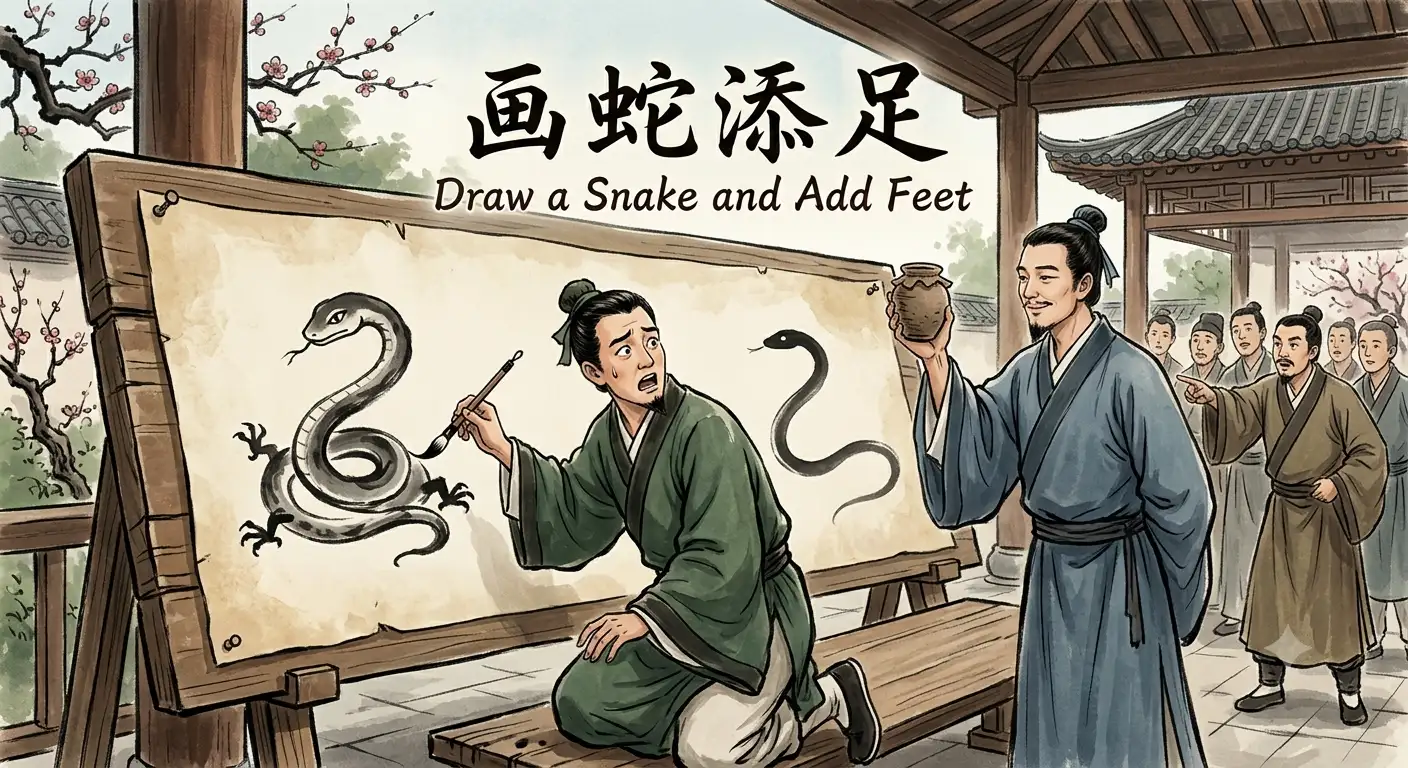
Today's Chinese idiom is " 画蛇添足 ," which translates to, " Draw a snake and add feet ," as per Chinese Learning.
The idiom literally means "to draw a snake and then add feet to it." It is used to describe situations in which someone ruins something by adding unnecessary details or doing more than what is required.
The Story Behind the Chinese Idiom
The idiom originates from an ancient Chinese story. According to the tale, a group of men held a competition to determine who would receive a pot of wine. The challenge was simple: whoever could draw a snake the fastest would win.
One man finished first. Confident that he had already secured victory, he decided to improve his drawing by adding feet to the snake. While he was doing so, another participant completed his own snake and claimed the prize.
The second man pointed out that snakes do not have feet. Because the first contestant had added something unnecessary, he lost despite finishing first.
What "Draw a Snake and Add Feet" Means
The idiom teaches that unnecessary additions can sometimes spoil an otherwise successful effort.
It encourages people to recognize when a task is already complete and avoid overcomplicating matters. Perfectionism, excessive confidence, or the desire to impress others may occasionally lead individuals to make avoidable mistakes.
Chinese Idiom of the Day June 23: Lessons on Simplicity and Good Judgment
Traditional Chinese wisdom often values moderation, balance, and practical judgment. This idiom reflects those principles by reminding people that knowing when to stop is just as important as knowing how to begin.
The lesson remains relevant. Businesses may overcomplicate products, students may add unnecessary information to assignments, and individuals may create problems by trying too hard to improve something that already works well.
Life Lessons From the Chinese Idiom of the Day
- Avoid unnecessary additions.
- Do not overcomplicate simple tasks.
- Confidence should not become overconfidence.
- Knowing when to stop is a valuable skill.
- Simplicity often leads to better outcomes.