
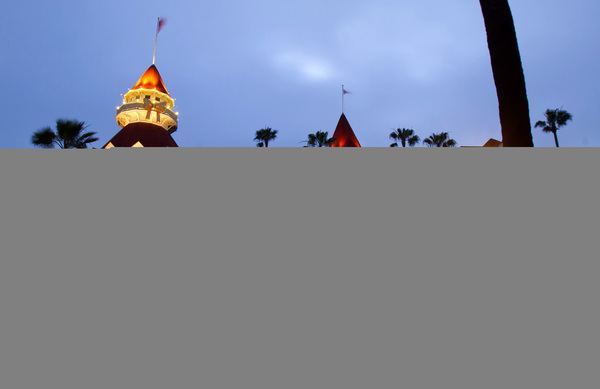
BEIJING _ Chinese regulators have taken control of the Anbang Insurance Group, a privately owned Chinese conglomerate that owns New York's Waldorf Astoria, temporarily putting management of the hotel and other high-profile international properties under the Chinese government's control.
China's insurance regulator said in a statement Friday that "there exist illegal operations at Anbang, posing threats to the company's solvency." The statement said a group of government agencies will take control of the company's board and management for one year. Anbang's chairman, Wu Xiaohui, has been indicted on suspicion of economic crimes, it said.
The government will eventually restructure Anbang's shareholding and again make the company private, the statement said.
Wu was known as one of China's "Gray Rhinos" _ ambitious, politically connected tycoons whose companies incurred extraordinary debt while buying prestigious foreign assets _ enough debt, regulators believed, to potentially destabilize the country's financial system. Last year, the Chinese government began cracking down. Authorities detained Wu in June, and he hasn't been heard from since.
Authorities have chastened other Gray Rhino companies, which have struggled financially in recent months. HNA Group, which owns several airlines, a 25 percent stake of Hilton Worldwide and several tourism and logistics companies, has an estimated $90 billion in debt, and has sought to raise capital from its employees. Dalian Wanda, a real estate giant that owns AMC Cinemas, plans to sell its last two overseas property developments.
"Why Anbang right now, and not HNA? I don't know," said Anne Stevenson-Yang, research director at the China-focused J Capital Research. "Anbang hasn't defaulted on anything, and HNA has. I think Anbang's holdings in the banks, and the banks' outstanding loans to Anbang, are a critical portion.
"I don't know what's going on right now, but the Chinese financial system is obsessed with the possibility of a financial crisis," she said. "So you can't allow a company like Evergrande (China's second-largest property developer), or even HNA, to default because you don't understand what the collateral damage will be."
Wu was extraordinarily politically connected. He married a granddaughter of Deng Xiaoping, China's leader in the 1980s. Yet experts say his problems may mean he's fallen out of favor.
President Xi Jinping, in power since 2012, has tightened Communist Party control over private enterprises, to stabilize the financial system and crack down on capital flight.
"There is one way to read this, which is that China's problems are much more severe and more different than people thought, so the Chinese state is taking action," said Fraser Howie, the author of "Red Capitalism: The Fragile Financial Foundations of China's Extraordinary Rise." "But you can also put a positive spin on that: Here's a government that's willing to act, and act boldly. That gives us confidence that they'll do so in other scenarios."
He emphasized the regulators' assurance that Anbang will remain private. "Look at it this way _ you're on a bus, and the driver's drunk," Howie said. "You seize control of the wheel, but you still don't own the bus. That's what the regulator's doing here."
Anbang's office in Hong Kong did not reply to a request for comment.
Wu grew up in southeastern China's Zhejiang province. According to a 2016 New York Times report, he worked as a car salesman and a low-level anti-smuggling official.
Anbang started in 2004 as an auto insurance company and moved into life insurance in 2010. It rapidly developed into a financial giant, with assets of about $300 billion. It is China's second-largest insurer in terms of life insurance premiums, Bloomberg reported.
Anbang also owns the Westin St. Francis in San Francisco, the InterContinental Miami and insurance companies in Europe and Asia. It purchased the Waldorf Astoria for $1.95 billion in 2014.
Wu ran the company under a Byzantine ownership structure, making its true owners _ and his own wealth _ difficult to discern.
Before his fall, Wu had found a comfortable place among the global elite. He made deals with the private equity group Blackstone; last year, he was involved in failed talks with President Donald Trump's son-in-law, Jared Kushner, over a property development in Manhattan.
In 2015, he gave a talk at Harvard University, in which he pondered his place in the universe.
"Our troubles are truly very, very small," he said, according to the Standard, a Hong Kong newspaper. "Once you've thought through things clearly, there is no trouble left. At the end of our life, we return to zero, so you absolutely must enjoy the journey."
����
(Special correspondent Kemeng Fan contributed to this report.)





.jpg?w=600)



