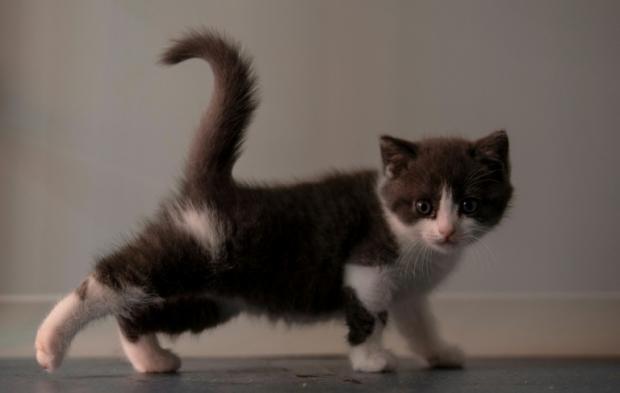
BEIJING: Seven months after Huang Yu's pet Garlic died, the cat was given a 10th life.
Born on July 21, the new Garlic was created by Chinese firm Sinogene, becoming the Beijing-based company's first successfully copied cat.
The pet-cloning outfit has made more than 40 pet dogs -- a procedure that costs 380,000 yuan (1.6 million baht), while the price for a cat comes in at 250,000 yuan (around one million baht).
Huang, 23, was overjoyed on first seeing Garlic's second incarnation, saying the "similarity between the two cats is more than 90 percent".
"When Garlic died, I was very sad," said Huang. "I couldn't face the facts because it was a sudden death. I blame myself for not taking him to the hospital in time, which led to his death."
The happy owner says he hopes the personality of the new Garlic is as similar to his old white-and-grey cat as its appearance.
And China's scientists have big aspirations for their next cloning challenge, working on the theory that if cats can be cloned, so can pandas.
Pet cloning is illegal in many countries but approved in countries including South Korea and the US, where singer Barbra Streisand announced last year she had cloned her dog.
The first major success in animal cloning was Dolly the sheep, born in Britain in 1996 as the first mammal cloned from an adult cell.