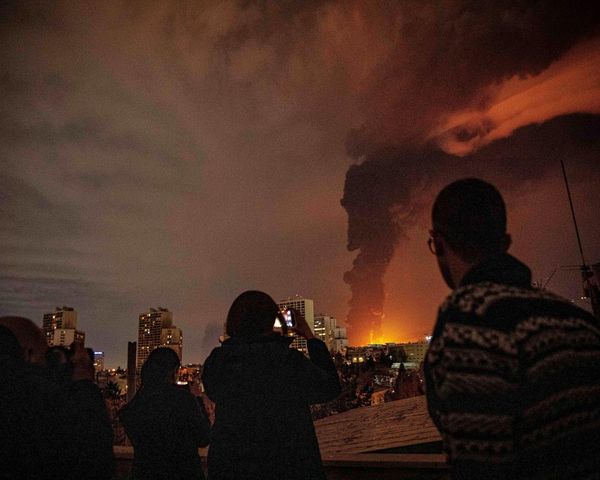
Aug. 14--REPORTING FROM BEIJING -- The burned-out husk of a fire engine sits amid a field of rubble, its windows blown out, hoses and candy apple-red helmets scattered across the charred earth.
The haunting image, captured on video, went viral on China's social media networks following massive explosions Wednesday that killed at least 56 people and hospitalized hundreds in the northeastern Chinese city of Tianjin.
Several social media posts in the wake of the blasts have drawn attention to Tianjin's emergency responders. The writers have focused not only on the firefighters' youth and vulnerability, but also their possible role in precipitating the explosions, which shot massive fireballs into the air and caused shock waves so intense that they shattered windows miles away.
At least 17 firefighters died in the blasts, state media have reported. Several others are still missing.
The blast occurred at a port warehouse owned by the 4-year-old Tianjin Ruihai International Logistics company. State-run media said that the facility held "dangerous materials," possibly including the chemical calcium carbide, which reacts violently to water.
Yet when firefighters were called to the warehouse at 10:50 on Wednesday night, they attempted to douse a fire there with water cannons, according to several reports in Chinese media. Minutes later, two blasts lighted up the sky that together had the force of 53 Tomahawk cruise missiles exploding, state-run media reported.
Beijing has dispatched 200 hazardous-chemical specialists -- many of them in full protective suits and gas masks -- to investigate the cause of the blast.
One firefighter told the liberal newspaper Southern Weekend that his brigade was never warned against the use of water.
Propaganda authorities required local media outlets to use "only copy from Xinhua [news service] and authoritative departments and media," according to a censorship directive leaked to the news website China Digital Times. Officials said at a news conference Friday that even the names of the chemicals in the warehouse "cannot be determined at the moment," contradicting previous reports.
The Southern Weekend report has been taken offline.
Lei Jinde, the deputy propaganda chief of China's national fire department, has denied that the authorities' response to the emergency was misguided or rash.
"Our firefighting department went through rigorous training and knew how to handle the situation scientifically and properly," he told the Shanghai-based news website the Paper. "When our firefighters do not try to contain the situation, when they let it grow out of control, who knows what the results will be. Ordinary people can pull back. But our fighters, they can only push forward. That is our responsibility."
Zhang Dapeng, a Tianjin fire corps team leader stationed at the port, rescued a young firefighter from the rubble near the warehouse Friday morning. Zhou Ti, 19, sustained facial burns and "features of memory loss," the state-run New China News Agency reported.
------
FOR THE RECORD
11:24 a.m.: An earlier version of this article gave the name of a Tianjin fire corps team leader as Sun Dapeng. His name is Zhang Dapeng.
------
"We will save our brothers even if there's is only one slight hope," Zhang told the state broadcaster CCTV, struggling to speak through his tears. "We will save the survivors and carry our brothers out. We will not give up, even though there is only a glimmer of hope."
Many Internet users praised the firefighters for their heroism. One widely forwarded social media post contains a drawing of a red-clad firefighter walking down a long corridor as a stream of black-and-white civilians walk in the opposite direction.
A receptionist at Tianjin's fire department, when reached by phone, said that department officials on site could not be reached because "their cellphones are running out of batteries."
On Friday, state-run newspaper Global Times published a harshly worded editorial castigating the skepticism as unproductive.
"If some reporters or opinion leaders stormed into questioning the rescue operation, they should then seriously reflect on their constructiveness," it said. "These questions have led to mistrust from the public toward the rescue efforts, just when the rescuers needed encouragement and support the most."