A court in China has ruled that companies cannot automatically justify firing workers simply because artificial intelligence can now perform their jobs more cheaply, as businesses worldwide increasingly deploy AI systems to automate human labor. The decisions emerged from cases published in late April by the Hangzhou Intermediate People's Court ahead of International Workers’ Day on May 1, including a dispute involving a tech worker whose responsibilities were gradually absorbed by large language models.
According to the court documents, an employee identified as Zhou worked for an online technology company as a question quality inspector, earning 25,000 yuan ($3,640) per month. His job involved evaluating outputs generated through interactions between users and AI models, including checking responses for correctness and filtering problematic or privacy-violating content.
The company later argued that advances in AI technology had reduced the need for Zhou’s role and attempted to transfer him to a different position with a sharply reduced salary of 15,000 yuan ($2,180) per month. When Zhou rejected the reassignment, the company terminated his employment contract.
At the center of the dispute was whether AI-driven restructuring constituted what China’s Labor Contract Law describes as a “major change in objective circumstances,” a legal condition that can justify terminating an employment contract under certain situations.
The courts rejected the company’s argument. According to the rulings, a company’s decision to adopt AI technology and reorganize around it does not automatically render a labor contract impossible to perform. The courts also found that the replacement role offered to Zhou came with such a substantial pay reduction that it could not reasonably be considered a fair reassignment. The dismissal was ultimately ruled unlawful.
The Hangzhou court explicitly acknowledged the tension between technological progress and worker protections. In its explanation of the case, the court stated that while businesses are free to pursue technological upgrades, they must also consider employees' legitimate rights and interests during those transitions. The court added that companies should prioritize retraining workers and helping them transition to higher-level roles that require greater human involvement.
A similar case cited by Chinese state media involved a map data collection worker whose dismissal after AI-driven job replacement was also ruled unlawful by an arbitration panel in Beijing. In that dispute, the panel reportedly argued that the company’s decision to adopt AI technology was a voluntary business strategy and that the risks of technological transformation could not simply be transferred onto workers.
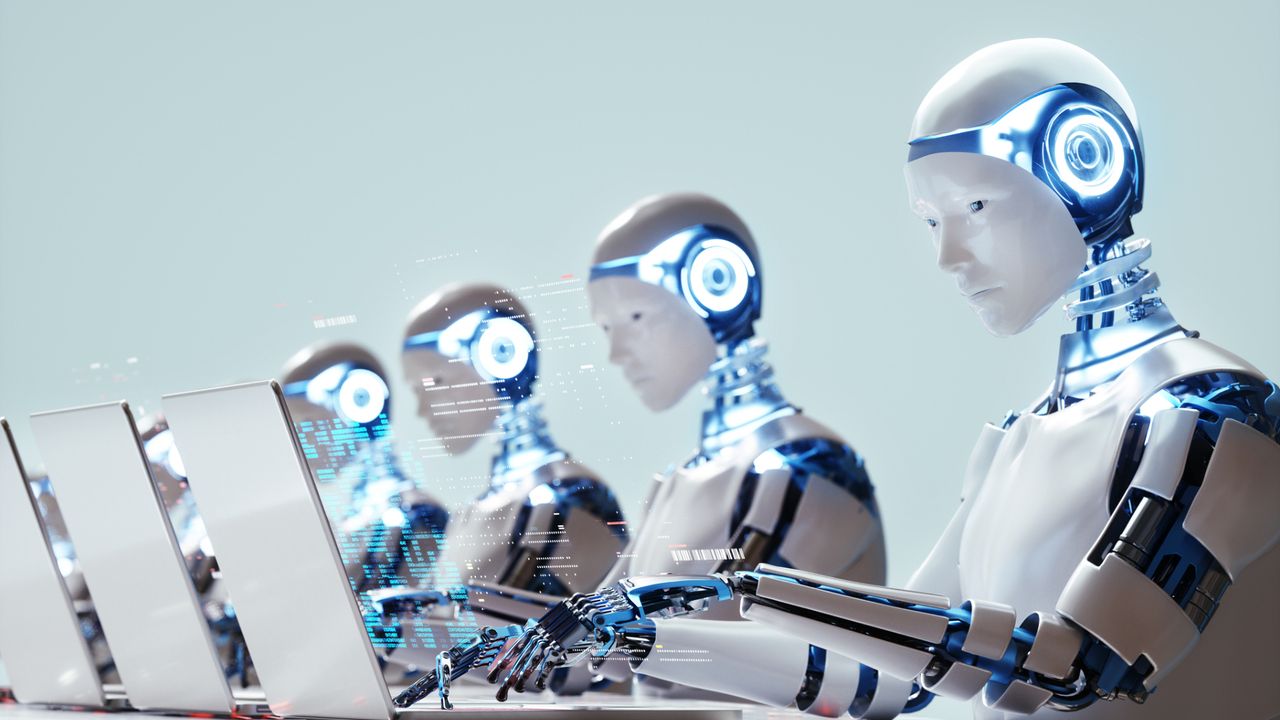
The broader implications extend well beyond a pair of labor disputes. AI-driven layoffs and restructuring have become an increasingly contentious issue globally as businesses race to automate everything from customer service and coding to data labeling and content moderation. Tech companies worldwide have aggressively invested in generative AI systems to cut operational costs and reduce dependence on human labor.
Early last month, we reported that nearly 80,000 US tech workers had lost their jobs to AI since the start of 2026, with some experts arguing that AI was merely used as an excuse for poor business decisions. The trend doesn't seem to be slowing down. Just last week, Mark Zuckerberg said Meta is cutting 8,000 jobs to cover AI infrastructure costs. Zuckerberg claimed that infrastructure spending, not AI-driven productivity gains, is the driver, but that is practically the second side of the same coin.
Legal experts say the rulings may signal a broader attempt by China to balance rapid AI deployment with labor stability.
“Technological progress may be irreversible, but it cannot exist outside a legal framework,” Wang Tianyu, a researcher with the Chinese Academy of Social Sciences, told Xinhua.
Whether similar moves will occur globally remains to be seen.