For years, scientists assumed that changes in drought intensity had gradual impacts on grassland, with the vegetation adapting to the reduced availability of water over time. However, a recent study on China's temperate grasslands shows that the effect of drought is much harsher. Studies show that until drought exceeds a certain limit, the ecosystems will be rather stable, but when the limit is reached, the slow-growing perennials will be replaced by fast-growing annual plants. The results are a challenge to the conventional understanding of the reaction of the ecosystems to climate change, raising concerns over whether they were closer to a state of transformation than people initially supposed. With the increase in the Earth's temperature and frequency of droughts, the new findings highlight the rapid response of nature to the adverse effects of climate.
Get breaking news anytime, anywhere. Download the TOI app now!
A hidden threshold beneath the grasslands
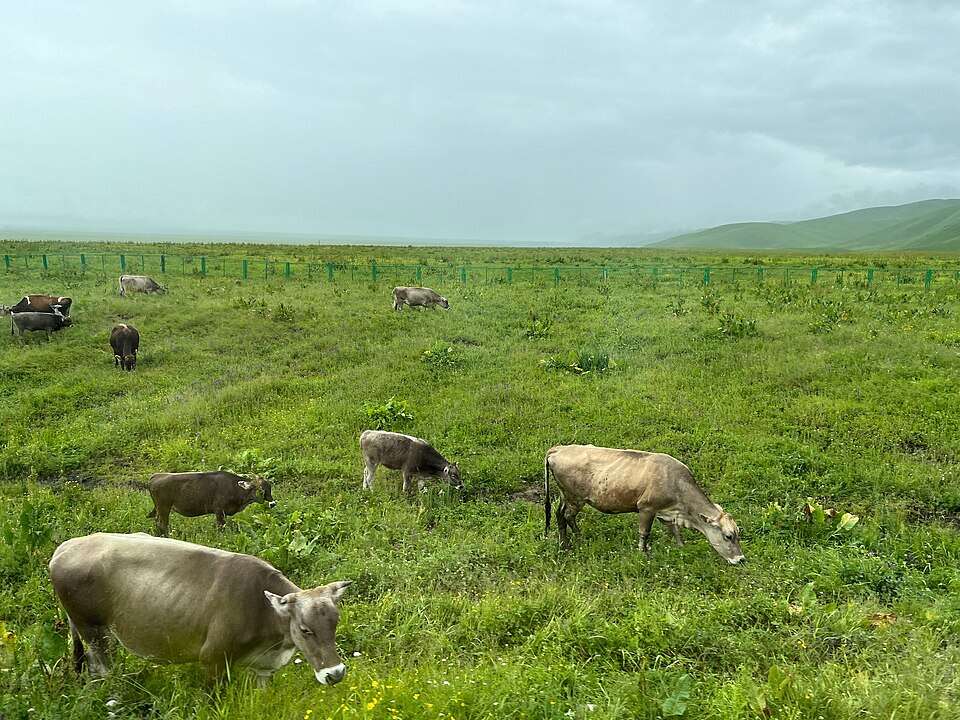
The temperate grasslands of China cover huge expanses of territory in northern and northwestern parts of the country, providing sustenance not only for livestock and wildlife but also for millions of people who earn their living from grazing grounds. The ecosystems under study are mainly composed of perennial grasses, meaning plants that live several years and grow very deep roots to conserve moisture and stabilise soil.
According to a study published on Cambridge , it was previously believed that with diminishing precipitation, the perennial grasses would start giving way to more drought-tolerant varieties of vegetation. However, this is not what the recent study has shown.
With the help of field observations and ecological studies, researchers established that the grasslands were rather resilient to drought and maintained normal ecosystem functioning until a certain level of water availability was reached. When the limit was crossed, however, everything started changing rapidly.
Instead of a slow transition, perennial grasses declined sharply and were replaced by annual species that complete their life cycle within a single growing season. The shift occurred far more abruptly than expected, suggesting that ecosystems may hide signs of vulnerability until they suddenly reorganise into an entirely different state.
As stated in the Journal of Animal Ecology , this ecological threshold represents a major change in how scientists understand drought responses in grasslands. Rather than adapting continuously, these ecosystems can remain stable for long periods before experiencing a sudden transformation once environmental stress exceeds their limits.
Why fast-growing annual plants gain the advantage
The difference between perennial and annual plants is in their survival strategies. To be able to survive for several seasons, perennial grasses develop an abundant network of roots underground. These roots will provide energy storage and support healthy soil conditions, while helping the plant regenerate after seasonal drought periods. They also ensure soil stabilisation and carbon storage.
In contrast, annual plants adopt the strategy known as live fast, breed fast. This means that they will go through all stages of development from germination until seeding and dying within a single growing season. Instead of spending energy on long-term survival, they attempt to reproduce before conditions become too harsh.
Under mild drought conditions, perennials remain superior thanks to their roots, which provide water that is not available to shallow-rooted plants. However, under severe drought conditions, the maintenance of these roots becomes more and more expensive. In such a situation, the advantage passes to annuals, which complete their cycle rapidly when there is rainfall.
Researchers found that after the ecological threshold was crossed, annual plants expanded rapidly while perennial species declined just as quickly. This shift changes much more than the appearance of the landscape. Perennial-dominated grasslands generally store more carbon underground, retain soil moisture more effectively and provide stable grazing resources throughout the year. Annual-dominated communities often produce more variable vegetation, leaving ecosystems increasingly vulnerable to erosion, nutrient loss and further degradation.
Climate change could trigger more ecological tipping points
The findings have implications far beyond China's grasslands. Climate models project that droughts will become more frequent and more intense across many regions of the world during this century. If similar ecological thresholds exist in other grassland ecosystems, sudden vegetation shifts could occur in regions that currently appear stable.
According to researchers, this should be a major consideration among land managers and policymakers. Conservation measures traditionally have been based on the assumption that the change takes place gradually and allows for interventions before serious environmental damage is done. However, when an ecosystem is resilient until it crosses a certain threshold, it can mean a much shorter window for intervention compared to previous estimates.
This draws attention to the need for protection of perennial grass species through sustainable grazing, proper land management and ecological monitoring. Sufficient perennial populations might enhance an ecosystem's resistance to drought until a tipping point is reached.
The consequences can go beyond loss of biodiversity and affect food security, meat production and climate regulation. Grasslands accumulate large amounts of carbon in their soil layers, and a sudden change in plant community composition can limit their ability to sequester and store carbon.
China's grasslands prove that the effects of climate change do not always manifest gradually and predictably. Sometimes the ecosystem seems stable until it crosses a tipping point. Understanding where those thresholds lie may prove essential for protecting grasslands not only in China but around the world, where increasing drought threatens some of Earth's most productive and ecologically important landscapes.