As a Special Administrative Region of China, Hong Kong has long enjoyed greater autonomy than the mainland, allowing its independent Chinese-language publishing industry to flourish.
Get breaking news anytime, anywhere. Download the TOI app now!
Yet, a series of raids on independent bookstores since March has raised fresh concerns about the future of the city's independent publishing industry.
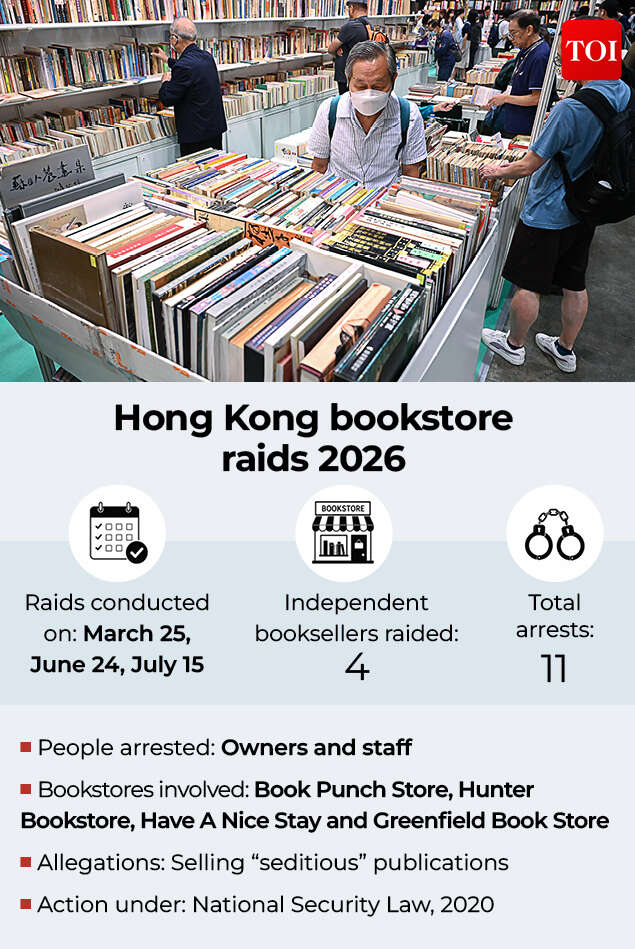
In the latest such crackdown, on July 15, authorities raided two booksellers and arrested five people, including two men and three women. The group was arrested on suspicion of selling “seditious” publications under Hong Kong’s 2024 national security legislation.
The developments have also resonated in Taiwan, the self-governed island claimed by China, underscoring Hong Kong's enduring significance in the Chinese-speaking publishing landscape.
The Hong Kong bookstore raids
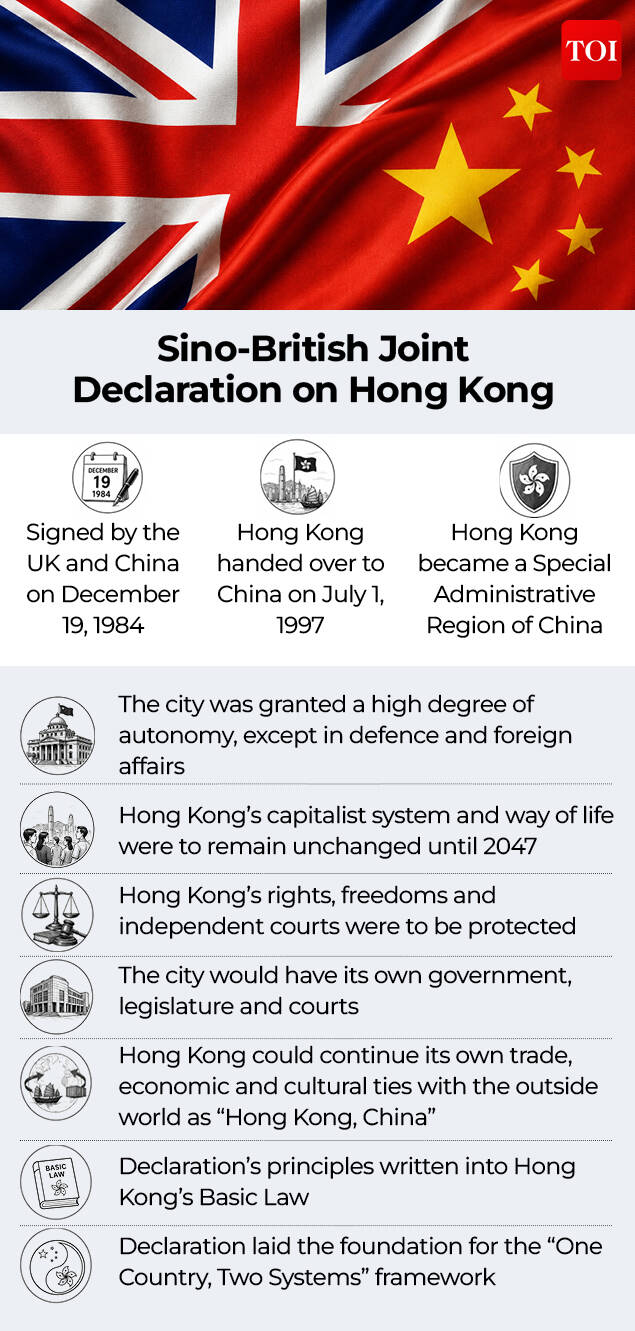
Although Hong Kong retains its own government and legal system, Beijing exercises sovereignty over the territory and has steadily expanded its political control. Hong Kong, a former British colony, returned to Chinese sovereignty in July 1997 under the terms of the Sino-British Joint Declaration. It has since been governed as a Special Administrative Region under the “one country, two systems” framework set out in its Basic Law.
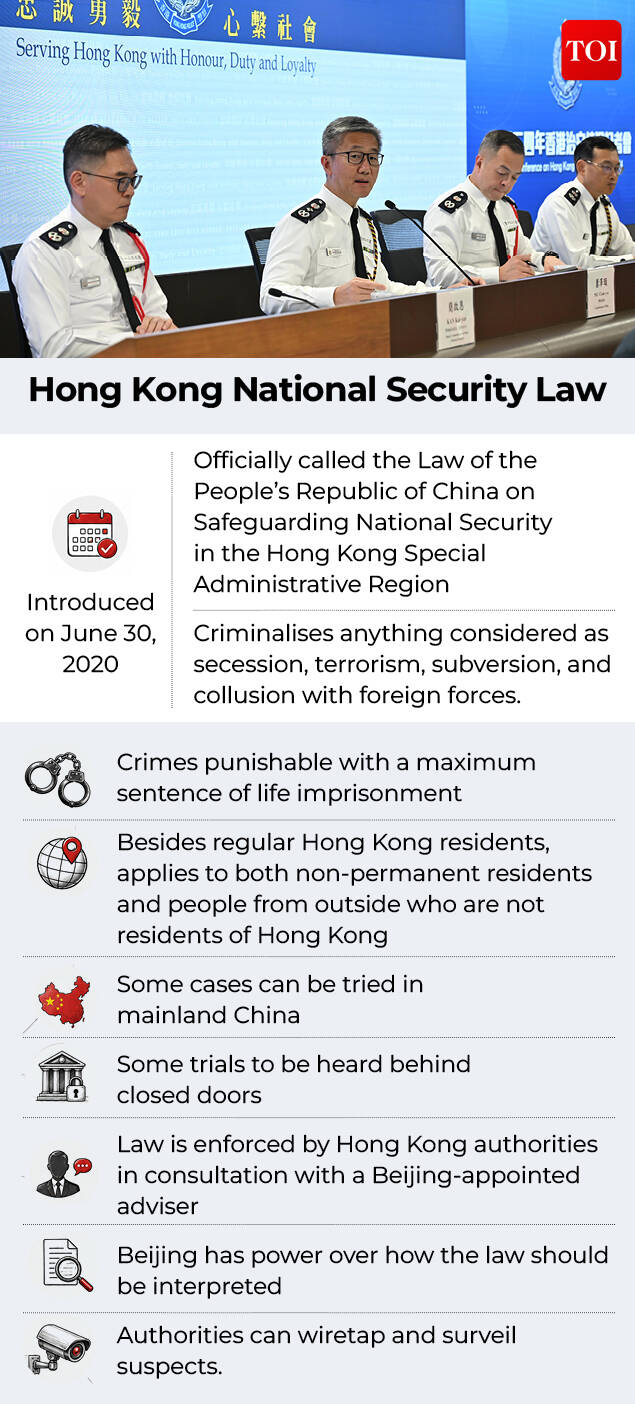
Beijing’s imposition of the National Security Law in June 2020, followed by Hong Kong’s passage of its own Article 23 security legislation in 2024, further expanded the authorities’ powers.
The three rounds of raids since March have been widely viewed by rights groups and critics as further evidence of Beijing's tightening control over Hong Kong.
On March 25, police arrested the owner and three staff members of the Book Punch store for selling allegedly seditious publications.
On June 24, two booksellers from Hunter Bookstore were arrested on similar charges.
The latest to be raided were Have A Nice Stay and Greenfield Book Store. Founded by a group of former journalists, Have A Nice Stay had announced just the previous day that it would cease operations on August 30, citing financial difficulties and an elusive "red line." On July 29, Greenfield Book Store also announced it would cease operations due to expiry of lease without sharing any further details.
The arrests have intensified concerns among rights groups and members of the publishing community about mounting pressure on independent booksellers.
Hong Kong’s independent publishing legacy - and its decline
According to experts, Hong Kong was, for decades, the centre of independent Chinese-language publishing. Books banned in mainland China were written, published and sold in the city, making it a vital source of uncensored Chinese-language literature.
Official data released in July 2003, six years after Hong Kong's control was transferred to China, showed that the number of publishing companies remained above 4,500 each year between 1992 and 2000 before falling to 3,950 in 2001.
By 2024, Hong Kong had 1,070 publishing establishments, down around 73% from the 3,950 recorded in 2001.
Employment in the publishing industry has also declined sharply, from 38,856 people in 1992 to just 12,040 in 2024—a drop of 69%.
Experts attribute the decline to Beijing’s tightening control over Hong Kong, further reinforced by the National Security Law, as well as earlier incidents such as the disappearance of booksellers linked to Causeway Bay Books in 2015 and similar action against other independent publishers.
The latest raids, therefore, suggest that the pressure on Hong Kong's independent publishing industry is far from over, raising fresh questions about its future.
The undefined ‘red line’ in Hong Kong
The 2026 raids have once again drawn attention to an enduring question in Hong Kong's publishing industry: where is the elusive "red line" invoked by Have A Nice Stay, one of the bookstores raided this year?
Authorities have not disclosed which publications formed the basis of the operation. Responding to questions after the raids, Hong Kong's Secretary for Security, Chris Tang, said booksellers had a “responsibility to ensure the books they sold did not endanger national security.”
"If you are a bookseller, you have the responsibility to make sure the books you sell won't endanger national security. We will not let criminals off the hook like this," Tang was quoted by AP as saying.