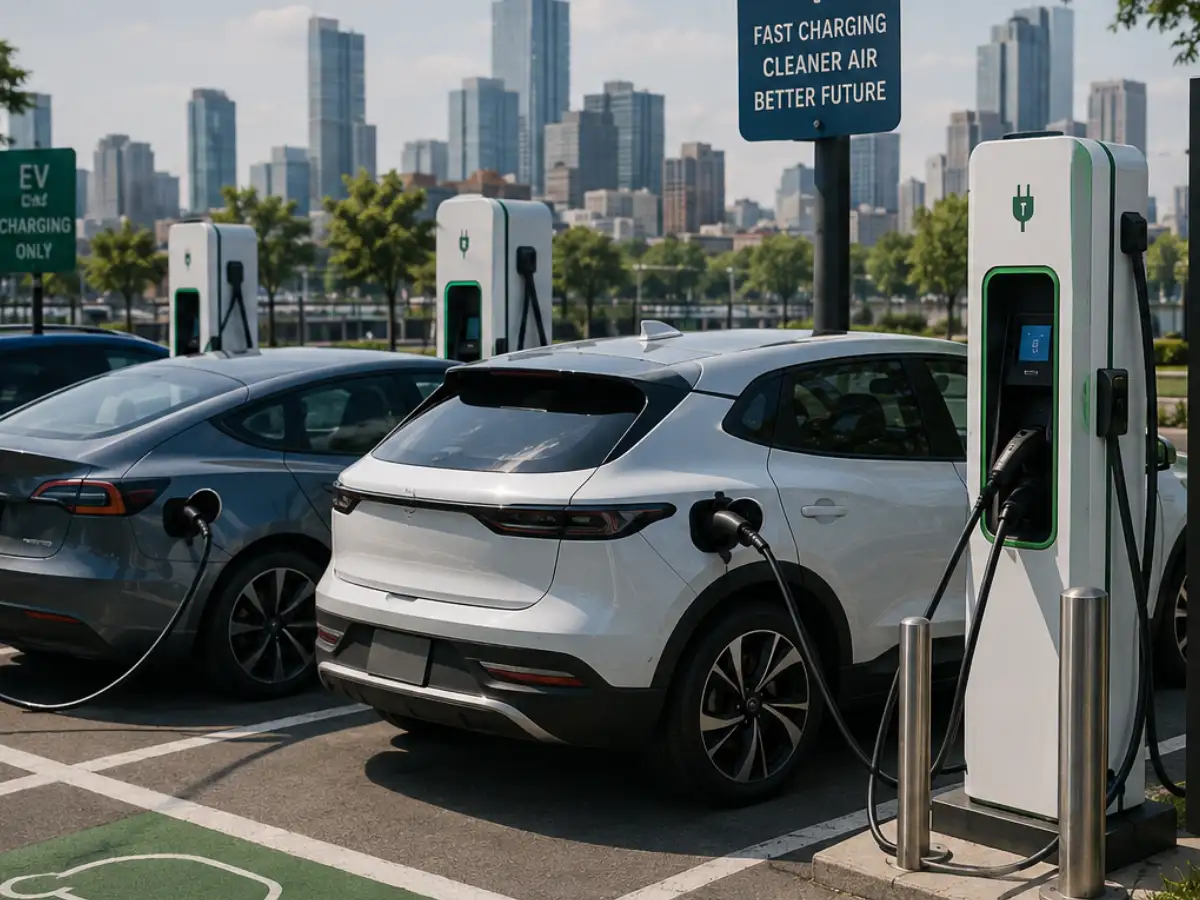
Electric vehicles were sold as the future of clean transportation. And now the numbers are proving this, not just in reduced emissions but in lives saved.
A sweeping new study published in Nature Health has found that China’s rapid adoption of electric and hybrid vehicles what the country calls “new energy vehicles” has prevented an estimated 262,000 premature deaths. By combining satellite data and machine learning, researchers measured air pollution in 150 Chinese cities. They compared the actual pollution levels to a hypothetical situation in which every vehicle on the road still used a combustion engine. The results are stunning. Carbon monoxide levels fell by more than 30%, while fine particulate matter, tiny particles that get deep into the lungs, was down by almost 24%.
These are not mere abstract statistics. Long-term exposure to these pollutants directly causes heart disease, lung cancer, stroke and chronic respiratory illness. As pollution levels fall, people are living longer. That’s exactly the case right here.
What it actually looks like on the ground
China didn't stumble into this. The Chinese government has spent hundreds of billions of dollars over the past two decades on EV subsidies, tax incentives and charging infrastructure. It worked: by 2025, more than half of all new cars sold in China were electric. That degree of market saturation has a measurable ripple effect on the air millions of people breathe every day.
The study's co-author Qiangqiang Yuan, a remote sensing researcher at Wuhan University, described the findings as “both encouraging and sobering.” Encouraging because the health benefits are real. Sobering, because those improvements have not been evenly spread out, with cities with lower incomes and less EV adoption seeing much smaller gains. In places that did not have solid charging networks or robust air-quality enforcement, pollution numbers hardly moved. In other words, the EV transition is only as good as the infrastructure behind it.