In the past five years, the number of expats working in China has risen by 18%, while the number entering the US has declined, according to data from the Centre for Future Studies. In China, the number of expats grew from 31,160 in 2006/07 to 38,000 in 2010/11.
Economists predict China will overtake the US as the world's largest economy by 2018. Even if China's growth rate slows, the country will still account for 30% of the world's economic growth to 2017, according to KPMG. With manufacturing in China hitting a two-year high in January 2013, those with a sense of adventure and the right skills are flocking there - and loving what they see.
HSBC's most recent Expat Explorer survey found that 69% of expats in China have more disposable income, while nearly half (44%) believe the country offers them a higher quality of life.
Scottish-born expat Scott Fraser works in Beijing for language firm Rosetta Stone. "China's been a completely wonderful experience," he says. "The system of support is so great, and so immediate, that within a few weeks of arriving, I had more friends than I'd built up in London."
In 2011, GE announced it was relocating executives from its x-ray division to new global headquarters in Beijing, while Ford will double its number of dealerships in China by 2015. Other companies investing in China include Coca-Cola ($4bn between 2012 and 2014) and FedEx.
Around 85% of China expats work for international firms, with the largest proportions in sales and marketing (30%), banking and financial services (25%), and engineering (15%).
Shanghai and Beijing are the most popular destinations, while Hong Kong – just off China's south coast – has been an expat success story.
Since Britain ceded control of the territory in 1997, Hong Kong has attracted rising numbers of foreign workers, particularly Britons and Americans. Between 2010 and 2011, the number of work visas issued to UK citizens jumped by 45% to 3,907, while for US citizens that figure rose by 96%, to 4,290.
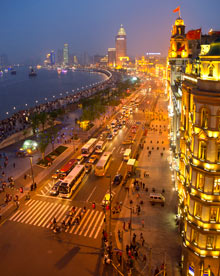
Photograph: Tom Horton/Getty Images
Hong Kong, Shanghai and Beijing have their own unique characters and attract very different expats. Hong Kong is a relentlessly busy hub that appeals to those who want to make their mark, but Miles Young – worldwide chairman of advertising and PR agency Ogilvy & Mather – says others will love the slower pace of life and contemplative atmosphere of Beijing.
"This is a country that has nothing but opportunity," says Young. "The sheer speed of development will inspire and astonish. If you're prepared for the unexpected – and the fact you can go to bed one night and wake up to find a tower block has gone up across the street – this is the place for you."
English is the business language in Hong Kong and Shanghai, which accounts for their popularity. But for expats to really fit in culturally, learning basic Cantonese (Hong Kong) or Mandarin (China) is beneficial. "Small efforts are respected," says Young. "Professional adaptation with cultural sensitivity – that goes a long way."
For those that do get some basic language under their belt, China can very quickly feel less of a bewildering, and more of a beguiling place, as can a few insider tips, such as this one posted by an expat living in China on the HSBC's Expat Explorer website: "Get a driving licence first and buy a car, as renting a car with a driver is quite expensive, unless you have company car offered in your package. It would be more enjoyable to explore the city and nearby areas with a car. Besides, taxis in China aren't easily available during rain or peak hours."
Visit the HSBC Expat Explorer website for more expat experiences, hints and tips on China and Hong Kong.
China's top cities
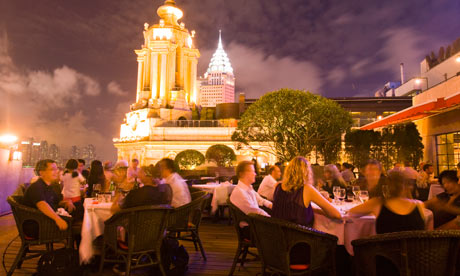
Shanghai
Population:
23 million
In brief:
Financial as well as shipping hub (it is the busiest container port in the world); home to major commerce, technology and transport industries. Heavy industries accounted for 78% of its gross industrial output in 2009.
Where expats go:
Hongqiao (apartments and villas) or further out towards Pudong (to be away from the downtown area).
What they say:
"Shanghai has always been the westerner's choice. It's highly multi-cultural, has a more capitalist feel and lifestyle, and even 'looks' more European. It's very easy to integrate into." – James Hardy, director of international business at Alibaba.com.
"You have to be the best of the best to flourish in Shanghai. It's highly competitive, but the reward is fantastic support systems. It's a good place to bring up children." – Miles Young, worldwide chairman of Ogilvy & Mather.
Hong Kong
Population:
7 million
In brief:
International finance centre with one of the highest income per capita levels in the world. Popular with professional/financial/managerial classes. Expats are attracted by low taxation (equivalent to around 20-30% more pay), good transport, managerial roles and proximity to China.
Where expats go:
Research by Mercer ranks Hong Kong as the eighth most expensive city for expats, down from fifth place. Expats tend to gravitate to Discovery Bay, Causeway Bay and Park Island.
What they say:
"Great for families, but highly competitive and with a culture of long work hours." – Miles Young, worldwide chairman of Ogilvy & Mather.
Beijing
Population:
19.6 million
In brief: Largely a financial and bureaucratic centre, but increasingly attracting venture capitalists. Home to 41 Fortune 500 companies (second only to Tokyo), the service sector is responsible for 73% of the city's GDP.
Where expats go:
Around Chaoyang, to the east of Tiananmen. Most families tend to live in expat villa housing in suburban Shunyi, close to the airport and a 50-minute drive to the city during peak hours.
What they say:
"Beijing has far fewer expats as a percentage of the population. It's less friendly, but it has great restaurants and night life. Accommodation is expensive – more than Shanghai – but everything else is relatively cheaper. It's worth remembering that no Chinese city is in the world's top 30 most expensive places to live." – James Hardy, director of international business at Alibaba.com.
Cities to watch
In China there are 170 cities with more than 1 million people. Many of these so-called second-tier cities are located in central China and have benefited from stimulus packages that have provided better highways and faster trains.
Nanjing
Why:
The capital of Jiangsu province has a population of 7 million and is the second-largest commercial centre in east China, after Shanghai. One of the largest petrochemical centres in the country.
Chengdu
Why:
Automotive-heavy, plus a centre for logistics, commerce, finance, science and technology. The capital of Sichuan province is home to companies such as JP Morgan, Henkel, IBM, Cisco, SAP, Siemens, Canon, HP and Microsoft.
Suzhou
Why:
Close to Shanghai, but less frequented by expats, it offers great opportunities, particularly in heavy industry. The Suzhou Industrial Park is home to the largest co-operative project between the Chinese and Singaporean governments.
Wuhan
Why:
This industrial, financial, commercial and educational hub in central China is experiencing 10.5% growth. This is partly because of the Three Gorges dam (the world's largest power station) and a high-speed rail connection to China's third-largest city, Guangzhou.
Dalian
Why:
This port city in north-east China has the Yellow Sea to the east and the Bohai Sea to the south and west. An international shipping and logistics hub, it has a population of 7 million – 2 million more than Scotland.
Find out more about the expat lifestyle
You can read more than 800 tips from expats on 50 countries, from Australia to Zambia, and 18 themes with the HSBC Expat Hints & Tips tool. For a video introduction to expat banking and to find out how HSBC Expat can help you in your next move click here.