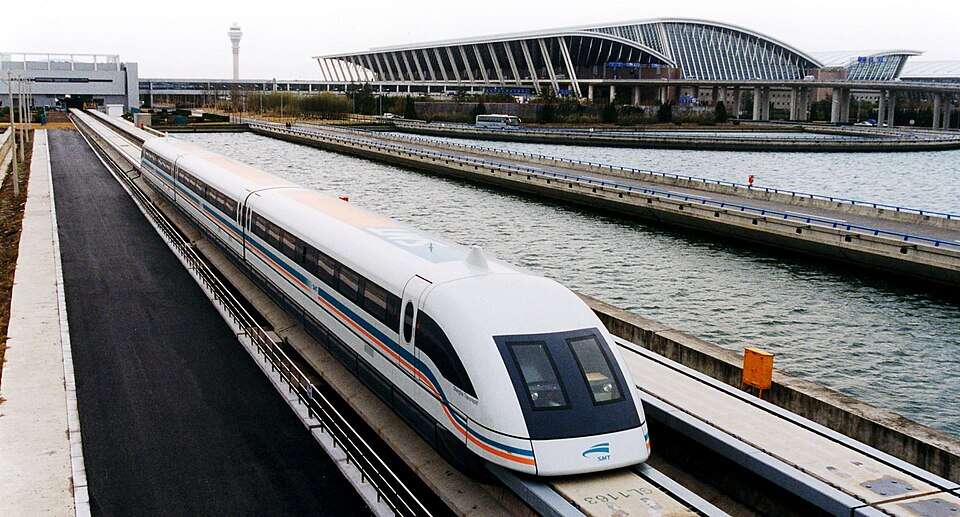
China is already home to one of the world's largest high-speed rail networks, and this new train has attracted global attention for its speed and design. The 600 km/h maglev train developed by China is among the fastest ground-based transport systems developed for commercial use.
Get breaking news anytime, anywhere. Download the TOI app now!
Unlike regular trains, maglev trains do not have wheels moving on the rails. According to the U.S. Department of Energy , they hover above the track using powerful magnets, allowing them to travel at very high speeds. Maglev technology is back in transport debates because it could cut travel times on routes where air travel and high-speed rail compete.
How does the 600 km/h maglev compare with conventional trains?
China's 600 km/h high-speed maglev prototype rolled off the production line in Qingdao on July 20, 2021. It was developed by CRRC, the country's largest rolling stock manufacturer, as an alternative to both high-speed rail and air travel. According to CRRC , the train can reach a maximum speed of 600 kilometers per hour (373 mph). It is one of the fastest ground transport systems developed for commercial use so far.
The maglev train differs from ordinary trains because conventional trains experience friction while moving on rails, whereas maglev trains use electromagnetic force to lift the train off the track surface. With no contact during movement, resistance is reduced, making higher speeds possible while also reducing mechanical wear. Magnetic levitation allows trains to run at high speed without wheel-to-rail contact.
How could it cut travel time in half?
One major benefit of maglev technology is that it can significantly reduce journey times on medium-distance routes. According to CRRC, while some journeys currently take about five hours by high-speed rail, the new maglev technology could reduce them to around two and a half hours, depending on the route.
In addition, CRRC says the train is best suited to routes of about 1,500 to 2,000 kilometers, where rail is slower, and airport check-in and security add time. It could become an option on busy routes linking major cities.
What enables the train to levitate?
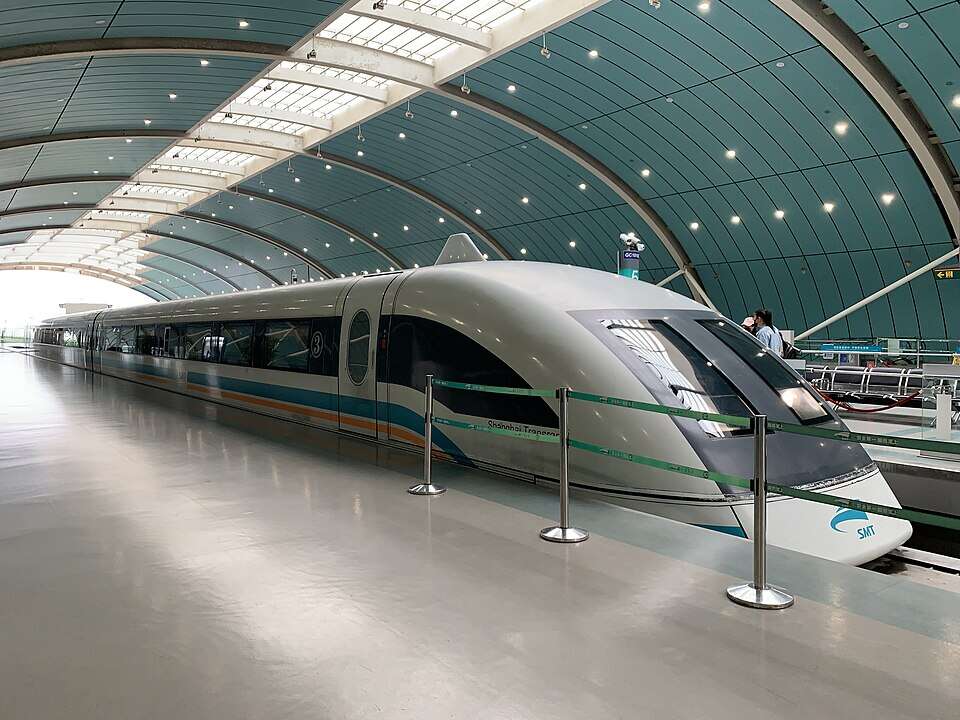
The train is designed to use electromagnetic levitation. According to the U.S. Department of Energy , magnets lift the maglev train from its specially designed guideway while magnetic fields keep it centered. A linear motor then propels the train forward. Since the train has no wheel-to-rail contact, it eliminates rolling resistance, leaving air resistance as the primary source of friction.
According to CRRC, the latest magnetic levitation train also features an improved braking system, lightweight aluminum couplers, a non-contact power supply system, and passenger amenities such as wireless charging and 5G connectivity. China operates several commercial maglev lines, including the Shanghai Maglev, which connects Pudong International Airport with the city, and the Changsha Maglev Express in Hunan province. Even though the 600 km/h train attracted global attention, it has not yet entered commercial service. China's current commercial high-speed maglev train is the Shanghai Maglev, which links Longyang Road Station and Shanghai Pudong International Airport.
The line began commercial operations in 2004 and can reach a maximum operating speed of 430 km/h, completing the roughly 30-kilometre journey in around seven to eight minutes. This new 600 km/h system will need its own guideway because maglev trains cannot run on normal rails.
Why can’t maglev trains be deployed everywhere?
Building a maglev system is far more expensive than upgrading an existing rail network because it requires specially built guideways, power systems and stations. According to the U.S. Congressional Research Service , maglev systems have not been widely adopted because of their high infrastructure costs and their inability to integrate with conventional rail networks. Building a maglev line requires an entirely new infrastructure system that is significantly more expensive than extending an existing railway.
The CRS paper also notes that the proposed Baltimore-to-Washington superconducting maglev project, spanning roughly 35 miles, was estimated in a draft environmental review released in January 2021 to cost between $10 billion and $13 billion, or approximately $285 million to $370 million per mile. While those costs are lower than some competing U.S. rail tunnel projects on a per-mile basis, the report notes that maglev still requires an entirely new right-of-way and guideway system. Governments must weigh whether projected passenger demand justifies the construction and maintenance costs.
Could maglev shape the future of travel?
With the world's largest high-speed rail network, China could expand rail options that are more environmentally friendly than short-haul flights, especially if electricity generation becomes cleaner in the future. Future investment will determine how the 600 km/h maglev is deployed, but the prototype already shows continued progress in magnetic levitation technology.
For travelers, the main advantage is reaching another major city in about half the time without flying. Even though widespread commercial use may still be some time away, the project offers a glimpse into how fast ground transportation could become.