BEIJING ��China's state-sponsored push to dominate technologies of the future looms as one of the biggest obstacles to prospects for resolution to the U.S. trade war.
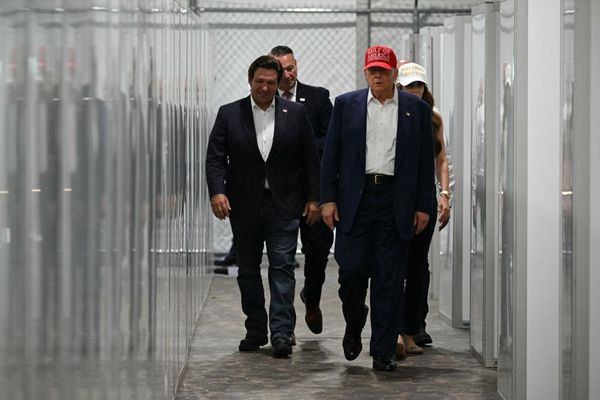
Officials from both sides are pessimistic about chances for a breakthrough when Donald Trump and Xi Jinping meet in Buenos Aires Nov. 30-Dec. 1. While Trump is still dangling the threat of more tariffs, Xi is digging in for a protracted conflict by cushioning the impact on growth and showing no signs that he's willing to compromise.
For Xi, shedding reliance on smokestack industries and dominating newer, cleaner technologies is central to his pledge to create a moderately prosperous society. Trump and his team of trade hawks want to maintain America's economic pre-eminence, and say they have the upper hand. "We have the economic advantage right now," Larry Kudlow, the head of Trump's National Economic Council, said in a recent speech.
Chinese officials are playing a longer game. While they have sought to downplay the significance of the Made in China 2025 plan to dominate industries like robotics, new-energy vehicles and aerospace and said it's open to foreign companies, too, they've shown no willingness to abandon the goals.
Below the radar is an unofficial document called "The Made in China 2025 Major Technical Road Map," better known as the Green Book after the color of its original cover. While the official Made in China 2025 plan has no targets for Chinese companies to seize domestic and global market share and even says implementation must be dominated by markets, the Green Book is full of goals.
China says the targets are nonbinding and unofficial. It is committed to ensuring the Made in China 2025 plan is applied equally to local and foreign companies, Minister for Industry and Information Technology Miao Wei wrote in an April article in the state-run China Daily newspaper. The ministry didn't respond to questions seeking comments on the Green Book.
Because of the targets, foreign companies in industries including medical devices and advanced agricultural equipment _ both priority industries in the Made in China 2025 plan _ may already be losing business, the U.S.-China Business Council said.
Industrial policy was central to Japan's rapid growth in the 1970s and 1980s and the Made in China 2025 plan draws heavily from Germany's "Industry 4.0 Plan" adopted in 2013. In the U.S., breakthroughs in semiconductors, nuclear power, imaging technology and others were all helped by industrial policy.
Even still, China's 2025 plan was a game changer for economic relations with America and remains a sticking point.
����
(Yinan Zhao and Dandan Li contributed to this report.