MANILA (Reuters) - Shanghai steel rebar futures jumped nearly 3 percent on Monday as Chinese markets reopened after a week-long holiday, with investors anticipating production cuts in the world's top steel producer as the country fights smog.
Prices of steelmaking raw materials iron ore and coking coal fell, reflecting worries over weaker demand.
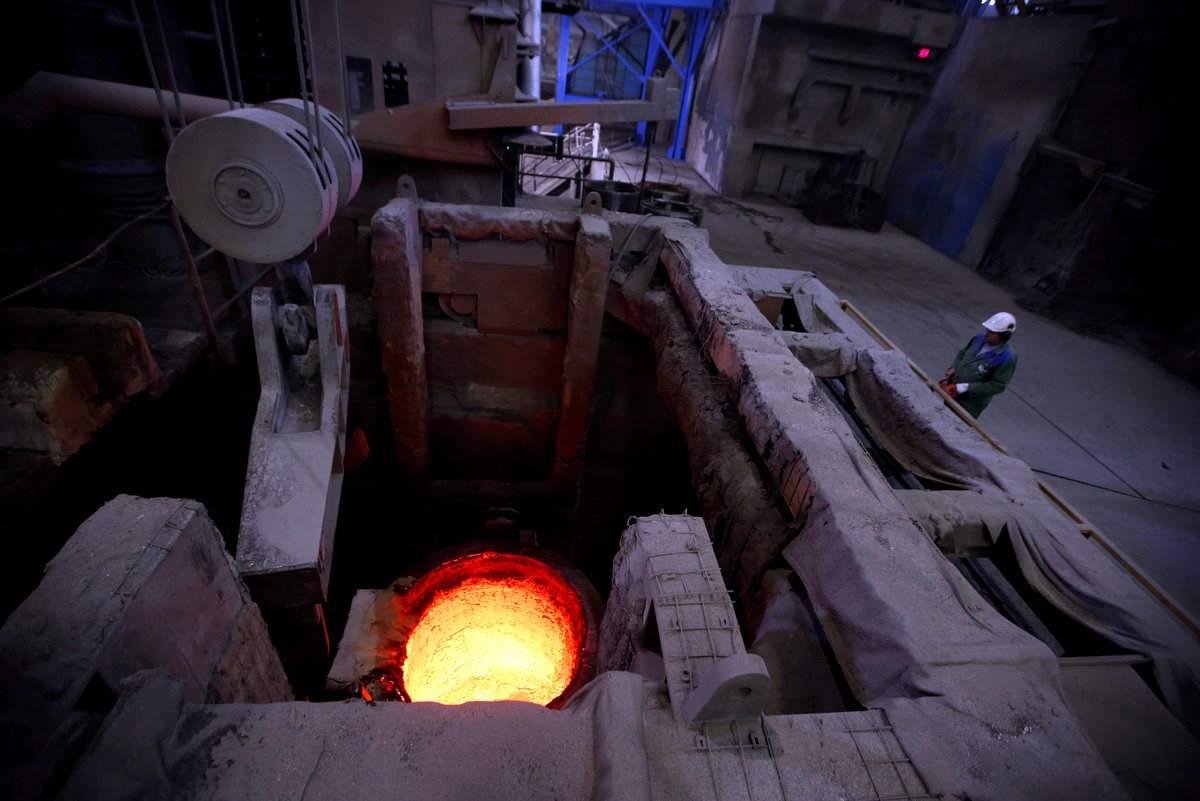
Chinese authorities have ordered heavily air-polluting industries including steel to curb output and cut emissions during the four-month winter heating period that typically begins on Nov. 15.
Some cities have already ordered its mills to reduce output. The city of Handan in the top steelmaking province of Hebei has told its steel mills to halve output from Oct. 1 until March.
The most-active rebar on the Shanghai Futures Exchange <SRBcv1> rose as much as 5.3 percent from the close on Sept. 29 to 3,795 yuan ($573) a tonne, the highest since Sept. 21. The construction steel product later cut gains and settled at 3,701 yuan, up 2.7 percent.
Chinese markets were shut from Oct. 2 to 6 for the National Day holiday.
The main driver behind the spike in steel prices is the "winter cuts and we need to pay attention to detailed plans of the different provinces to measure the material impact on steel production and supply," said Kevin Bai, a consultant at CRU.
But Bai said the production cuts would also coincide with the seasonal downturn in consumption during winter, possibly muting any impact on supply and demand conditions.
If all 28 Chinese cities covered by the restrictions slash production by 50 percent, around 45.67 million tonnes of crude steel output will be lost, said Cao Ying, an analyst at SDIC Essence Futures, told an industry conference in Qingdao late last month.
That is equal to nearly 6 percent of China's 2016 output.
Iron ore futures reversed initial gains to trade lower amid ample supplies. The most-traded iron ore on the Dalian Commodity Exchange <DCIOcv1> closed down 2.1 percent at 442.50 yuan per tonne.
Stockpiles of iron ore at China's ports rose 2.35 million tonnes from the previous week to 133.2 million tonnes as of Sept. 29, just before China went on holiday, according to SteelHome consultancy. The increase in port stocks followed an eight-week decline.
Coking coal futures <DJMcv1> closed 3 percent lower at 1,091 yuan a tonne, after falling to as low as 1,076.50 yuan intraday, a level last seen on July 6. Coke <DCJcv1> slipped 0.8 percent to 1,884 yuan.
($1 = 6.6270 Chinese yuan)
(Reporting by Manolo Serapio Jr.; Editing by Christian Schmollinger and Subhranshu Sahu)