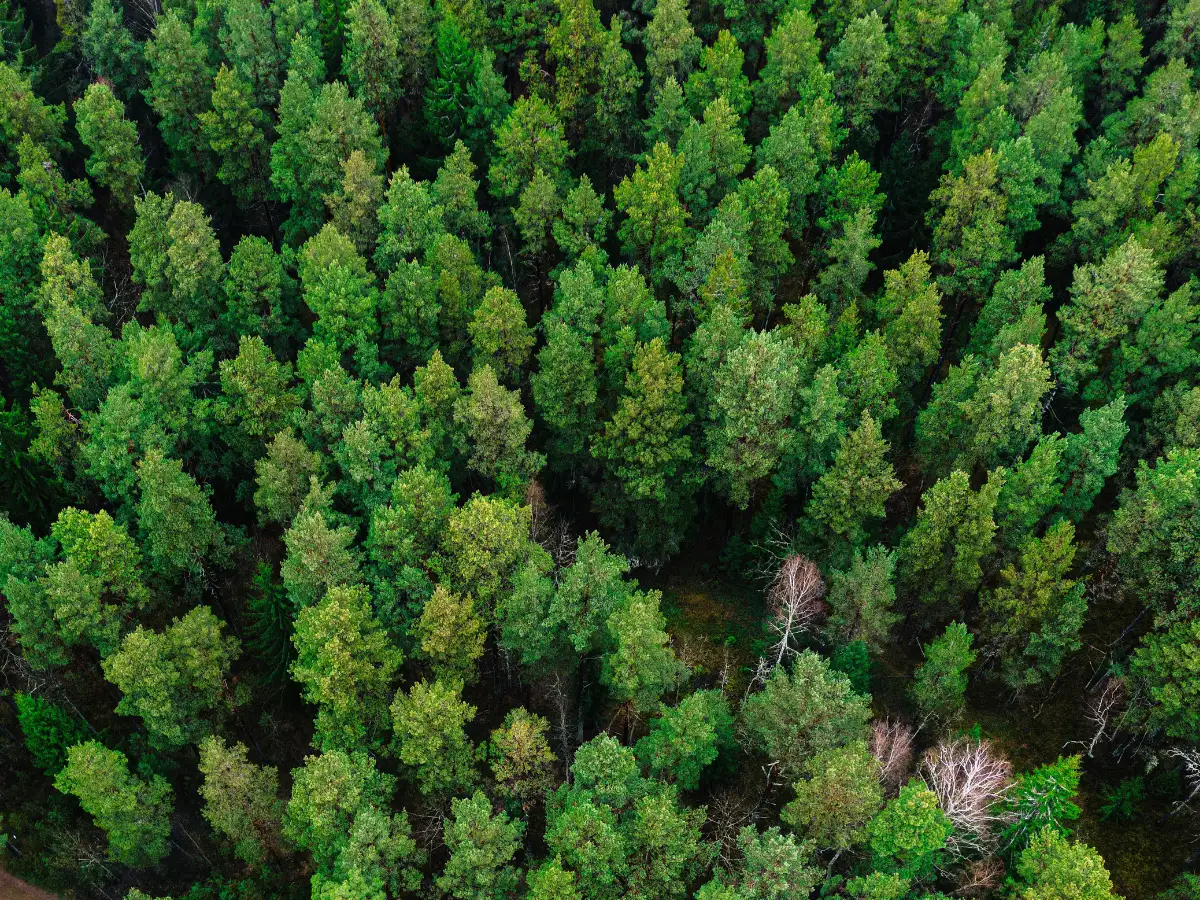
If you've ever planted a tree on Earth Day and wondered if it actually does anything, China has an answer that might surprise you. China's Three-North Shelterbelt Program, launched in 1978 to hold back the Gobi and Taklamakan deserts, has resulted in some 66 billion trees planted to date, according to Live Science's coverage of the research. According to a new 2026 study published in Geophysical Research Letters, these human-planted forests are now growing faster than the forests nature made on its own.
The researchers used satellite records of leaf area index, a canopy-density proxy linked to carbon uptake, and found that planted forests expanded their leaf area 66% faster than natural forests. Even after adjusting for age and growing conditions, the planted stands still outpaced natural ones by 4.6%, with the strongest gains in mixed and evergreen forests.
If you care about climate change, but wonder if large-scale tree planting makes any difference, this is the kind of hard data that says it does.
What the scientists actually found
The study was led by landscape ecologist Yuhang Luo at Peking University’s Shenzhen campus. Luo and his team set out to see if planted forests and natural forests respond differently to rising carbon dioxide and a warming climate. In a study in Geophysical Research Letters, Luo and colleagues used satellite data to track something called the leaf area index, essentially a measure of how thick and leafy a forest’s canopy is. A thicker canopy can indicate more photosynthesis and greater carbon uptake, though it is only an indirect measure.