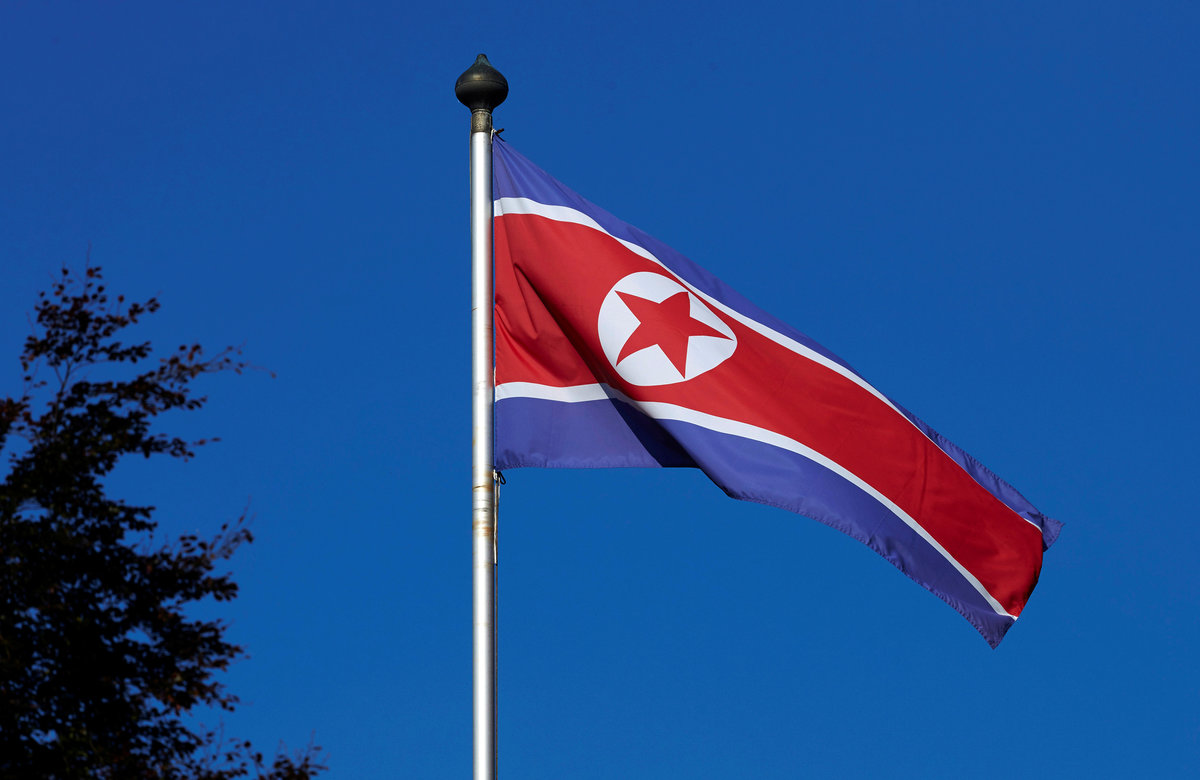
UNITED NATIONS/WASHINGTON (Reuters) - North Korea said on Saturday targeting the U.S. mainland with its rockets was inevitable after "Mr. Evil President" Donald Trump called Pyongyang's leader "rocket man", further escalating rhetoric over the North's nuclear weapons and missile programs.
North Korean Foreign Minister Ri Yong Ho's remarks to the United Nations General Assembly came hours after U.S. Air Force B-1B Lancer bombers escorted by fighters flew in international airspace over waters east of North Korea in a show of force the Pentagon said showed the range of military options available to Trump.
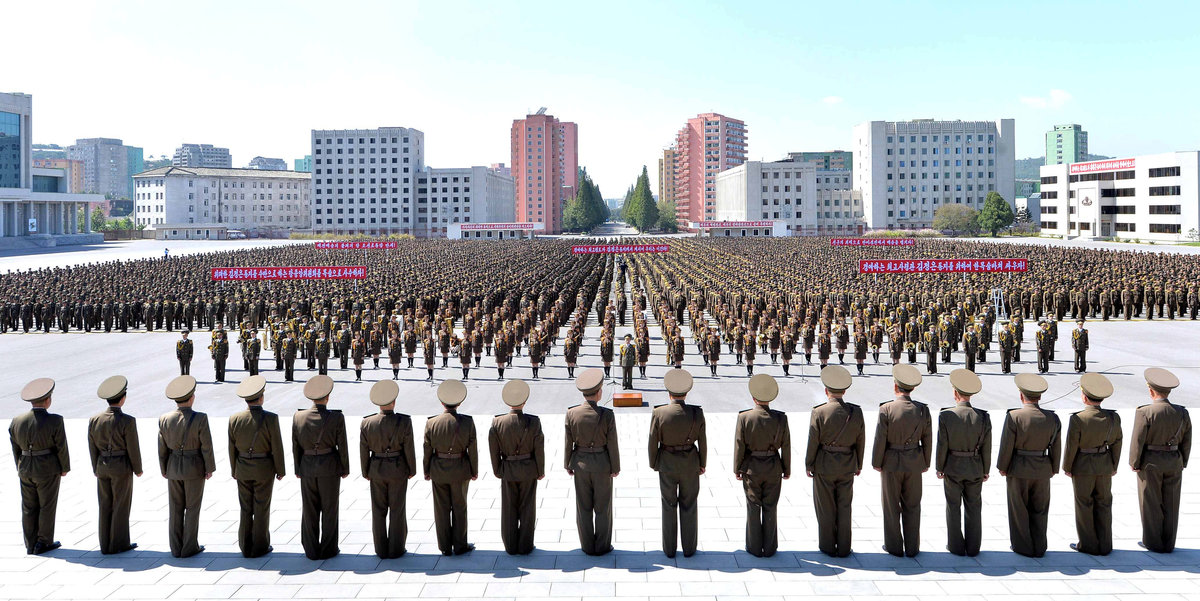
Ri's speech capped a week of rising tensions between Washington and Pyongyang, with Trump and North Korean leader Kim Jong Un trading insults. Trump called Kim a "madman" on Friday, a day after Kim dubbed him a "mentally deranged U.S. dotard."
On Saturday, the mudslinging continued with Ri calling Trump "a mentally deranged person full of megalomania and complacency" who is trying to turn the United Nations into a "gangsters' nest". Ri said Trump himself was on a "suicide mission" after the U.S. president had said Kim was on such a mission.
"'President Evil' is holding the seat of the U.S.
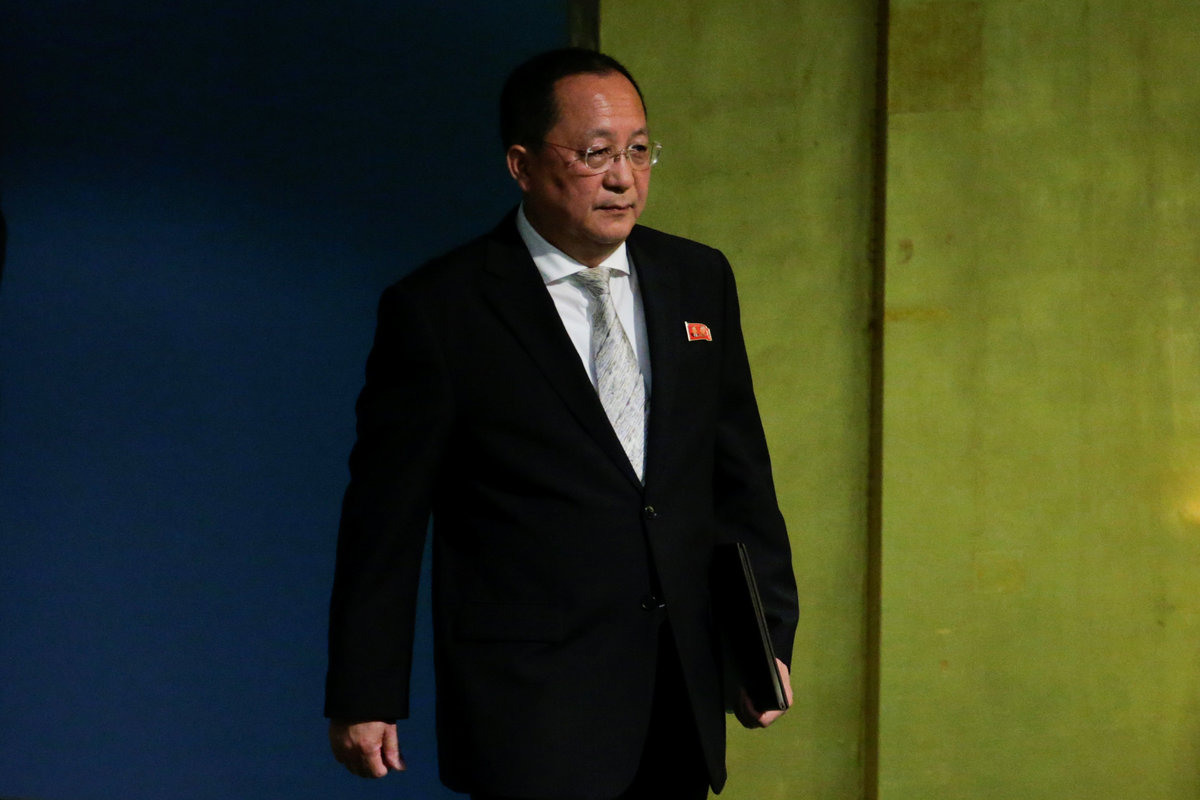
President," Ri said, warning that Pyongyang was ready to defend itself if the United States showed any sign of conducting a "decapitating operation on our headquarters or military attack against our country".
“Now we are finally only a few steps away from the final gate of completion of the state nuclear force,” Ri told the annual gathering of world leaders.
He said sanctions would have no effect on Pyongyang's resolve to develop its nuclear weapons, with the ultimate goal being "balance of power with the U.S."
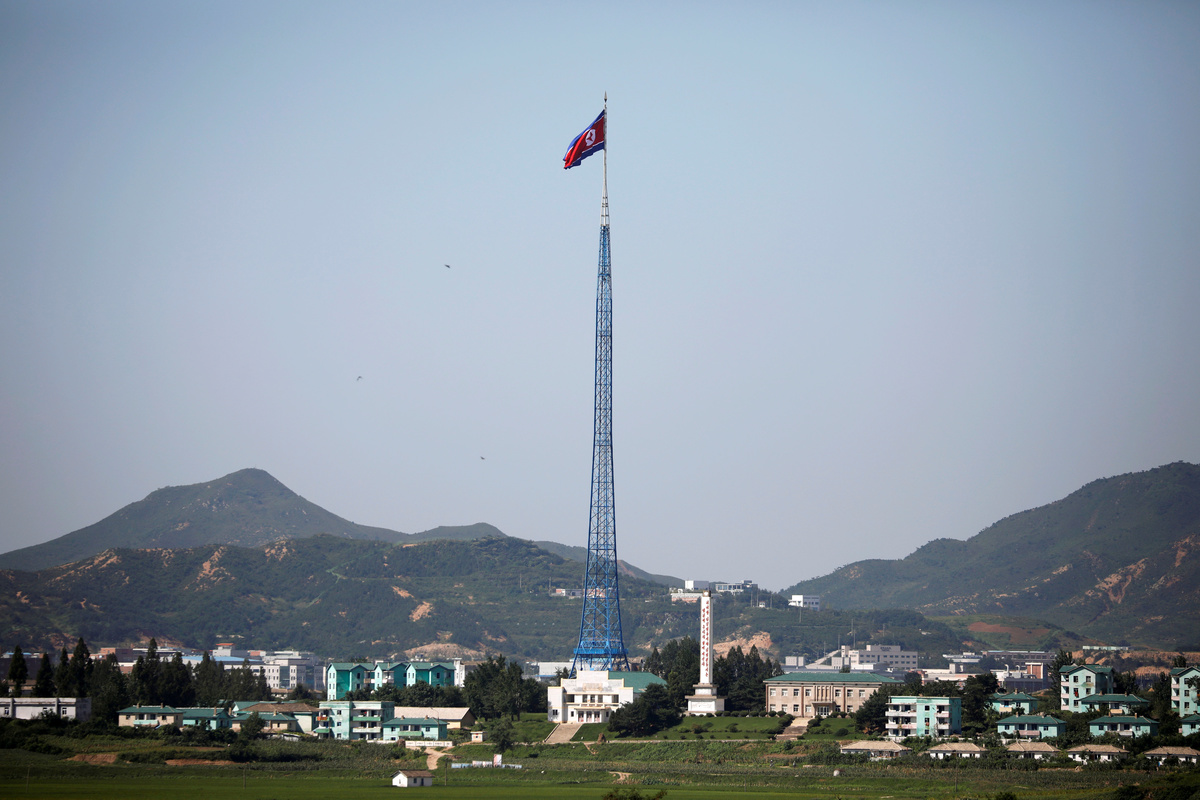
Trump announced new U.S. sanctions on Thursday that he said allow targeting of companies and institutions that finance and facilitate trade with North Korea.
Earlier this month the U.N. Security Council unanimously adopted its ninth round of sanctions on Pyongyang to counter its nuclear and ballistic missiles programs.
The U.S. bombers' flight was the farthest north of the demilitarized zone separating North and South Korea that any U.S. fighter jet or bomber has flown in the 21st century, the Pentagon said.
"This mission is a demonstration of U.S. resolve and a clear message that the President has many military options to defeat any threat," said Pentagon spokeswoman Dana White.
"We are prepared to use the full range of military capabilities to defend the U.S. homeland and our allies."
North Korea has launched dozens of missiles this year, several flying over Japan, as it accelerates its programme aimed at enabling it to target the United States with a nuclear-tipped missile.
Pyongyang conducted its sixth and largest nuclear test on Sept. 3 and has threatened to test a hydrogen bomb over the Pacific.
Ri met with U.N. Secretary-General Antonio Guterres after delivering his speech. Guterres expressed concern to Ri over the escalating tensions and appealed for de-escalation, the United Nations said in a statement.
The Pentagon said the B-1B bombers came from Guam and their U.S. Air Force F-15C Eagle fighter escorts came from Okinawa, Japan. Previous shows of force with bombers have stayed south of the demilitarized zone.
The patrols came after officials and experts said a small earthquake near North Korea's nuclear test site on Saturday was probably not man-made, easing fears Pyongyang had exploded another nuclear bomb just weeks after its last one.
China's Earthquake Administration said the quake was not a nuclear explosion and had the characteristics of a natural tremor.
The CTBTO, or Comprehensive Test-Ban Treaty Organization, which monitors nuclear tests, and officials of the South Korean meteorological agency also said they believed it was a natural quake.
The earthquake, which South Korea's Meteorological Agency put at magnitude 3.0, was detected 49 km from Kilju in North Hamgyong Province, where North Korea's known Punggye-ri nuclear site is located, the official said.
All North Korea's nuclear tests registered as earthquakes of magnitude 4.3 or above. The last registered as a magnitude 6.3.
Tensions have continued to rise around the Korean Peninsula since Pyongyang carried out its sixth test, prompting a new round of U.N. sanctions.
Trump told the United Nations on Tuesday the United States would "totally destroy" North Korea if it threatened the United States or its allies.
North Korea's nuclear tests to date have all been underground, and experts say an atmospheric test, which would be the first since one by China in 1980, would be proof of the success of its weapons programme.
The United States and South Korea are technically still at war with North Korea because the 1950-53 Korean conflict ended with a truce and not a peace treaty.
The North accuses the United States, which has 28,500 troops in South Korea, of planning to invade and regularly threatens to destroy it and its Asian allies.
GRAPHIC: http://fingfx.thomsonreuters.com/gfx/rngs/NORTHKOREA-MISSILES/010031V7472/index.html
GRAPHIC: http://fingfx.thomsonreuters.com/gfx/rngs/NORTHKOREA-MISSILES/010050Y124J/index.html
(Additional reporting by Andrew Galbraith in Shanghai, Ben Blanchard in Beijing, Christine Kim and Heekyong Yang in Seoul, Michael Shields in Zurich, Denis Pinchuk in Moscow, David Brunnstrom at the United Nations and John Walcott and Idrees Ali in Washington; Writing by Yara Bayoumy; Editing by James Dalgleish)