In 2007, Carolyn Drake travelled to the province Xinjiang Uyghur in the remote west of China, over 2,000 miles from Beijing. “I was immediately confounded,” she writes in her intriguing new photobook, Wild Pigeon. “There were farms growing out of the desert, city streets that twisted and turned like mazes, and the people were loud, friendly and seemed to be living their lives publicly, on the streets and with open doors.”
Over the next seven years, Drake took several trips throughout the region, photographing landscapes and people and listening to the locals tell their often allegorical stories. The place – and its people – remained mysterious and elusive. “A blacksmith arranged a secret rendezvous for our meetings because he didn’t want his neighbours to know he spoke English … When I decided to wear a headscarf and eat halal, a family took me in because I was interested in Islam, then closed me out, deciding I wasn’t.”
She also found a place undergoing rapid transformation, with old neighbourhoods demolished for new apartment blocks, and an influx of Han Chinese into the expanding cities. In 2009, riots broke out in the capital, Urumqui, and in their wake, mass arrests were made and many Uyghurs were imprisoned or “disappeared”. Residents were forbidden to speak to outsiders. Drake continued to make pictures, but “the political climate had placed a barricade between me and the people”. It was out of this increasing frustration that Wild Pigeon emerged.
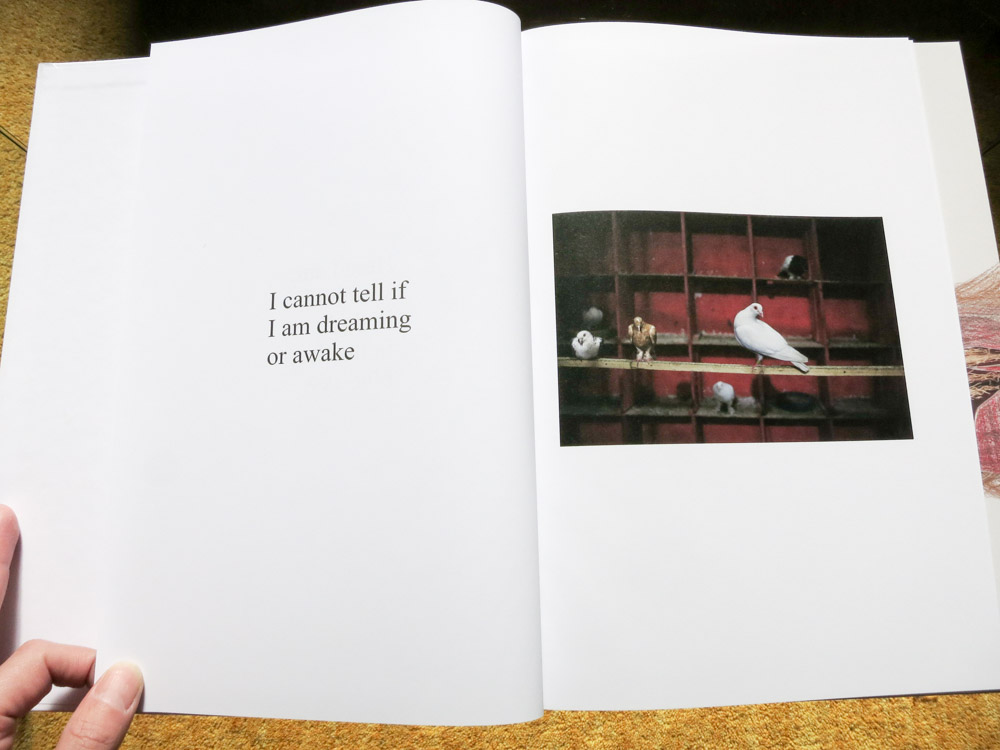
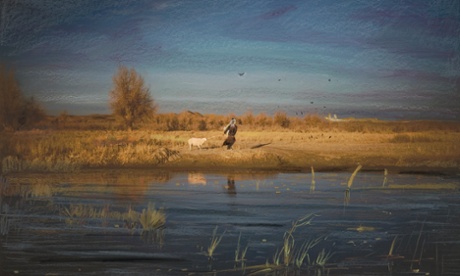
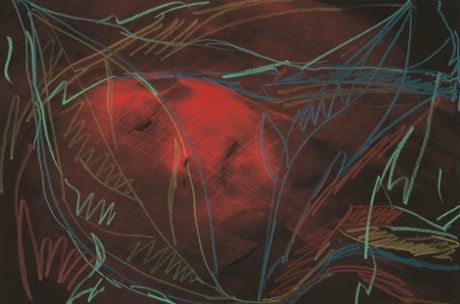
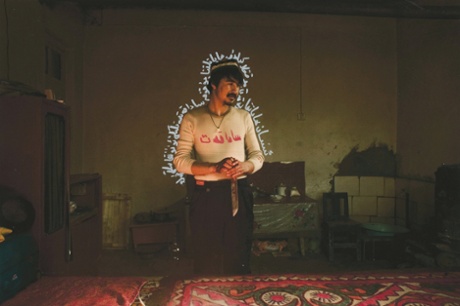
Like Drake’s previous book, Two Rivers, Wild Pigeon is elaborately designed, with its various sections printed on pages of two different widths. It slips from the quietly observational to the fragmentary, with collages and photographs that have been drawn over in often childlike scrawls. Each section is punctuated by lines from an allegorical short story by the Uyghur author and essayist Nurmuhemmet Yasin. Wild Pigeon is essentially a short story collection, both written and visual, that conjures a profound sense of place while reflecting that place’s essential mystery. It begins with the words: “I cannot tell if I am awake or dreaming.” That sense of being suspended between reality and dreamtime is echoed in Drake’s intriguing photographs. In one early shot, what looks like a small graveyard bedecked with prayer flags rises out of the desert. In another, a woman stares out over a river in which children sit in a bright boat. Trees shimmer on the surface of the calm water and a girl wades towards the children. As with many of her images, things utterly real are imbued with a heightened, almost serene sense of wonder.
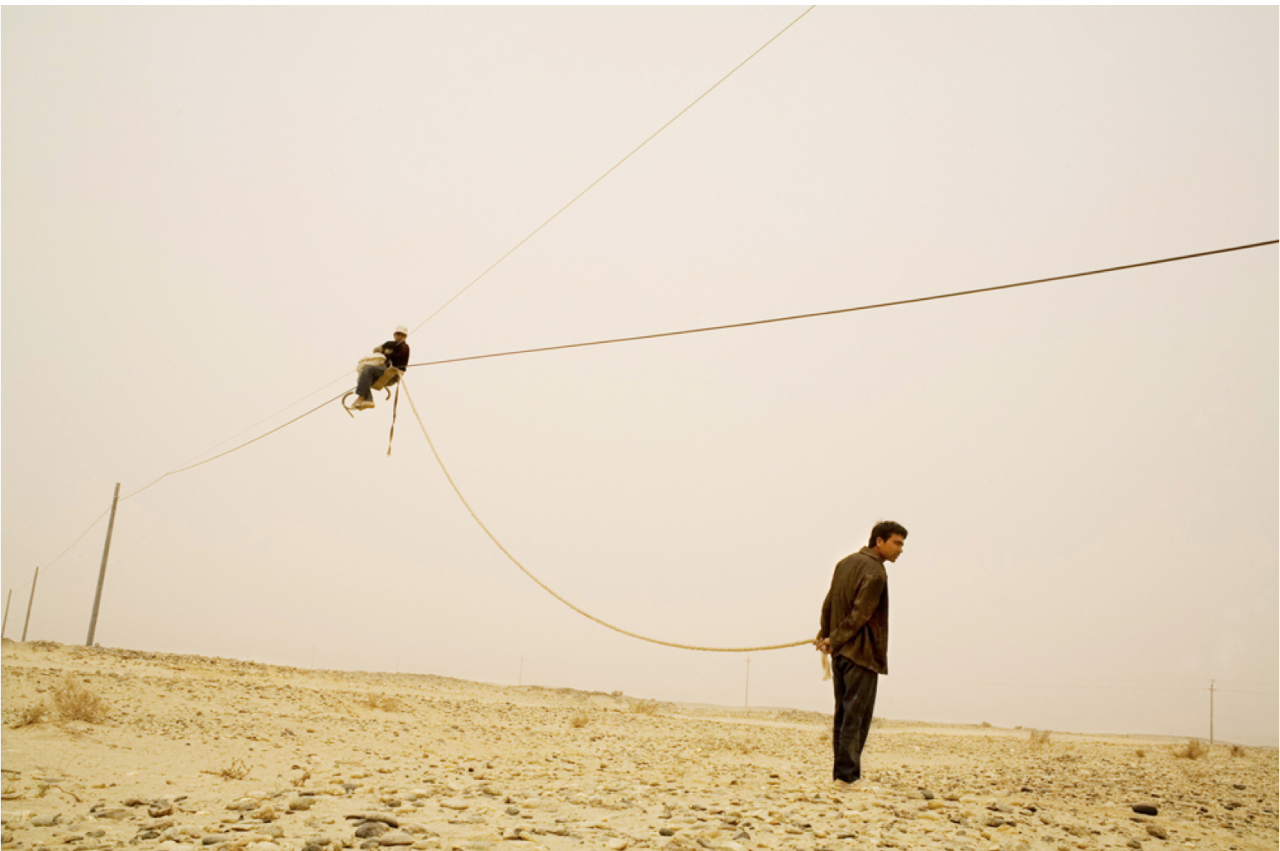
Likewise, a beautiful image of a worker suspended on a telegraph wire and attached by a long dangling rope to a man on the ground, who is gazing away daydreamily. The grey sky and flat earth add to the sense of isolation and otherworldliness.
Often Drake’s images seem to belong to another time, their colours muted and their subject matter either timeless or out of time – a procession of people and animals walking along a dusty road has the feel of a Victorian postcard and a vintage film still.
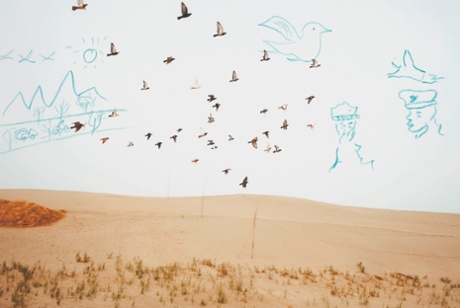
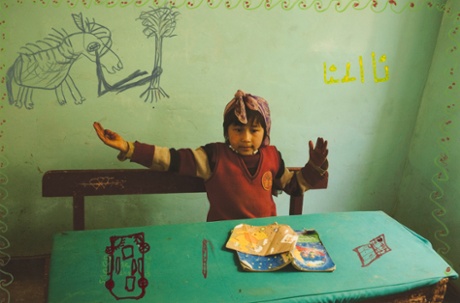
In the book’s second section, the makeshift collages and overwritten images could almost belong to another project – but the more thoughtful interventions have a strange poetry that perfectly fits the subject. A lone man stands on the edge of the desert. Around him, a tree and a flock of birds have been painstakingly drawn in coloured pencils. “Travelling with a box of prints, a pair of scissors, a container of glue, coloured pencils and a sketchbook, I asked willing collaborators to draw on, reassemble and use their own tools on my work,” explains Drake. “The collages and drawings they made are the product of our exchange, in all their roughness, ambiguity and risk.”
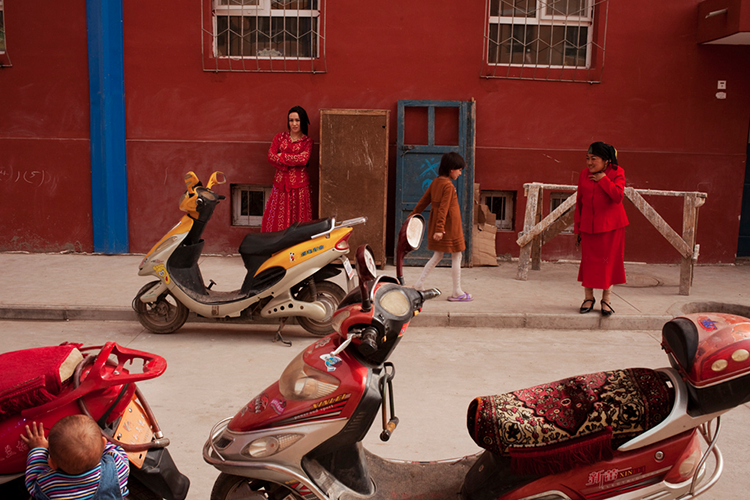
The third section shows Uyghurs at work and at rest: farmers, butchers, fruit-sellers, traditional women and their younger, trendier counterparts. Traditional rituals endure (the killing of a cow on a side street) and new ones emerge – a road full of scooters with customised seats made from traditional fabrics. The narrative ends in darkness, as Drake shoots at night in the alleyways of old cities and towns threatened by the unstoppable pace of China’s economic progress. The book may yet become a lyrical elegy for a way of life that held sway for centuries, but could pass into memory in just a few years.
The sense of loss is made all the more acute by the fate of the writer Nurmuhemmet Yasin. His short story originally appeared in 2004 and its popularity displeased the Chinese authorities. He was sentenced to 10 years in prison for “inciting separatism”. Though his prison sentence officially ended this year, his whereabouts – if he is still alive – remain unknown.
Carolyn Drake describes her book as “an allegory, retold through visual collaborations with Uyghurs in Xinjiang”. But it is Yasin’s thought-provoking story that most illuminates her images and casts light on the fate of the Uyghurs. Its final part is called A High Price for Freedom.