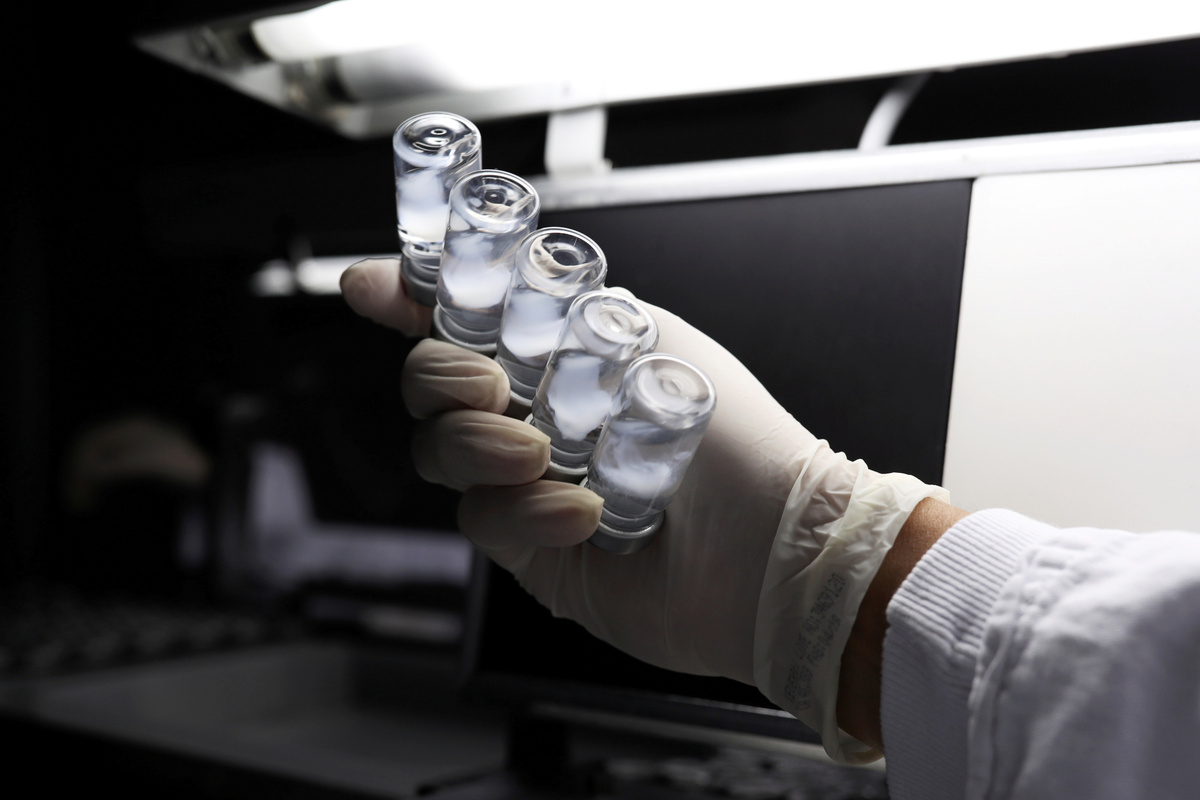
A unit of Sinovac Biotech could double annual production capacity of its CoronaVac COVID-19 vaccine to 1 billion doses by February, the group's chairman said on Wednesday.
More than 7 million doses of CoronaVac vaccine, one of the three China has included in its emergency vaccination programme, have so far been supplied to regions including the city of Beijing and Guangdong province, Sinovac Biotech Chairman Yin Weidong told a news conference.
While the first phase of Sinovac Life Sciences' existing production line can make 500 million CoronaVac doses in one year, another with annual capacity of 500 million doses could become operational by February, Yin said.
Researchers in Brazil on Tuesday released new efficacy data for the vaccine, for which there have been varying rates of success from trial sites in three countries.
Trials in different countries are designed differently, but the CoronaVac doses being tested came from the same batch, Yin said.
"These Phase III clinical trial results are sufficient to prove that CoronaVac vaccine's safety and effectiveness are good around the world," Yin said.
China has given over 10 million COVID-19 doses so far, Wang Bin, an official of National Health Commission, told reporters.
As clinical trial data and vaccine supply increases, the country will gradually include those older than 60 to its vaccination scheme, which is currently focused on people aged between 18-59 in priority groups of higher infection risk, Wang said, without giving a clear timeline.
(Reporting by Roxanne Liu and Yew Lun Tian; Editing by David Goodman and Louise Heavens)