
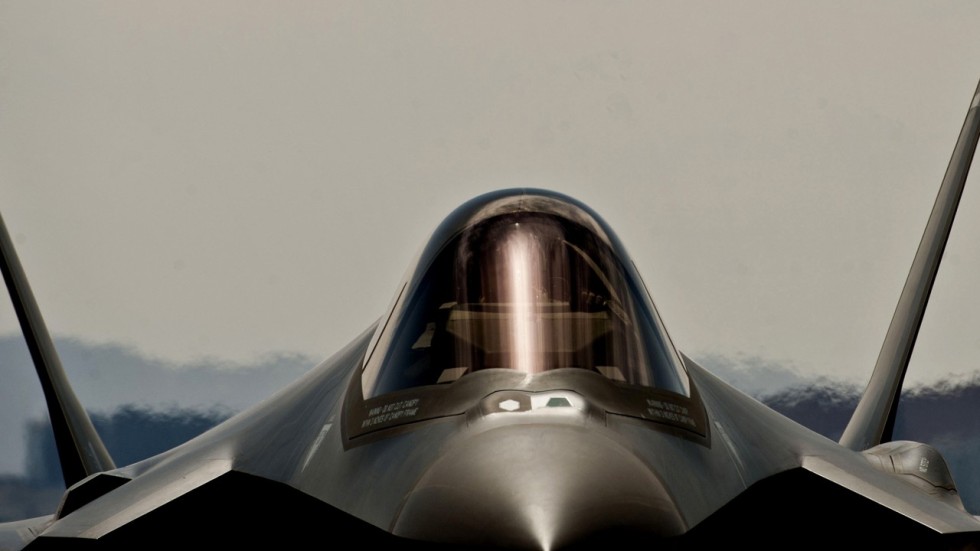
China’s biggest defence electronics company said the next generation of its quantum radar system will be able to detect ballistic missiles and other objects flying at high speed through space.
State-owned China Electronics Technology Group Corporation (CETC) announced two years ago that its scientists had tested a quantum radar to a range of 100km (62 miles), which in theory would allow it to detect stealth aircraft at long distances.
But at an industry exhibition in Nanjing, capital of eastern China’s Jiangsu province, on Friday, the company said the latest iteration of the technology could go one step further.
China tests stealth ‘invisibility cloaks’ on regular fighter jets
Once installed on a near-space vehicle, it could “effectively monitor high-speed flying objects in the upper atmosphere and above”, the company said.
Hong Kong-based military commentator Song Zhongping said the development was significant.
“The term ‘high-speed flying objects’ could include ballistic missiles during their boost phase and mid-course, or low-altitude satellites, all of which are important targets to be monitored,” he said.
“If a quantum radar could be fully developed, it would be really powerful in the three key areas of range, imaging and counter interference.”
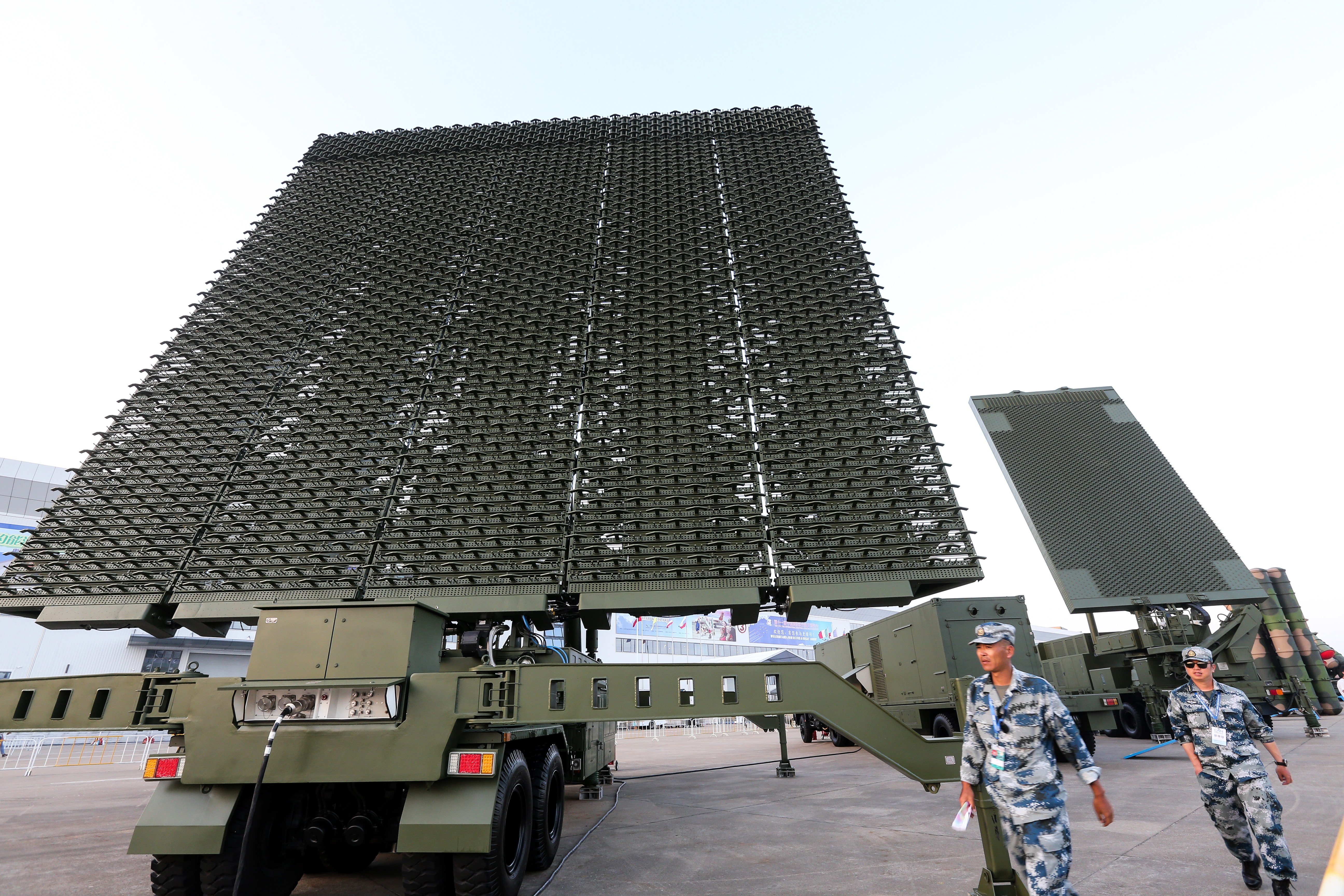
Xia Linghao, from CETC’s 14th Research Institute and one of the lead scientists on the radar project, was quoted by Chinese state newspaper Global Times as saying that the bulk of the theoretical work had been completed and that the company had entered the “experimental verification phase”.
The radar is based on single photon measurement technology, which measures the quantum states of subatomic particles repeatedly, the report said.
It is particularly useful in the detection of extremely weak signals, such as those given off by a stealth jet.
Chinese J-20 stealth fighter jets carry out first sea training mission
China regards the stealth aircraft flown by the United States and its allies as a major threat to its regional interests, and is therefore keen to have an effective countermeasure.
Quantum radar systems generate pairs of entangled light particles known as photons. One photon in the pair is beamed into the air while the other remains at the radar station.
If a target is located, some photons bounce back and can be identified by matching them with their “twins”. By measuring the returning photons, researchers can calculate the physical properties of the target, such as its size, shape, speed and angle of attack.
Could this new Chinese radar system really be used to play God with the weather?
However, the major challenge has been the small number of photons that return, with their number diminishing as the distance to a target increases.
The latest developments announced by CETC could help to resolve that problem.
China is not alone in developing quantum radar systems, although it claims to be the most advanced.
Song said, however, the technology was still some way from real-life application.
“We haven’t seen many figures or technical details yet, which means the prototype has not been finished,” he said. “It is still far from battlefield use.”