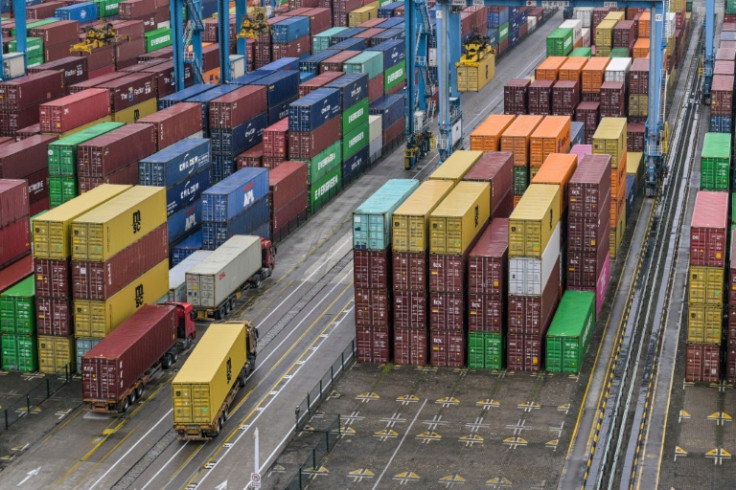
In a sharp turn from October's slump, China's exports surged 5.9% in November 2025 compared with a year earlier, according to data released by Chinese customs authorities.
Total outward shipments reached roughly US$ 330.3 billion, clearing economists' expectations and marking a swift rebound from October's 1.1% contraction.
US-Bound Shipments Collapse, But China Finds Other Buyers
Despite the overall rebound, exports from China to the United States collapsed -- down nearly 29% year-over-year, continuing an eight-month streak of double-digit declines.
This steep drop reflects ongoing tensions, high tariffs, and a shifting global supply-chain strategy. The fall in U.S. shipments is being partially offset by stronger demand in other regions, including Southeast Asia, Latin America, Africa, and especially the European Union.
Indeed, exports to the EU reportedly rose by 14.8%, and exports to Australia jumped by 35.8% in November, illustrating how Chinese traders are increasingly diversifying their customer base.
Imports Inch Up, But Domestic Demand Remains Fragile
Meanwhile, China's imports rose just 1.9% in November, reaching approximately US$ 218.6 billion, a modest improvement over October's 1.0% growth, but still underwhelming amid signs of continued domestic weakness.
Soft domestic demand, weighed down by a sluggish property sector and weak consumer confidence, remains a key constraint on broader economic recovery.
Trade Surplus Hits Historic Heights
Thanks to the export rebound and tepid imports, China's trade surplus has surged. For the first 11 months of 2025, the surplus has crossed the US$ 1 trillion threshold, a milestone never before reached.
Analysts attribute this surplus not only to strong global demand for Chinese goods, but also to Beijing's strategy of leaning on exports to offset weakness in domestic consumption and investment.
What's Driving the Resilience — and What Lies Ahead
Much of China's export strength stems from diversification of trading partners. With U.S. demand falling, Chinese firms are increasingly targeting Southeast Asia, Europe, Africa, and Latin America.
Additionally, there's a structural push underway: Beijing recently reaffirmed its ambition to pivot toward advanced manufacturing, high-tech goods and value-added industries.
Still, not all signs are bullish. Despite the export growth, China's factory activity contracted for an eighth consecutive month in November, a worrying indicator of domestic economic fragility.
Economists argue this could temper China's ability to sustain export momentum long-term, unless domestic demand or global order backlogs recover.
Why This Matters for China and the World
- Global supply-chain shake-up: The collapse in U.S.-bound Chinese exports and the redirection toward other regions signal a lasting shift in how global trade flows — potentially reshaping manufacturing, sourcing, and consumer markets worldwide.
- China's balancing act: With domestic consumption and investment weak, exports remain Beijing's most reliable lever to sustain economic growth, but overreliance on foreign demand carries risks, geopolitical, demand-side, and cyclical.
- Implications for U.S. and EU: For the U.S., shrinking Chinese imports could dampen availability and prices of consumer goods; for the EU and other regions, rising inflows could stir protectionist pressure and trade-policy debates.
- Watch for volatility: As factories struggle and global demand remains uncertain, the window for China's export-led recovery may narrow, making upcoming economic indicators and policy moves critical.