The Chinese government has announced a plan to switch the majority of new car sales in the country to electric and other eco-friendly vehicles.
The plan aims to reduce China's emissions of greenhouse gases, and also shows its ambition of becoming a world-leading automotive powerhouse that features electric vehicles front and center in its strategy.
U.S. President-elect Joe Biden, who will take office in January, also supports the increased use of eco-friendly vehicles. This, combined with China's plan, could accelerate structural reforms of Japan's auto industry.
China's plan calls for making electric vehicles the mainstay of new car sales by 2035, while increasing the percentage of new-energy vehicles in new car sales from the present figure of about 5% to 20% by 2025. "New-energy vehicles" is the general term for environmentally friendly cars the Chinese government wants to see on its roads. They comprise electric vehicles that run on a motor, rechargeable plug-in hybrid vehicles and fuel cell vehicles powered by hydrogen, but not hybrids that have a motor and an engine but cannot be recharged.
The Chinese government's long-term plan for developing the new energy vehicle sector, which was announced this month, laid out a blueprint for the future of China's auto industry through until 2035. At a press conference on Nov. 3, Chinese Industry and Information Technology Vice Minister Xin Guobin said the plan comprehensively considered consumer and production capacity trends, as well as room for growth in demand.
A "technology road map" compiled in October by a group of automotive experts under the guidance of the Industry and Information Technology Ministry went even further, calling for increasing the share of new-energy vehicles in new car sales to at least 50% by 2035, with the remainder to all be hybrid vehicles. This plan spelled out a vision in which vehicles with only gasoline-powered engines will be elbowed out of the market.
-- Local companies nurture
China is the world's largest emitter of greenhouse gases. Amid rising international criticism of China's emissions, President Xi Jinping in September announced a goal of slashing China's net greenhouse gas emissions to net zero by 2060. The road map included a 2035 target of cutting emissions by 20% from their projected peak in 2028.
However, China relies on coal-fired thermal power plants -- which produce large volumes of carbon dioxide emissions -- for about 60% of its electricity generation. Even if electric vehicles become more common on China's roads, their impact on the environment may be limited.
The government's plan also calls for accelerating moves to transform China into an auto powerhouse. "China is attaching great importance to seizing leadership of the auto industry," an analyst said.
In 2019, about 25.77 million new vehicles were sold in China – a figure eclipsing the combined total of new cars sold in the United States, Germany and France. But according to auto industry research company MarkLines Co., not a single China carmaker features in the world's top 10 for auto sales.
If the world's automakers boost their investment in eco-cars in China, parts makers and other companies in the country would build up their technologies and expertise. The Chinese government also is nurturing domestic companies through subsidies and apparently intends to swiftly redraw the global auto industry landscape.
-- Japan's rules lag behind
Environmental regulations pertaining to automobiles are being strengthened around the world.
In the United States, California in September announced that it will require all new passenger vehicles sold in the state to be zero-emission vehicles by 2035. Biden supports the installation of 500,000 public charging outlets for electric vehicles across the United States by the end of 2030, and he also favors introducing new fuel economy standards.
Regulations are even stricter in Europe. Britain plans to ban the sale of new gasoline- and diesel-powered vehicles -- including hybrids -- from 2035, and France will do likewise from 2040.
Japan has so far set a target of having next-generation vehicles, including hybrids, account for up to 70% of new car sales in 2030. This falls short of the radical plans launched by Britain, France and California, and it pales in comparison to China's latest initiative. For this reason, there are concerns structural reform of Japan's auto industry could be delayed.
-- Japanese automakers in fierce competition in China
Though Japanese automakers have taken the lead in the eco-friendly car market in China, they are expected to inevitably face competition from other manufacturers including local carmakers.
Toyota Motor Corp.'s total sales of hybrid vehicles in China exceeded 1 million as of September, and it plans to supply a hybrid core system to local automakers to reduce costs through mass production.
Toyota, which introduced luxury car brand Lexus electric vehicles in China in April, started building plants in Tianjin and Guangzhou in Guangdong Province, in summer to increase production of eco-cars.
Nissan Motor Co., for its part, plans to introduce its Ariya electric vehicles in 2021, which it positions as a global strategic car.
Honda Motor Co. is expected to sell more than 20 models of electric vehices in China by 2025.
Japanese carmakers have hesitated to deploy their state-of-the-art technology in China out of concern over infringements of intellectual property rights and technology outflow. With the Chinese market seeing huge growth, however, such ideas are becoming a thing of the past.
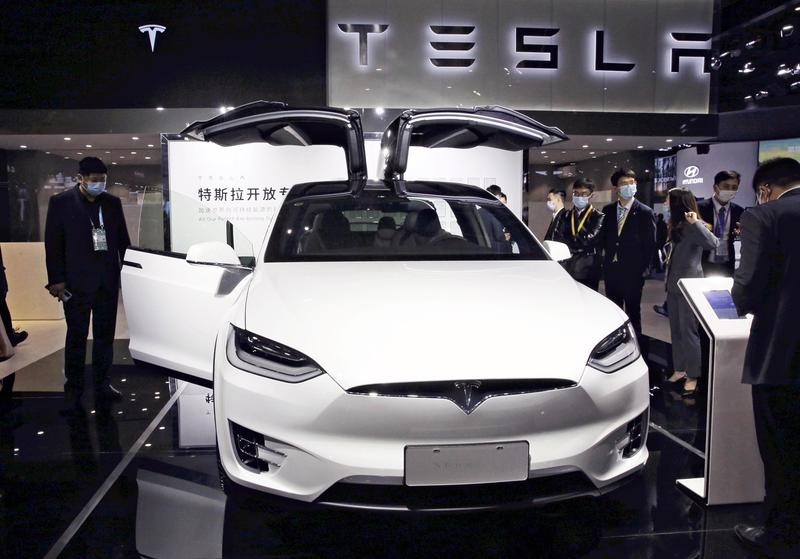
Volkswagen AG of Germany, General Motors Co. of the United States, and other major conventional automakers are not only their rivals. U.S. electric vehicle giant Tesla Inc. cars have becoming spread in China as it started mass production of its flagship sedan at its newly established Shanghai plant in January.
Chinese manufacturers are also rapidly improving their technological capabilities. Contemporary Amperex Technology Co. established in 2011, for example, is now regarded as a leading manufacturer of electric batteries for electric vehicles.
Given such situations, there is no knowing whether Japanese carmakers will be able to gain in advantage in China.
"Japanese firms are ahead in the development of hybrid cars, but lag behind European and Chinese firms in electric vehicles," said Takaki Nakanishi of Nakanishi Research Institute Co.
Read more from The Japan News at https://japannews.yomiuri.co.jp/