Analysis: China has read the black-and-white letters of the Treaty of Rarotonga carefully, before firing a ballistic missile into the South Pacific Nuclear-Free Zone. As a signatory to protocols II and III of the 1985 Treaty, the People’s Republic has pledged to never use or threaten nuclear explosives against any treaty signatory. And it’s committed to not test any nuclear explosive anywhere in the zone’s designated boundaries.
The missile fired yesterday – most likely a new generation JL-3 missile designed to carry a nuclear warhead – is thought to have been launched from a nuclear-powered submarine outside the nuclear-free zone.
It soared past American missile-tracking facilities on Guam and in the Marshall Islands, and over the exclusive economic zones of Micronesia, Nauru and Kiribati, before splashing down north of Tuvalu.
China can credibly say it was not a threat, and it was not a nuclear explosive, so it was not a treaty breach. “This test launch complies with international law and international practice and is not directed at any specific country or target,” said Senior Captain Wang Xuemeng.
But China has not read the mood of Pacific peoples so well as it has read the letter of the law.
After years of diplomatic work, infrastructure investment and trust-building across the South Pacific, it risks losing many of its hard-fought gains in one fell swoop of a ballistic missile.
This was a rare strategic miscalculation by a nation whose foreign policy has usually been marked more by its calm foresight, as others act impulsively.
Some analysts have linked the test to the timing of the Fiji-Australia security deal, and say China is sending a message to Australia. It was the same day that Australian prime minister Anthony Albanese and his Fiji counterpart, Sitiveni Rabuka, signed a new bilateral defence agreement.
(International correspondent Anna Fifield, writing at Between Giants, rejects this explanation, noting that missile launches are dependent on weather and other factors.)
Other analysts have linked the timing to the start of joint naval exercises with Russia, and say China is sending a signal to the US. Lyle Morris at the Asia Society Policy Institute argues that the fact Japan, Australia and New Zealand were given an hour or two’s notice, but America was given none, shows it was primarily a signal to the United States.
“It means the People’s Liberation Army Navy is capable of targeting the continental US from bastions close to Chinese waters,” he tells Fifield. “The launch appears intended to demonstrate an operational sea-based nuclear deterrent.”
To be clear, China is not alone in such missile testing. The US routinely carries out test launches of ballistic missiles from land or sea, including one fired from California at a target in the Marshall Islands in March. But the Marshall Islands are not (yet) part of the Pacific Nuclear-Free Zone.
And this is a more serious provocation by China than the test-firing of a missile from Hainan Island in 2024; this shows that China could use its submarines to hit the US mainland with nuclear-armed missiles.
Yet whether Chairman Xi Jinping wants to send an airborne communiqué to friends like Russia, or to adversaries like the USA and Australia, this can be seen only as a fleeting exchange.
The more enduring message he is sending is to Pacific island nations like the Solomons, Fiji, Vanuatu, Cook Islands and Kiribati, which had been slowly strengthening their relations with China over the past eight years, since signing up to China’s Belt and Road Initiative.
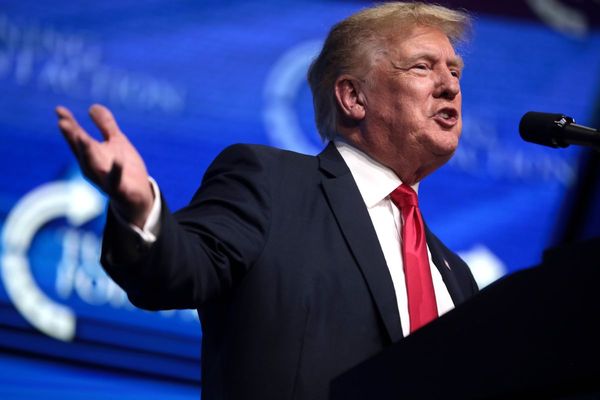
These are populations that, like New Zealand, have watched with mounting alarm the mercurial behaviour of US President Donald Trump, and concluded that China is a calmer and more predictable friend. The Asia NZ Foundation’s annual Perceptions of Asia survey, last month, showed for the first time that New Zealanders were more likely to see China as a friend than the USA.
But now, this.
Consider beneath the flight path, Kiribati (formerly known as the Gilbert Islands) whose people were severely affected by 33 atmospheric nuclear tests conducted by the UK and US between 1957 and 1962. Local populations were exposed to radioactive fallout; there was lasting environmental contamination and intergenerational health complications like elevated cancer rates.
Kiribati had, controversially, slid closer to China than other Pacific nations. In 2019 it officially severed ties with Taiwan to recognise Beijing, and China has since funded large-scale infrastructure projects, supplied ships and planes, and provided Chinese officers for community policing. The China-Kiribati security relations created a rift with New Zealand, which temporarily suspended development aid.
Just two weeks ago, China’s chargé d’affaires Zhao Jian led a delegation of the ‘Chinese Assisting Police Team’ to parade at the Kiribati Police National Day celebrations. They were inspected by President Taneti Maamau.

It was a similar story in the Cooks, whose prime minister, Mark Brown, had signed a strategic partnership and agreements with China around infrastructure development and deep-sea mineral research. Again, it undermined relations with New Zealand, and Foreign Minister Winston Peters temporarily suspended aid.
But New Zealand and Australia have been quietly rebuilding relations with Kiribati, the Cooks and other island nations. Australia’s Anthony Albanese visited Fiji on Monday this week, and is in the Solomon Islands on Tuesday to advance bilateral security negotiations with the nation’s new prime minister, Matthew Wale.
Indeed, in his capacity as the current chair of the Pacific Islands Forum, Wale has been the first Pacific leader to speak out about this week’s missile test.
“China is a good friend of the Solomon Islands, but this is not something a friend does,” he said. “This is not good in our region. And as chair of the Pacific Islands Forum I have registered my strong protest yesterday with the ambassador. Solomon Islands also lodged a protest note.
“We don’t want to see any more countries — China, America, anybody — testing in the Pacific Islands region, that’s the bottom line. Be our friend, but don’t threaten us.”
China has undermined much of its own diplomatic work with this missile test.
Over the years, 13 Pacific nations have ratified the Treaty of Rarotonga, linking their lands and waters into one vast nuclear-free zone, and ratification is pending for a 14th, the Marshall Islands.
Foreign Affairs Minister Winston Peters says he’ll be talking with Pacific counterparts about China’s action. “Pacific leaders have been clear we do not want to see the region become a theatre for outside military competition. This launch is not consistent with regional stability, and peace in the South Pacific,” he says. “We, like our neighbours in other Pacific countries, have no interest in China using the South Pacific as a testing site for missile capability.”
Kiribati has consistently urged all nations to cease weapons testing in the “Blue Pacific Continent”. And like the I-Kiribati, the Cook Islands peoples are passionate about their opposition to nuclear weapons and testing – they’ve given the name to the Treaty of Rarotonga, the nuclear-free treaty signed on their biggest island on the 40th anniversary of the Hiroshima bomb.
Asked that day in 1985 whether the treaty was truly significant, in its incremental progress, New Zealand prime minister David Lange responded: “You can’t climb a ladder by starting at the top.”
Building relationships in the Pacific can only be achieved one step at a time. China has tried to start at the top of the ladder.
This article has been updated with comment from Solomon Islands prime minister Matthew Wale.