Beijing has said speculation it had a hand in efforts to dethrone Robert Mugabe is an “evil” plot designed to sully its reputation and derail China-Africa relations.
A recent visit to Beijing by one of the architects of last week’s slow-burn coup has stoked suspicions China played some role in attempts to oust its longtime ally.
Experts say Mugabe had fallen from favour with China’s Communist party leaders in recent years, with Beijing particularly alarmed at the prospect of his wife, Grace Mugabe, succeeding him.
However, China issued a forceful denial of any connection to the unfolding political crisis on Monday, calling such speculation “complete nonsense, and purely fictitious”.
Its embassy in South Africa said in a statement: “Some people are trying to link China to the political crisis that is taking place in Zimbabwe in order to drive a wedge between China and Africa and to undermine China’s image.”
Such allegations were “illogical, inconsistent and filled with evil motives”.
“China has long enjoyed friendly relations with Zimbabwe. When Zimbabwe was facing isolation and sanctions from the west, China stood firm on its principles and remained by Zimbabwe’s side, developing mutually beneficial cooperation, which brought benefits to both countries and peoples.”
China claimed Mugabe himself had approved a trip to Beijing by Gen Constantino Chiwenga, the head of the Zimbabwe Defence Forces (ZDF) and one of those behind last week’s intervention.
“The link being made by some western media outlets between this normal bilateral exchange and the political crisis in Zimbabwe is pure speculation with ulterior motives.”
(November 6, 2017) Mugabe fires vice president
Robert Mugabe fires his powerful vice-president, Emmerson Mnangagwa, clearing the way for his wife, Grace, to succeed him as leader of Zimbabwe. Grace had accused 75-year-old Mnangagwa, a former intelligence chief, of being the “root cause of factionalism” in the ruling Zanu-PF party.
(November 8, 2017) Mnangagwa defiant
Mnangagwa reportedly flees to South Africa, but vows to return to Zimbabwe to lead party members. The party "is not personal property for you and your wife to do as you please," Mnangagwa tells Mugabe in an angry five-page statement.
(November 13, 2017) Army chief issues warning
Zimbabwe’s army chief demands a halt to the purge in Zanu-PF, and warns that the military could intervene. “We must remind those behind the current treacherous shenanigans that when it comes to matters of protecting our revolution, the military will not hesitate to step in,” General Constantino Chiwenga told a media conference attended by about 90 senior army officers.
(November 14, 2017) Army denies coup
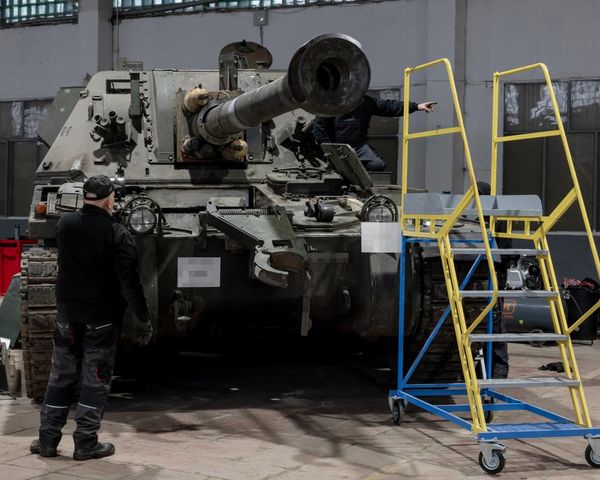
A convoy of tanks is seen moving on the outskirts of the Zimbabwean capital but the military denies a coup. In an overnight declaration on state television, they say Mugabe is safe and they are "only targeting criminals around him".
(November 15, 2017) Mugabe detained
Military vehicles take control of the streets of Harare in the early hours. South Africa says Mugabe has told its president, Jacob Zuma, by telephone that he is under house arrest but is "fine".
Observers believe Chiwenga’s pre-coup call on Beijing suggests some level of Chinese involvement or support for Mugabe’s removal.
“It certainly is eye-popping,” Cobus van Staden, a South African academic and journalist who specialises in China-Africa relations, said last week.
However, Ross Anthony, the director of the Centre for Chinese Studies at South Africa’s Stellenbosch University, said he doubted Beijing had played an active role.
“I’m sure this [coup] was being brought up [during Chiwenga’s visit] – but that’s not to say China had any part in it. Judging from China’s previous dealings with regime changes in Africa – especially in places where they have got big investments – as far as I can tell they’re not in the business of actively promoting coups,” he said.
As evidence, Anthony pointed to China’s recent dealings with Libya – where he said it had focused on securing its economic interests after Muammar Gaddafi’s 2011 fall – and Sudan, where Chinese diplomats had played “quite a constructive role” in mediating peace talks that preceded the 2011 referendum leading to the creation of South Sudan.
Still, the fact that Beijing appeared to have been tipped off about the coup in Zimbabwe underlined China’s growing importance on the world stage.
“The fact that they go to China now is significant ... China is now a global power which has to be consulted,” Anthony added.
Additional reporting by Wang Zhen