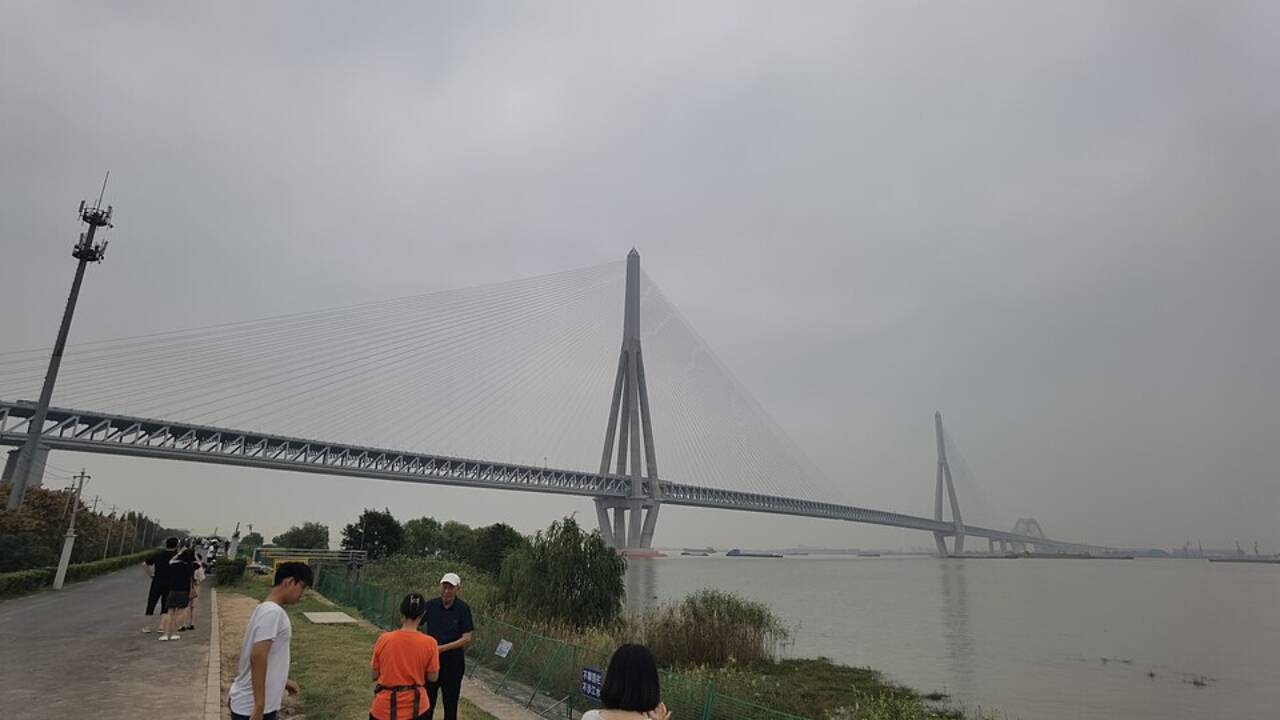
China has added another engineering milestone to its expanding transport network with the opening of the Changtai Yangtze River Bridge, a record-breaking structure that links the cities of Changzhou and Taizhou in Jiangsu Province. According to the South China Morning Post (SCMP) , the bridge officially opened to traffic in 2025, featuring the world’s longest cable-stayed bridge span at 1,208 metres. Notably, stretching 10.03 km across the Yangtze River, it is also the first crossing of the river to combine an expressway, that is, a conventional highway and an intercity railway, on the same structure. Additionally, according to the Chinese officials, the project reduces travel time between the two cities from more than an hour to around 20 minutes, thus strengthening transport links across one of China’s biggest economic corridors.
Get breaking news anytime, anywhere. Download the TOI app now!
Changtai Yangtze River Bridge rewrites engineering records
According to the China Railway Major Bridge Engineering Group , the Changtai Yangtze River Bridge took nearly six years to complete after its construction began in 2019. Notably, its main crossing consists of a steel-truss cable-stayed bridge with a 1,208 m main span, surpassing previous cable-stayed span records. Furthermore, the overall project incorporates two large steel-truss arch bridges and additional approach spans, bringing the total bridge length to just over 10 km. Engineers have designed this bridge as a double-deck structure, with the upper level carrying a six-lane expressway while the lower level accommodates a conventional highway alongside the future Taichang Intercity Railway, which is an arrangement rarely attempted on such a scale.
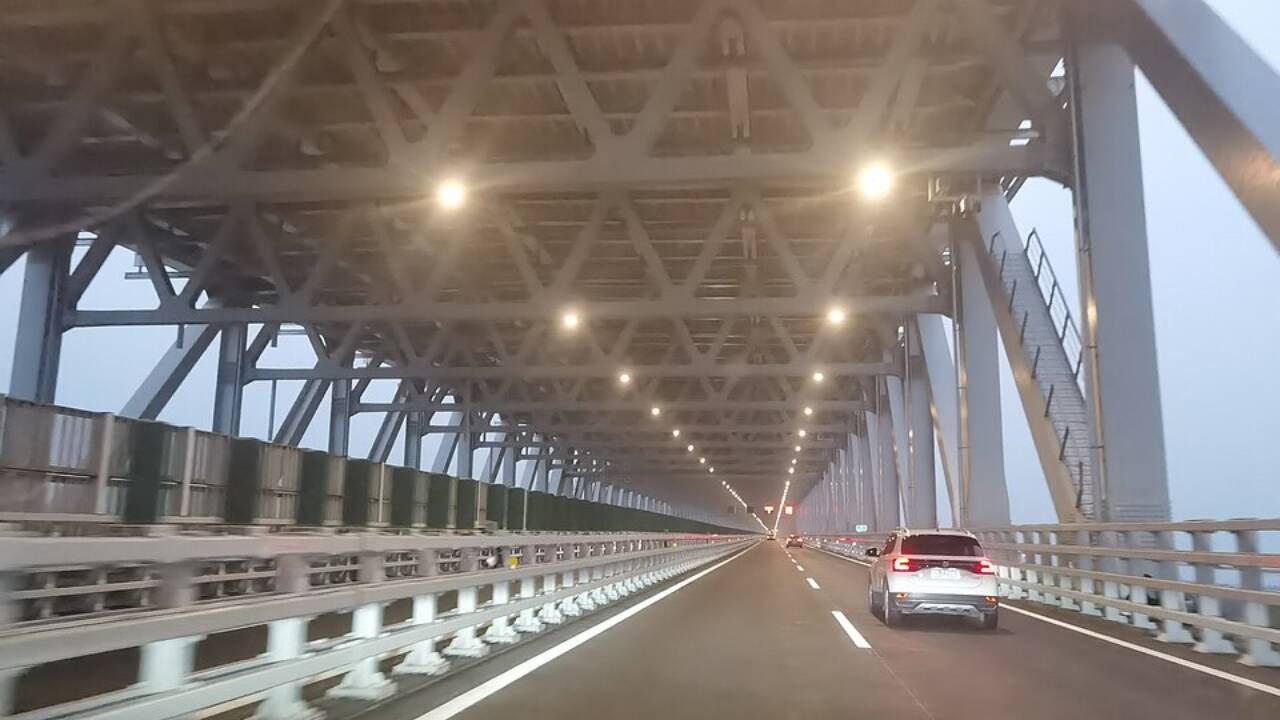
According to SCMP, the project used new construction technologies to erect long steel trusses, high-strength stay cables and massive bridge towers capable of supporting the unprecedented span. It is worth noting that during the construction, engineers also developed advanced methods for assembling large prefabricated sections over one of the world’s busiest inland waterways while also maintaining uninterrupted river navigation.
Transforming travel across the Yangtze Delta
According to SCMP, the previous road journey between the two cities often exceeded an hour because motorists had to rely on the older river crossings farther upstream or downstream. Meanwhile, the new bridge cuts that journey to roughly 20 minutes, thus improving connectivity across the Yangtze River Delta. Additionally, officials have claimed that the integrated design will improve freight movement and prepare the corridor for expanded intercity rail services in future.
According to the China Railway Major Bridge Engineering Group, integrating three transport modes into a single river crossing posed a major structural challenge because highway traffic and railway operations create different loading patterns and vibration characteristics. Engineers therefore developed a specially reinforced steel-truss system that is capable of accommodating both heavy traffic and future rail operations while maintaining stability under strong wind and temperature changes. Furthermore, the bridge incorporates digital monitoring systems designed to track structural performance continuously throughout its service life.
Notably, according to SCMP, officials view the crossing as both an infrastructure upgrade and a showcase of domestic engineering capability. By combining the span length with a multi-modal transport system, the Changtai Yangtze River Bridge aims to maximise capacity while reducing travel times across densely populated regions.