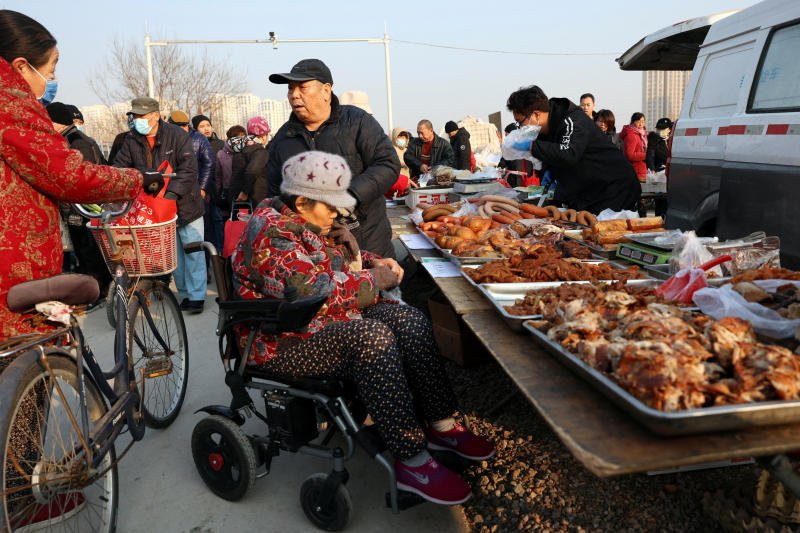
SHANGHAI — For the first time in records dating back to 1949, China is now home to more people aged 65 and above than children, the latest official data showed, underscoring the country's deepening demographic pressure.
By November last year, 15.87% of China's roughly 1.4 billion-strong population was aged at least 65, compared with 15.25% aged between 0 to 14, according to the results of a nationwide sample survey released late last week.
That meant China's traditional family-based model of elderly care was under immense pressure, said independent demographer He Yafu, while the burden on social security pension payments was growing heavier.
The data was extrapolated from a November "mini-census" - a sample survey of 1% of the nationwide population held between the once-a-decade national censuses - that covered over 20 million people, the National Bureau of Statistics (NBS) said.
"In pension provision, the population aged 65 and over - the main users of pensions and elderly care services - has now overtaken the child population, adding further strain to social security pension payments," He said.
"At the family level, the rising number of elderly people and the trend towards smaller households are placing immense pressure on the traditional family caregiving model."

The survey also found the country's working age population - who were expected to support more elderly people - was also shrinking. Those aged between 15 and 59 accounted for 61.89% of the total population, down from 67.33% a decade ago.
Families are also becoming smaller. The average household comprised 2.52 people at the end of last year, compared with 3.10 10 years ago.
He said that was also a concerning trend, as it pointed to "a significant rise in single- and dual-person households, signalling an intensification of non-marriage and childlessness trends."
While China's demographic dividend era is over, Beijing says the nation still has a "human resources dividend" to tap into.
A readout issued after a State Council meeting last week said China would focus on raising the overall quality of its population to "continuously build up and unleash the human resources dividend".
At the same time, the country would "strive to maintain a moderate fertility level and population size", it said.

Beijing also views the country's sizeable "younger elderly" population - those aged between 60 and 64 - as an important resource. In an article posted on the bureau's website late last year, an NBS official said they were in good health and still wanted to be engaged in society, which meant they could be expected to play an important role in economic development.
- In Thailand: Population shrinks to 65.8m
Earlier this month, the National Health Commission urged city governments to reduce the financial burdens of childbirth, child-rearing and education on families, and called on employers to support their employees in balancing work and family responsibilities.
It launched a campaign that aims to name 40 cities and 200 workplaces as being supportive of childbirth every three years, the latest in a series of measures - including cash subsidies for newborns - as the government doubles down on its pledge to build a birth-friendly society in the face of a declining birth rate.