China 'mines' ice from river to build frozen castles, pagoda
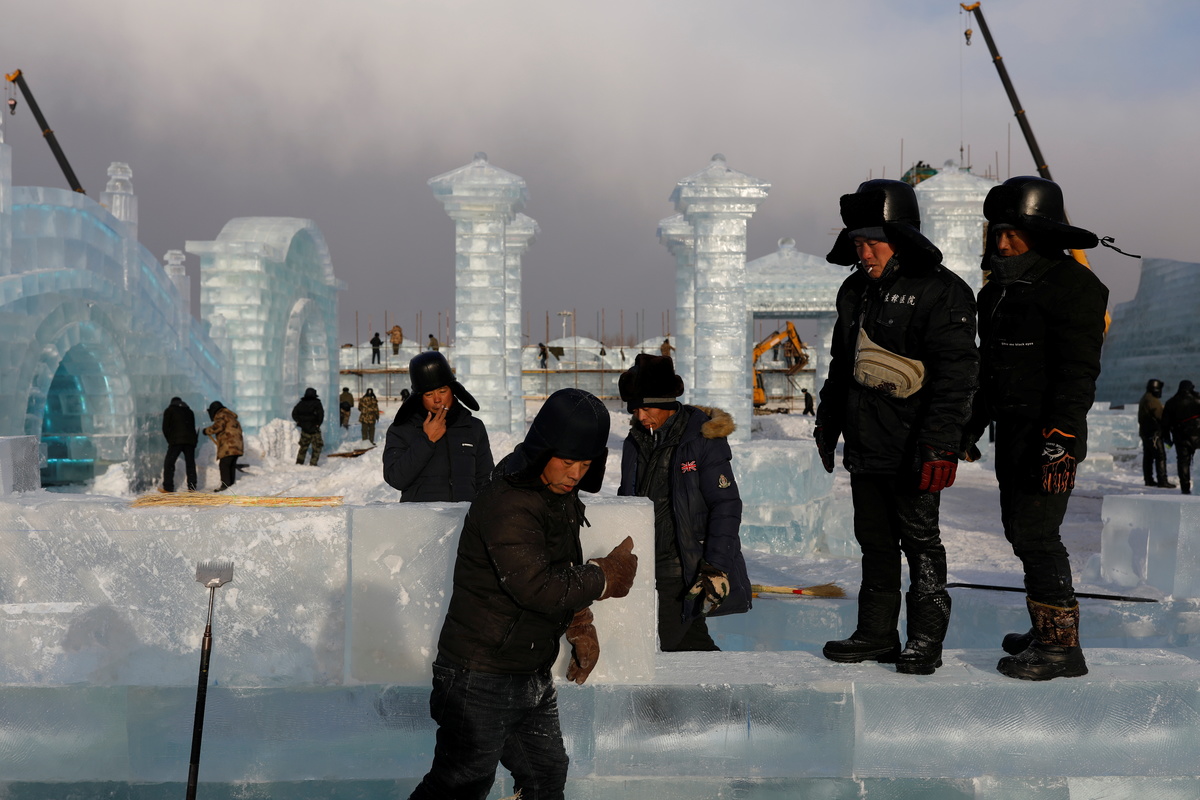
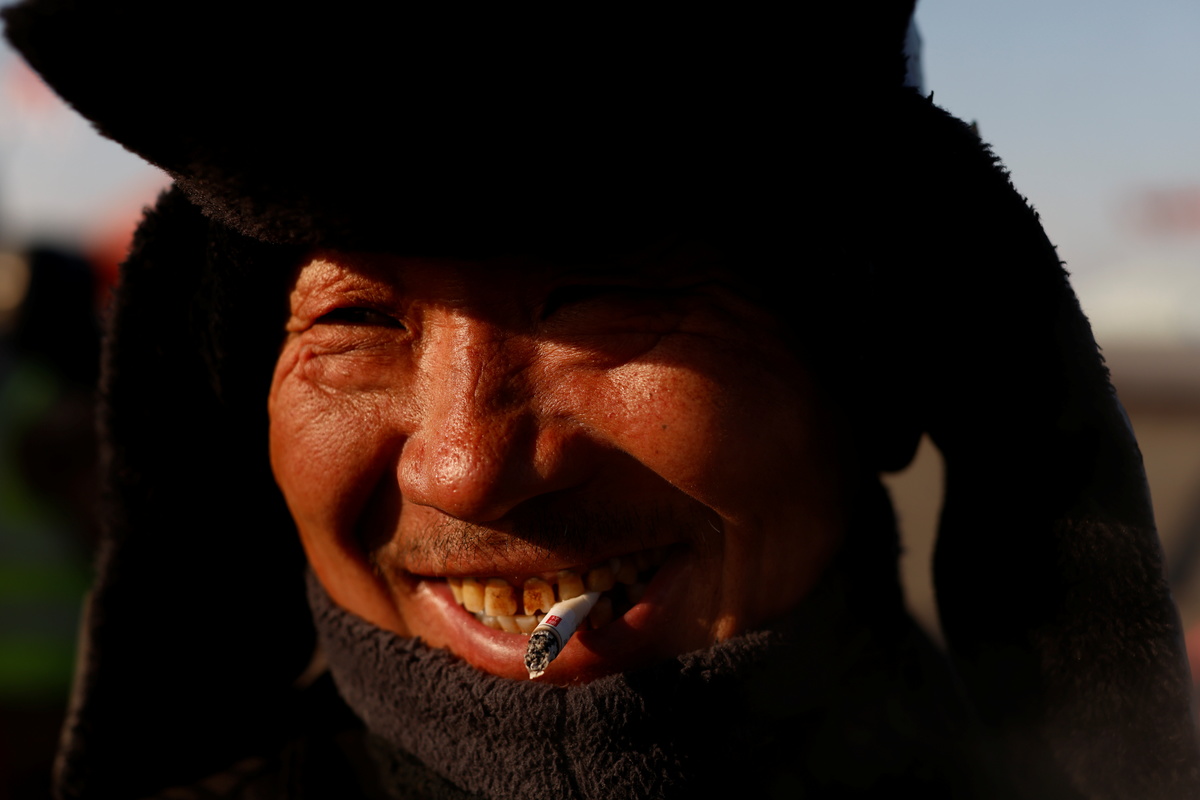
Workers smoke, while constructing ice structures at the site of the Harbin International Ice and Snow Festival before its opening in Harbin, China, December 18, 2020. REUTERS/Carlos Garcia Rawlins
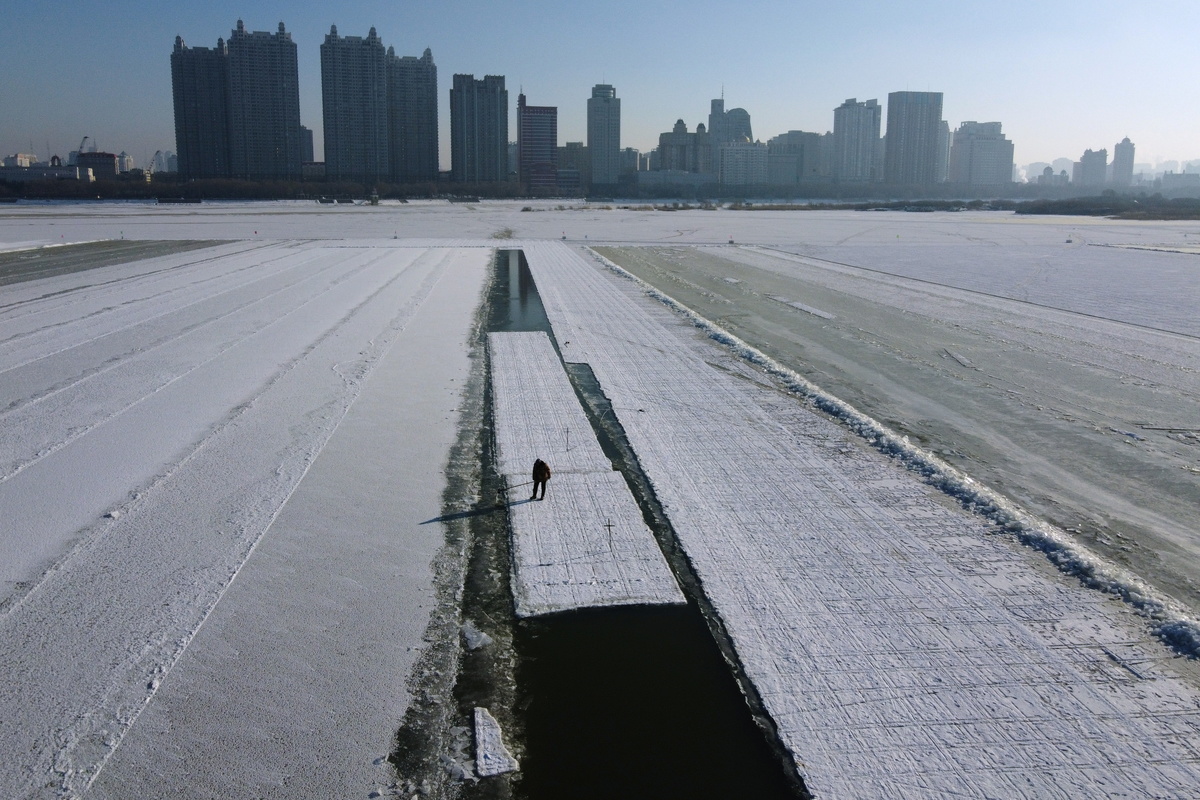
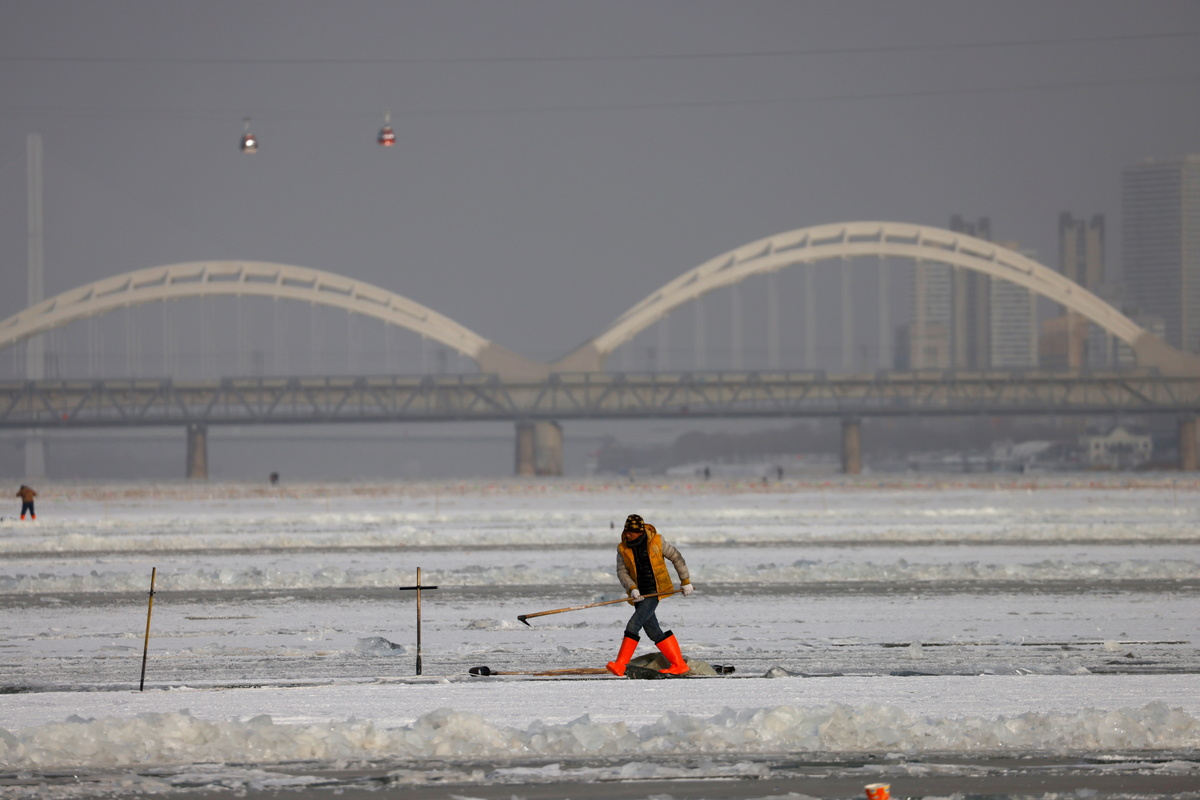
For more than 300 "ice miners" in Harbin, work begins in the numbing cold before dawn every day on the frozen Songhua, a broad river that winds its way through the northeastern Chinese city.
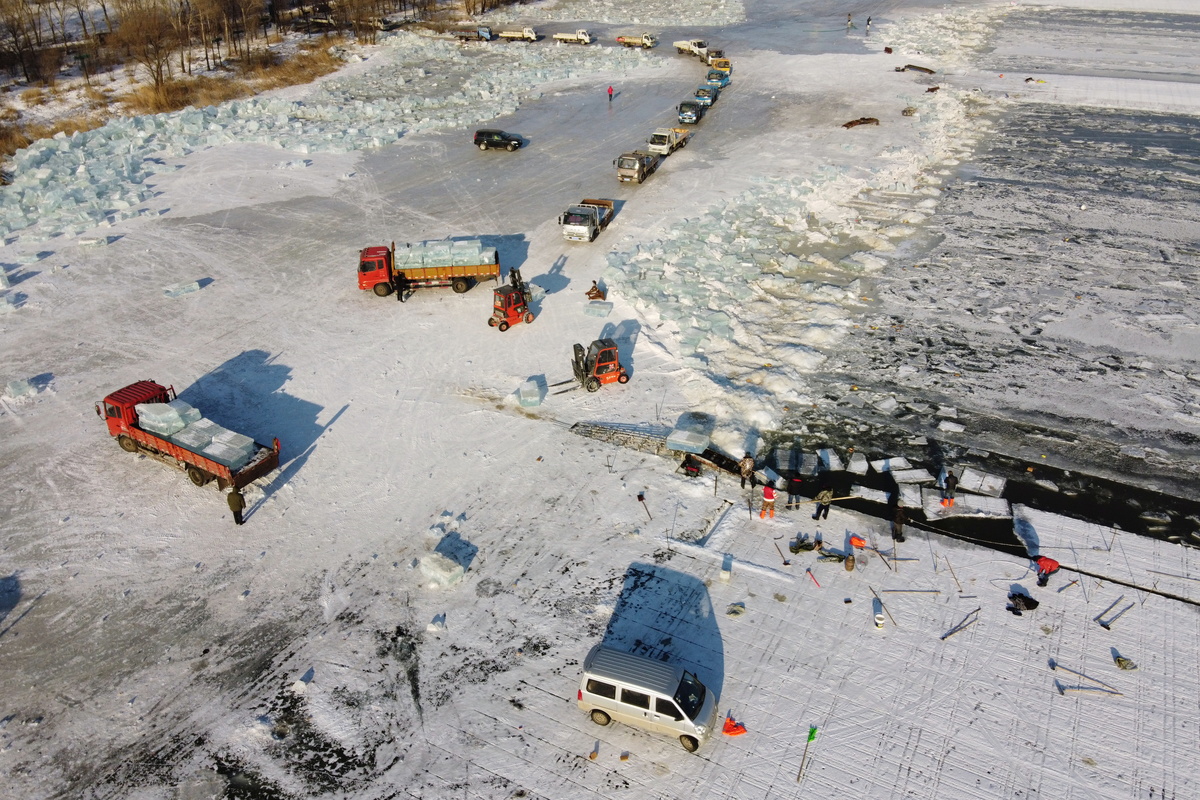
Wielding long ice picks, the workers break up the frozen surface of the kilometre-wide river into crate-sized blocks of ice.
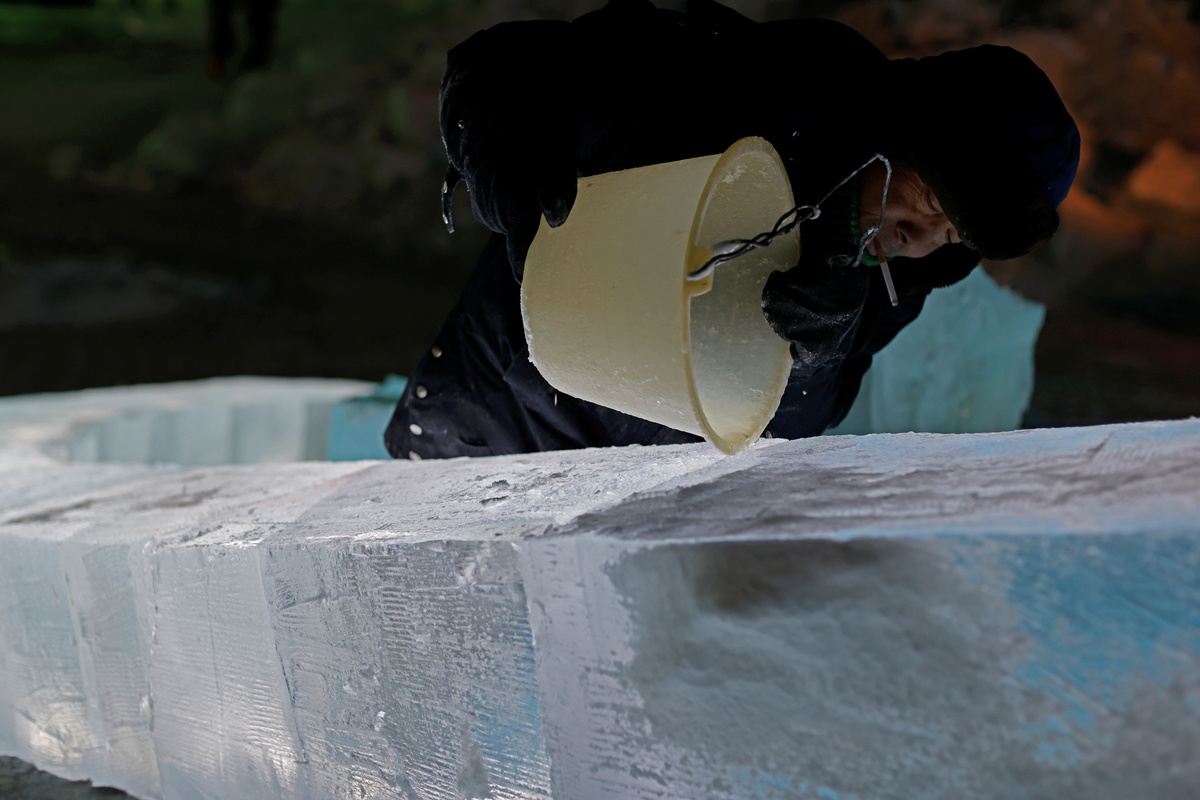
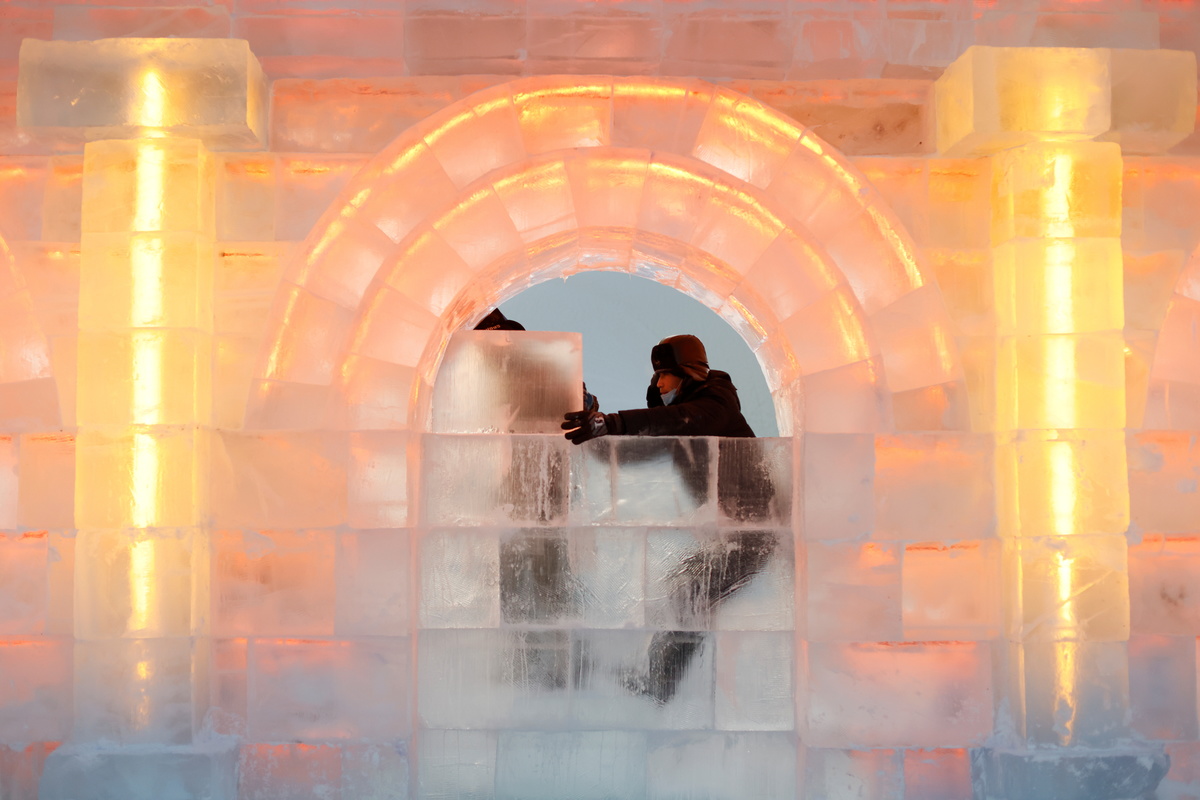
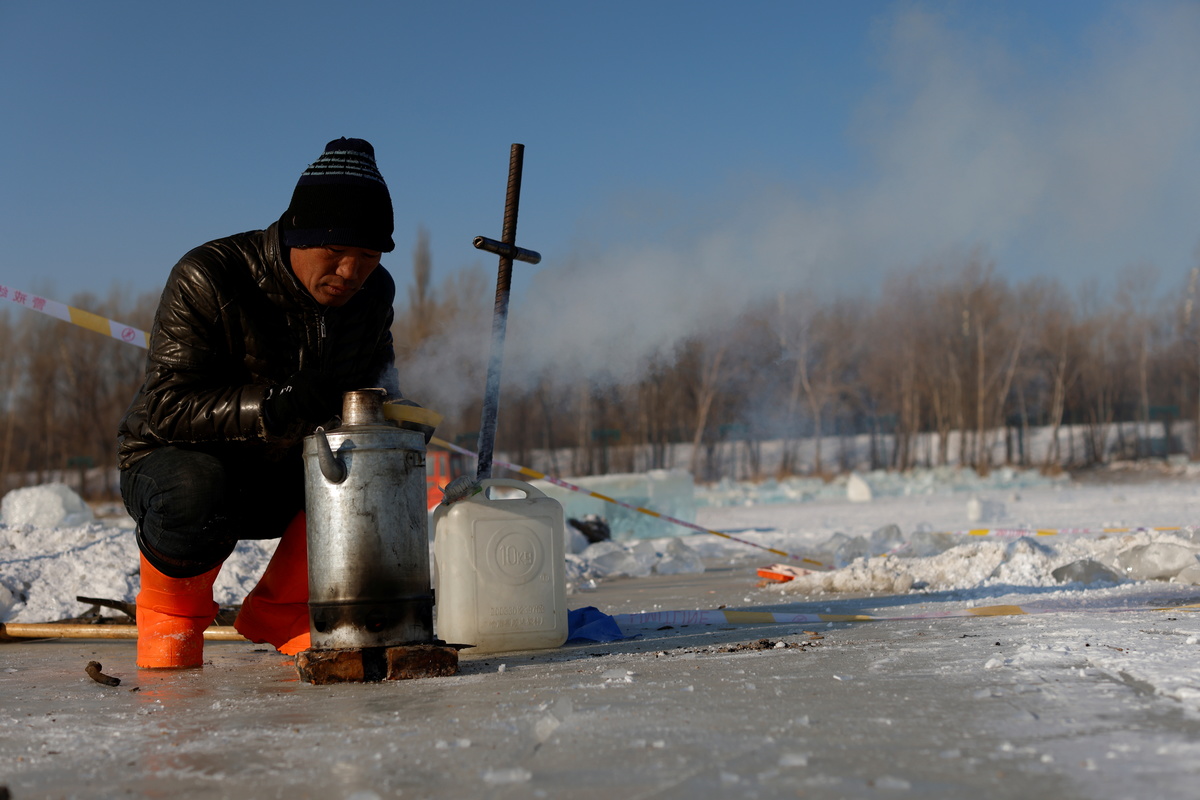
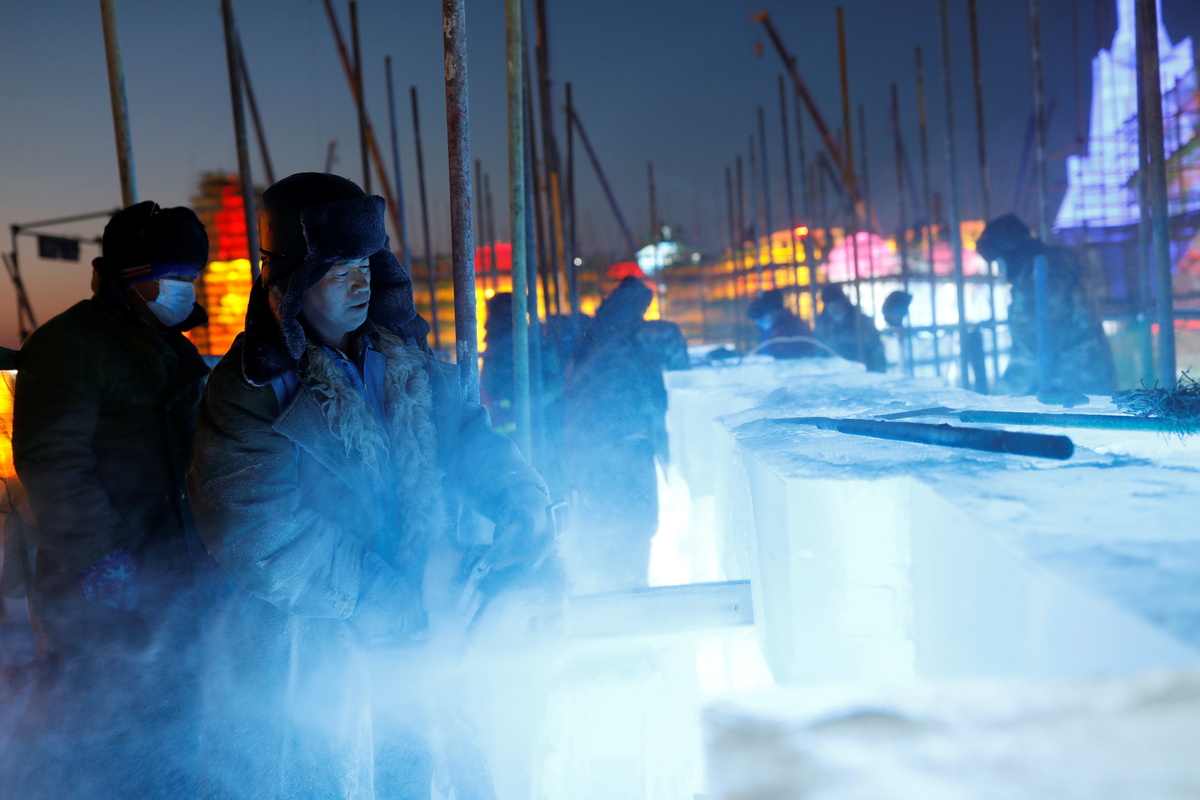
A worker uses water to bond blocks of ice while building an ice structure at the site of the Harbin International Ice and Snow Festival, before its opening in Harbin, China, December 17, 2020. REUTERS/Carlos Garcia Rawlins
Many of them construction labourers or farmers, they wear knee-high rubber boots, down jackets, thick gloves and hats with flaps to protect their ears from the frigid air.
(Click https://reut.rs/3hbY1FS to see a picture package of ice mining in Harbin.)
"We come to mine ice at 6 a.m. every day," said Zhang Wei, 40. "We need to work overtime sometimes, until 8 or 9 p.m., even late after midnight."
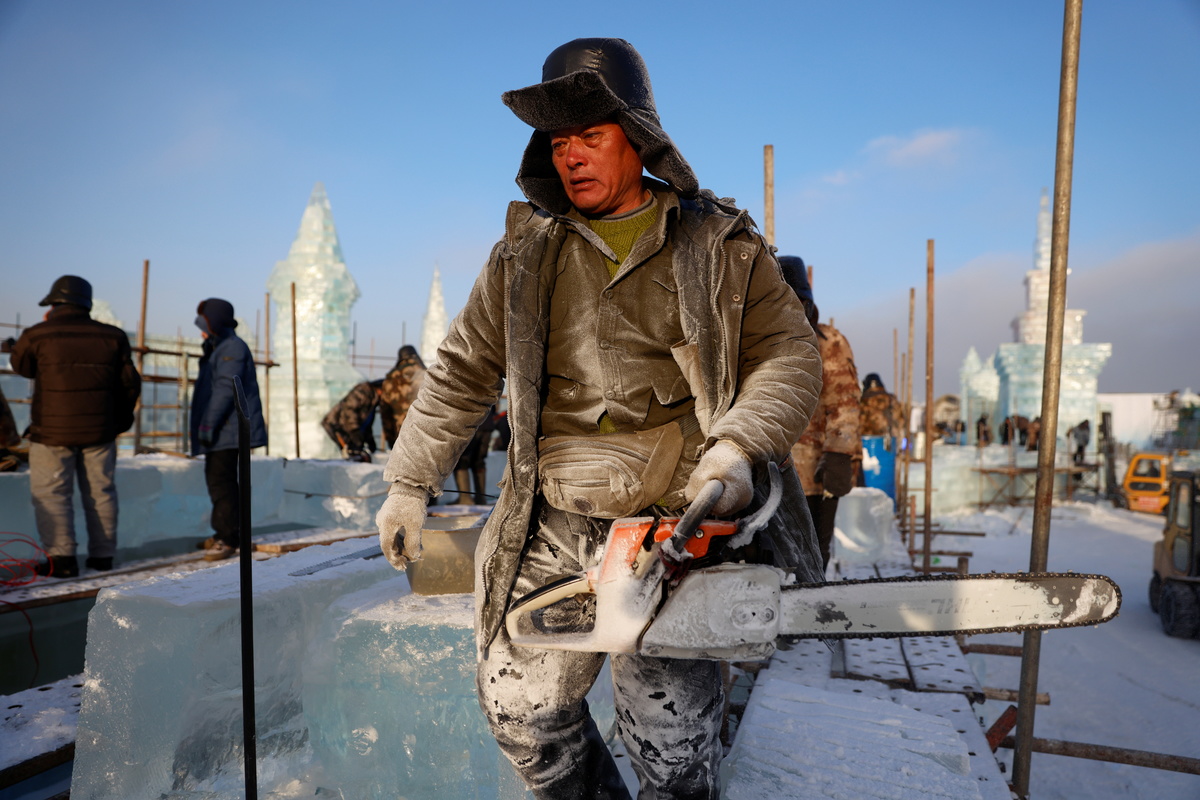
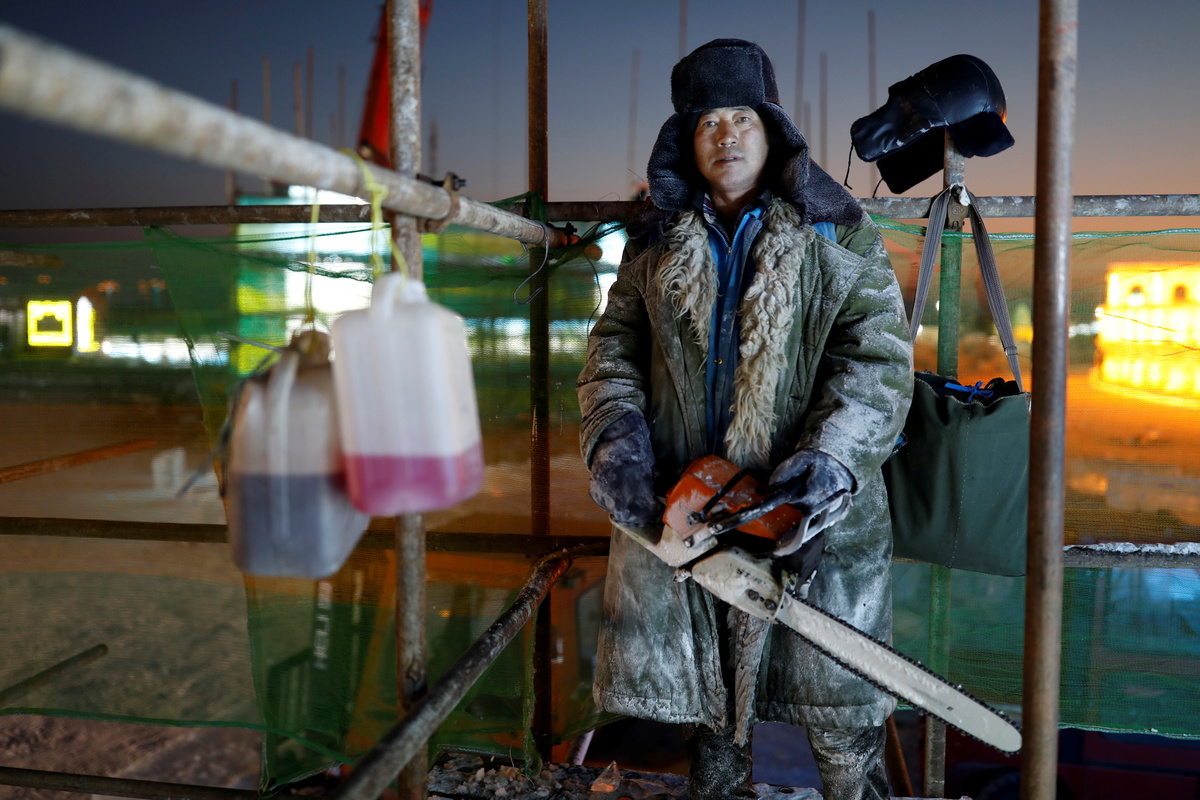
A worker carries a chainsaw while constructing an ice structure at the Harbin International Ice and Snow Festival before its opening in Harbin, China, December 18, 2020. REUTERS/Carlos Garcia Rawlins
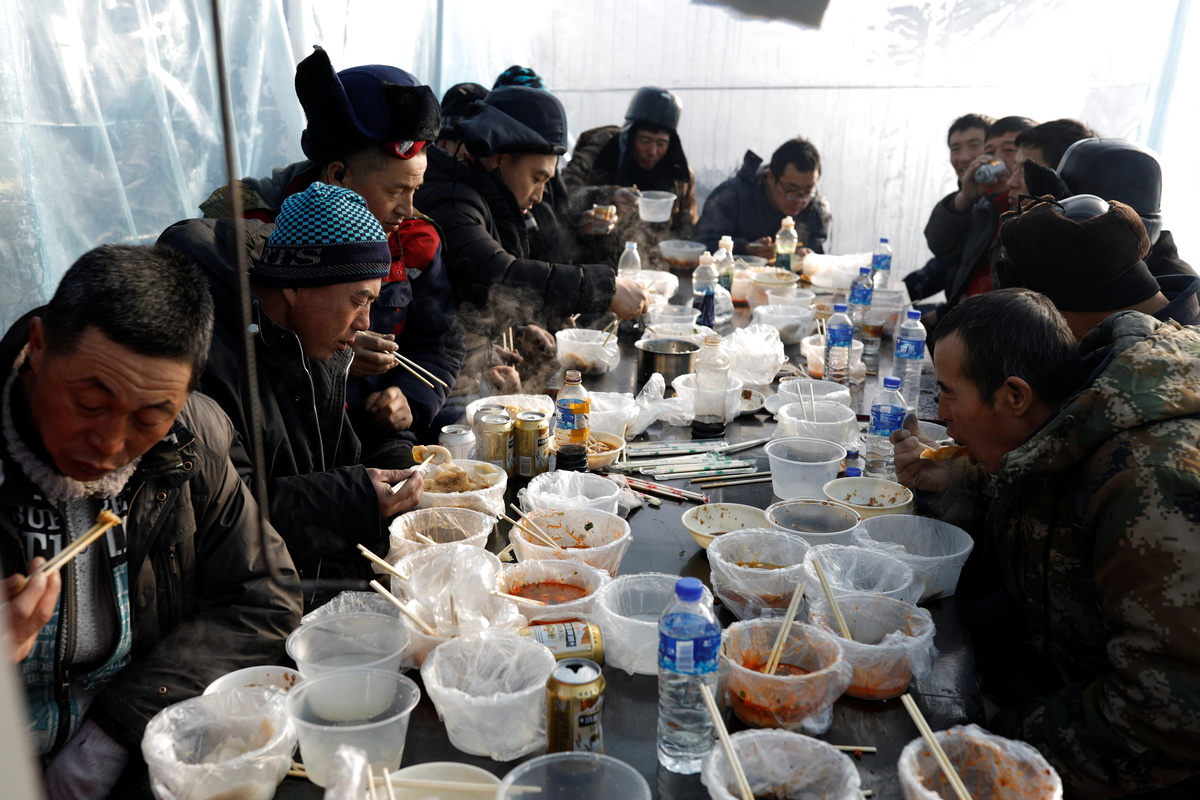
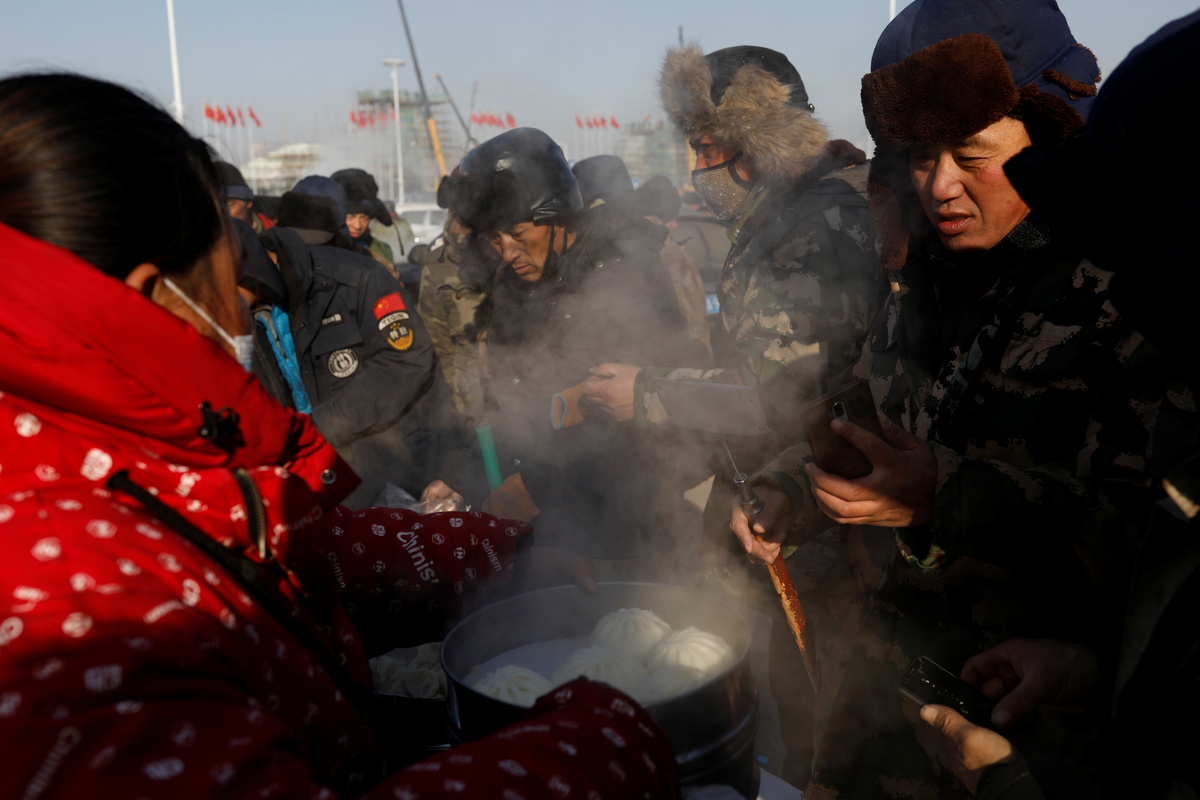
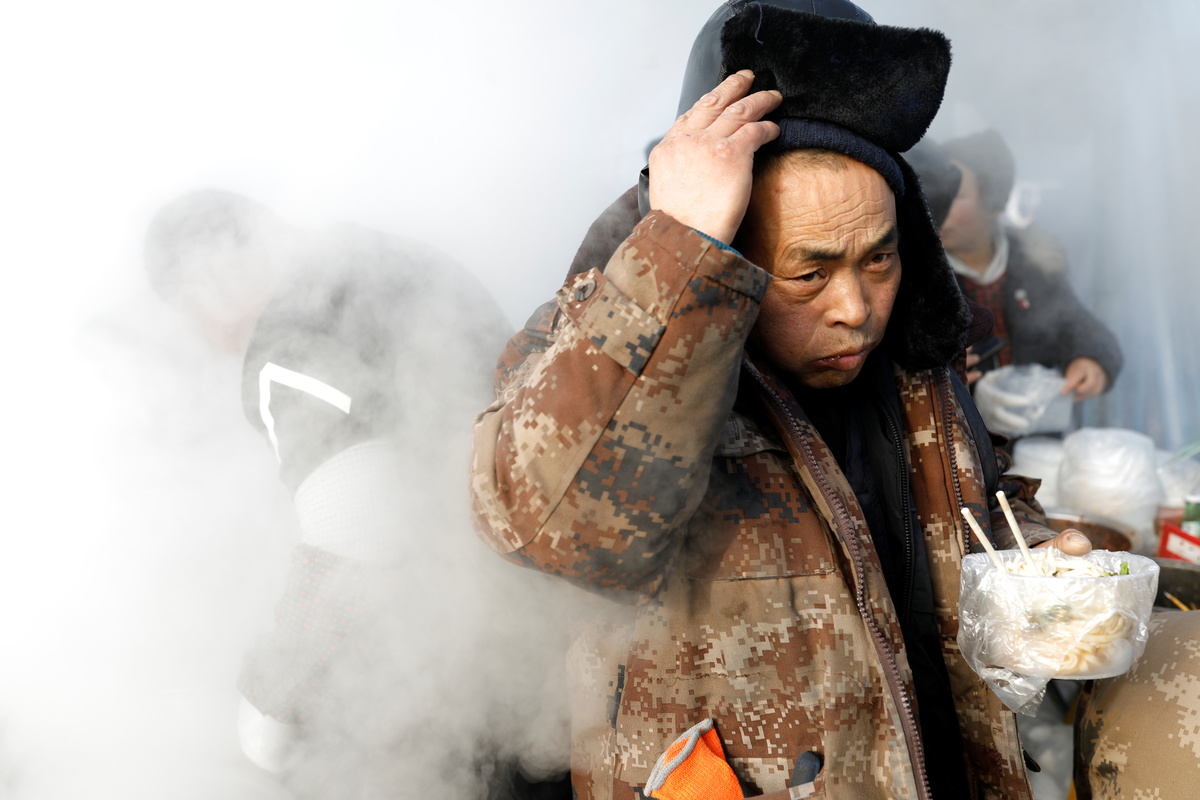
Lunch is brief - a bowl of piping-hot noodles, dumplings or steamed buns. Makeshift canteens built with wooden poles and see-through sheets offer a little warmth.
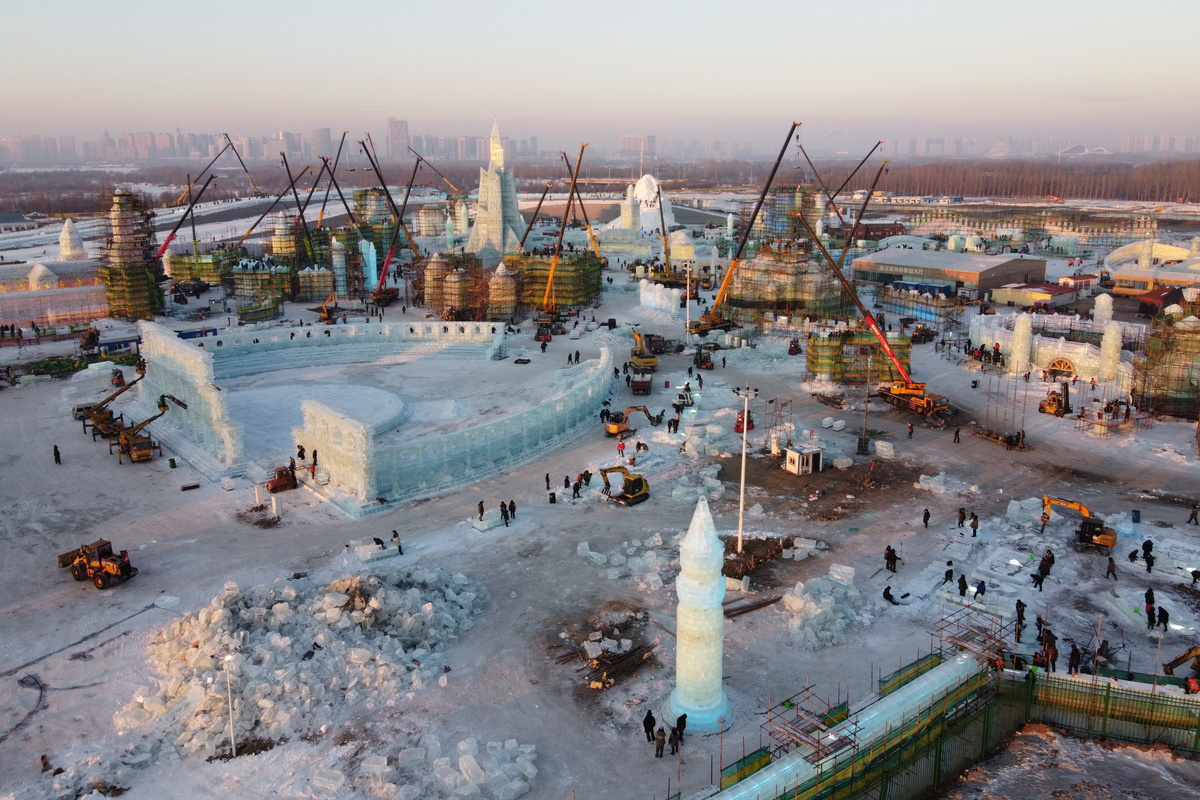
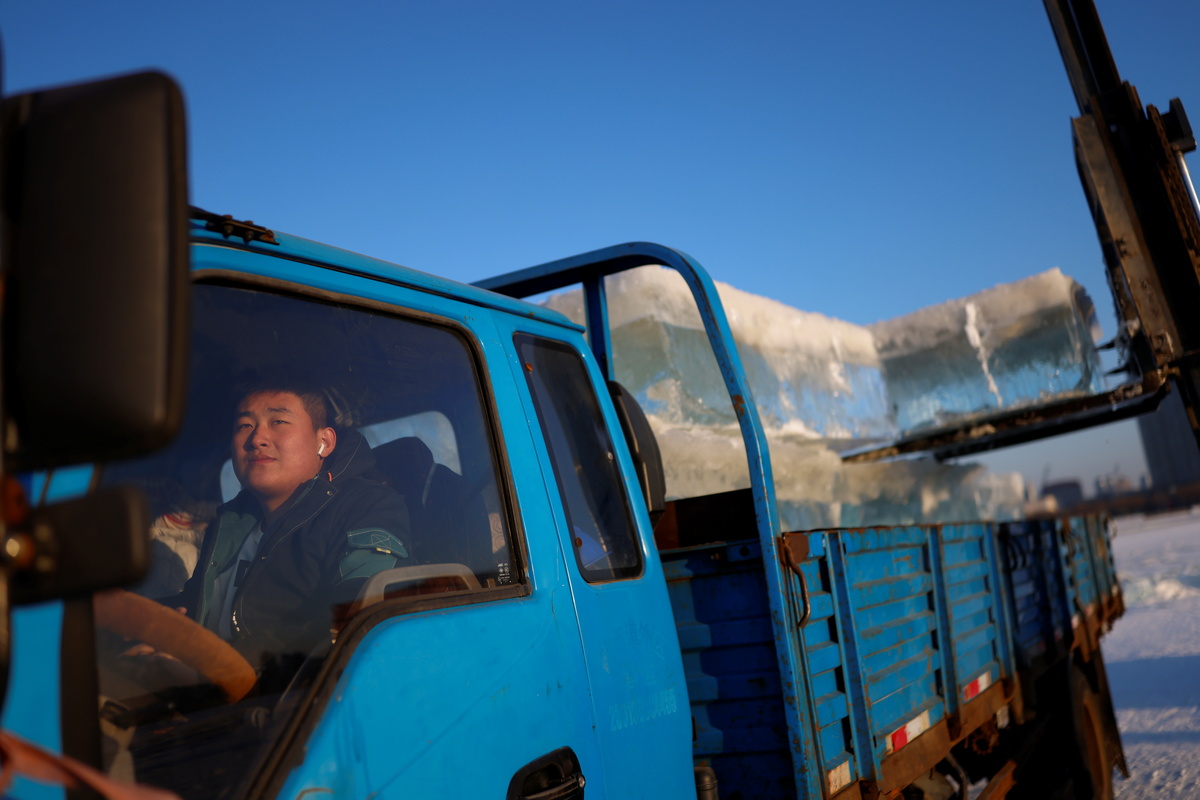
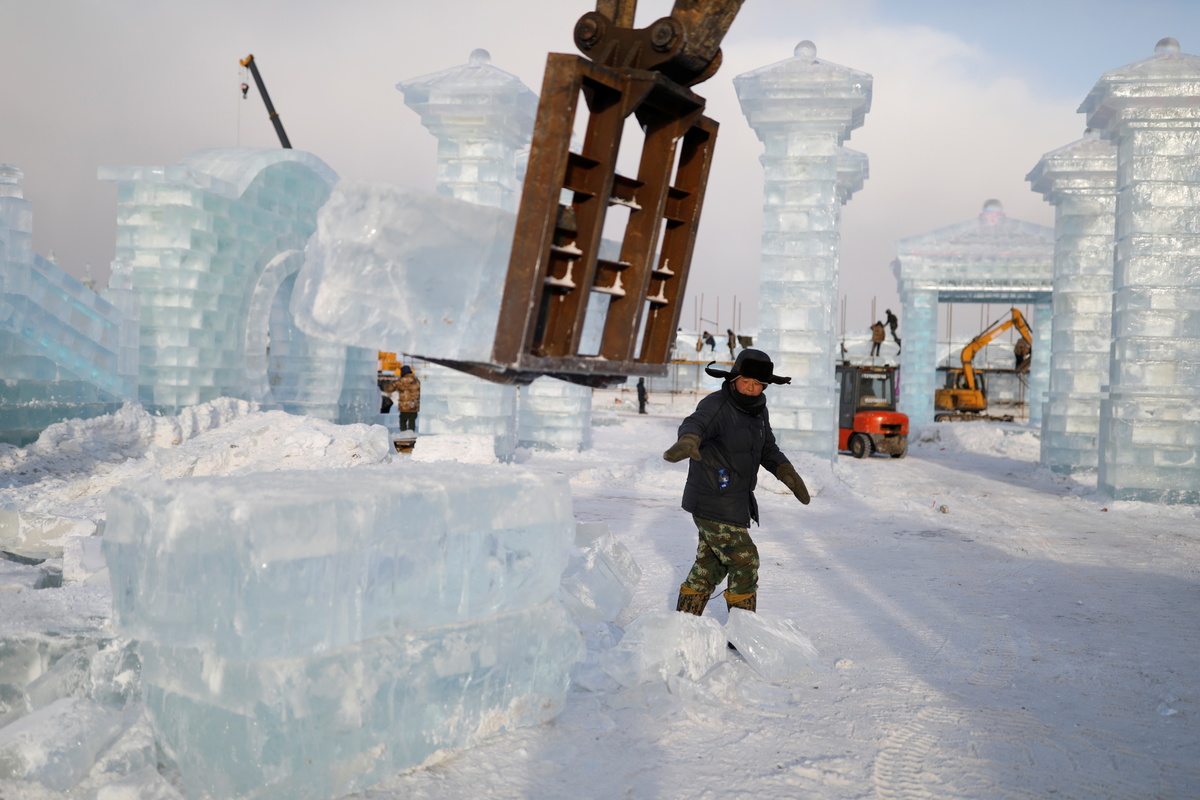
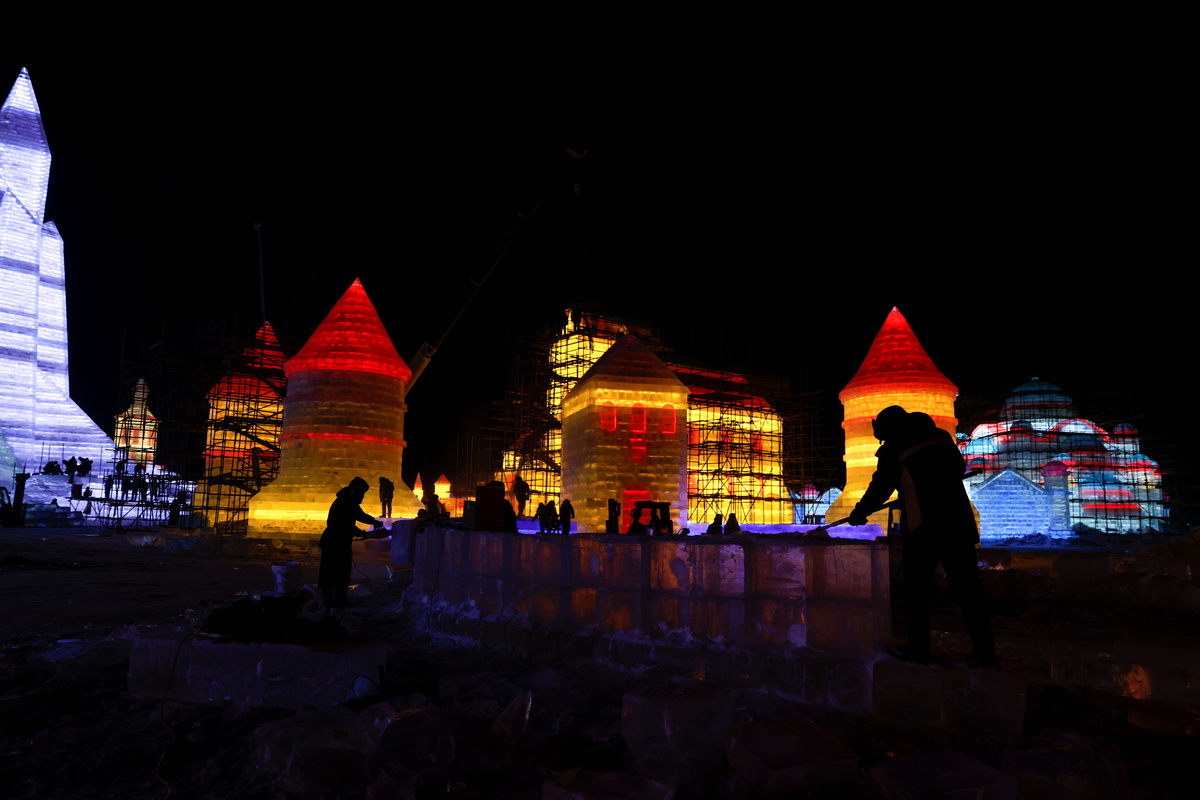
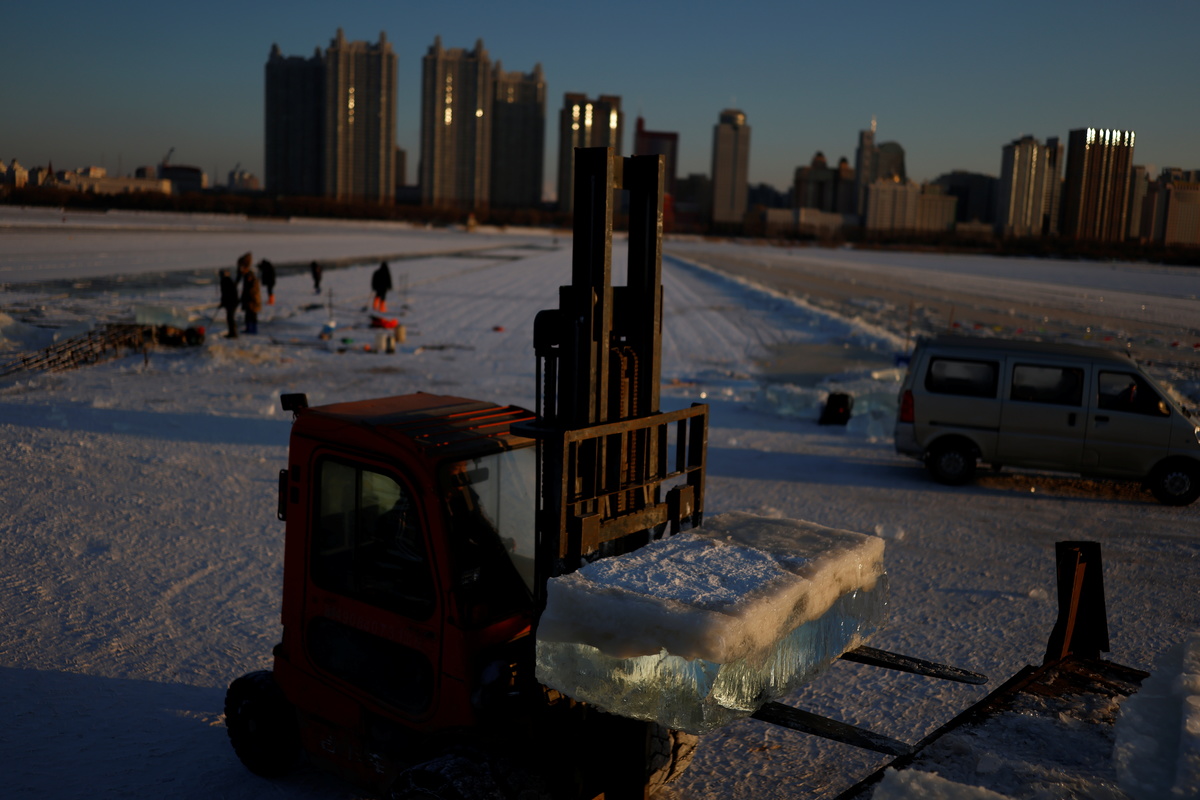
Every day since early December, tens of thousands of ice blocks have been prised out of the river and moved by truck to the venue of Harbin's annual winter festival, where they are used to build life-sized castles, pagodas, bridges and even a functioning hotpot restaurant.
Ice from the river is essential.
Workers eat lunch inside a food stall's makeshift plastic tent, outside the site of the Harbin International Ice and Snow Festival, before its opening in Harbin, China, December 17, 2020. REUTERS/Carlos Garcia Rawlins
"Artificial ice isn't that thick, and isn't strong enough to stand in the wind," said Wang Qiusheng, who has been carving ice for the festival for 20 years.
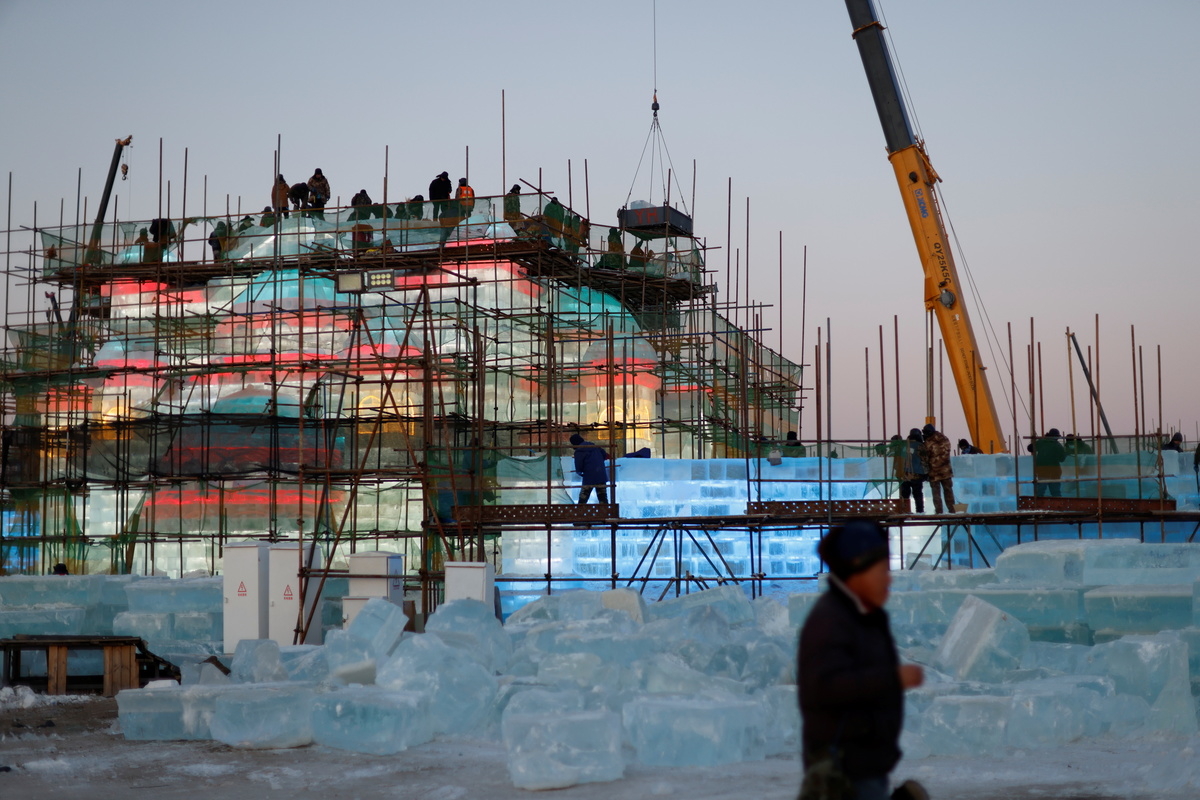
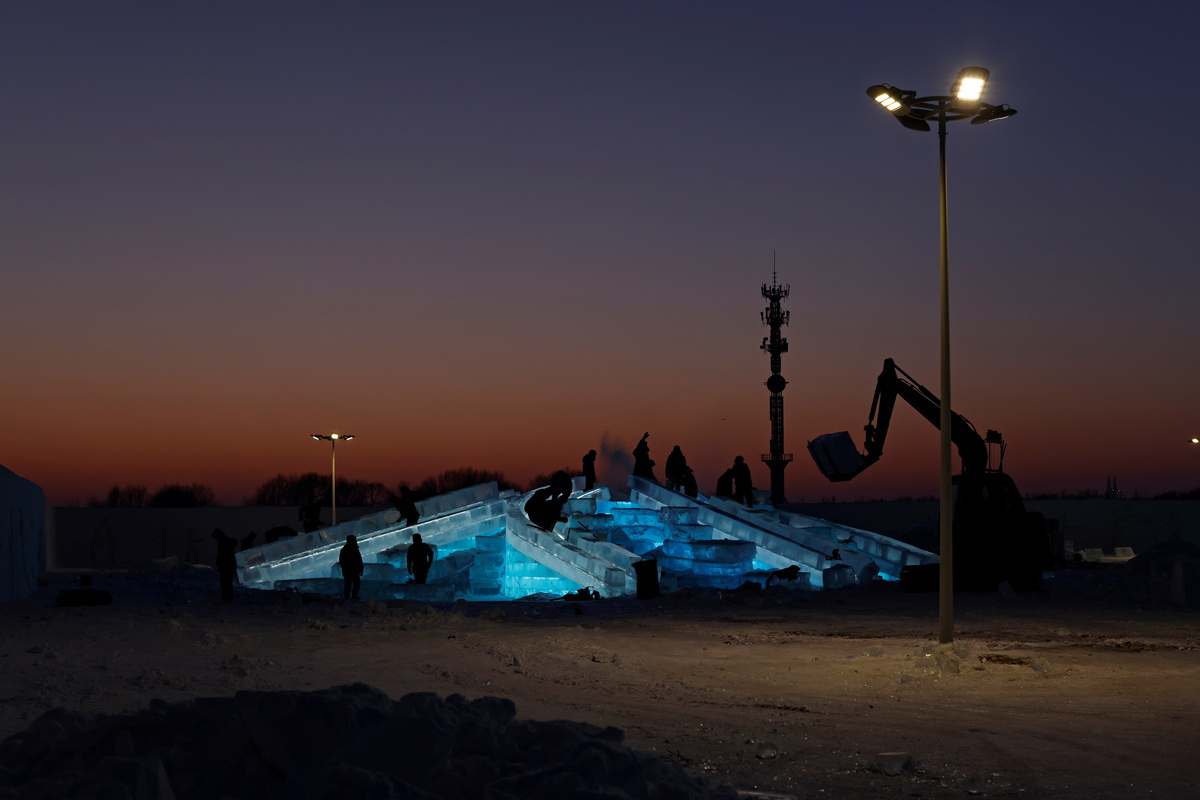
Organisers are racing to complete the sculptures at the festival venue - a busy scene of forklifts, cranes and scaffolding.
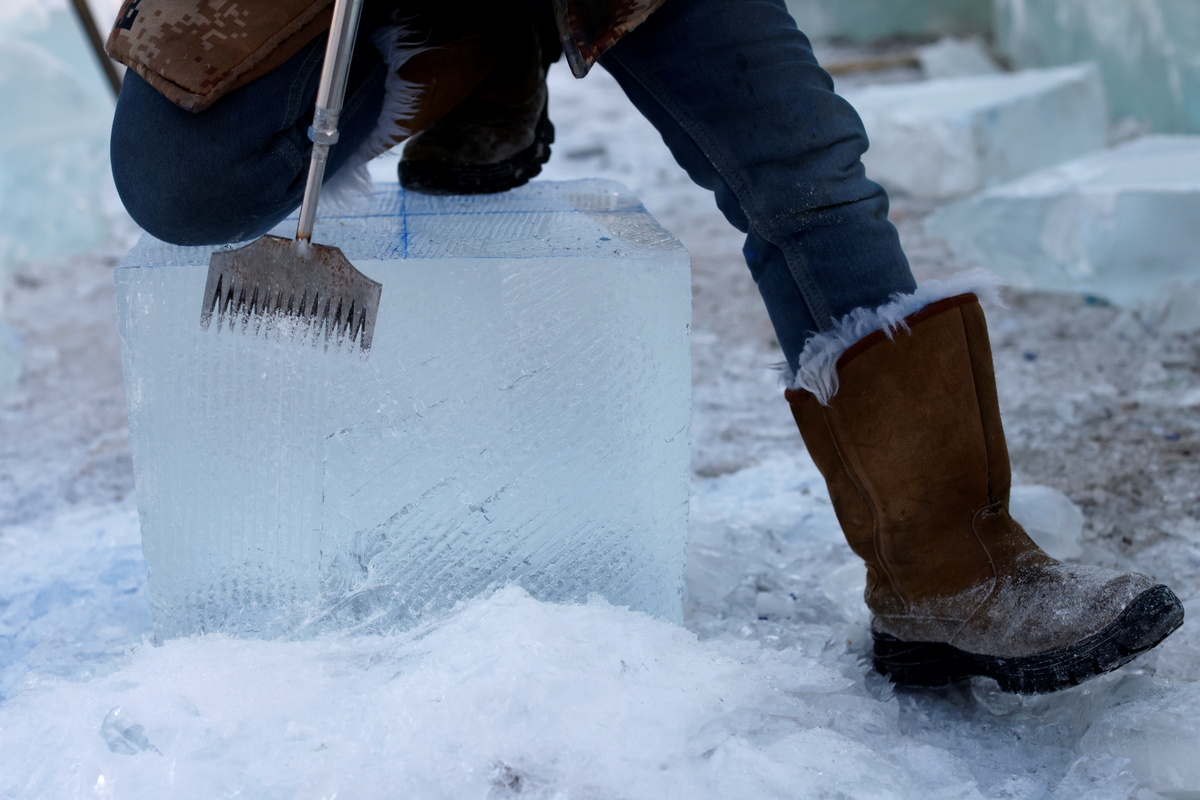
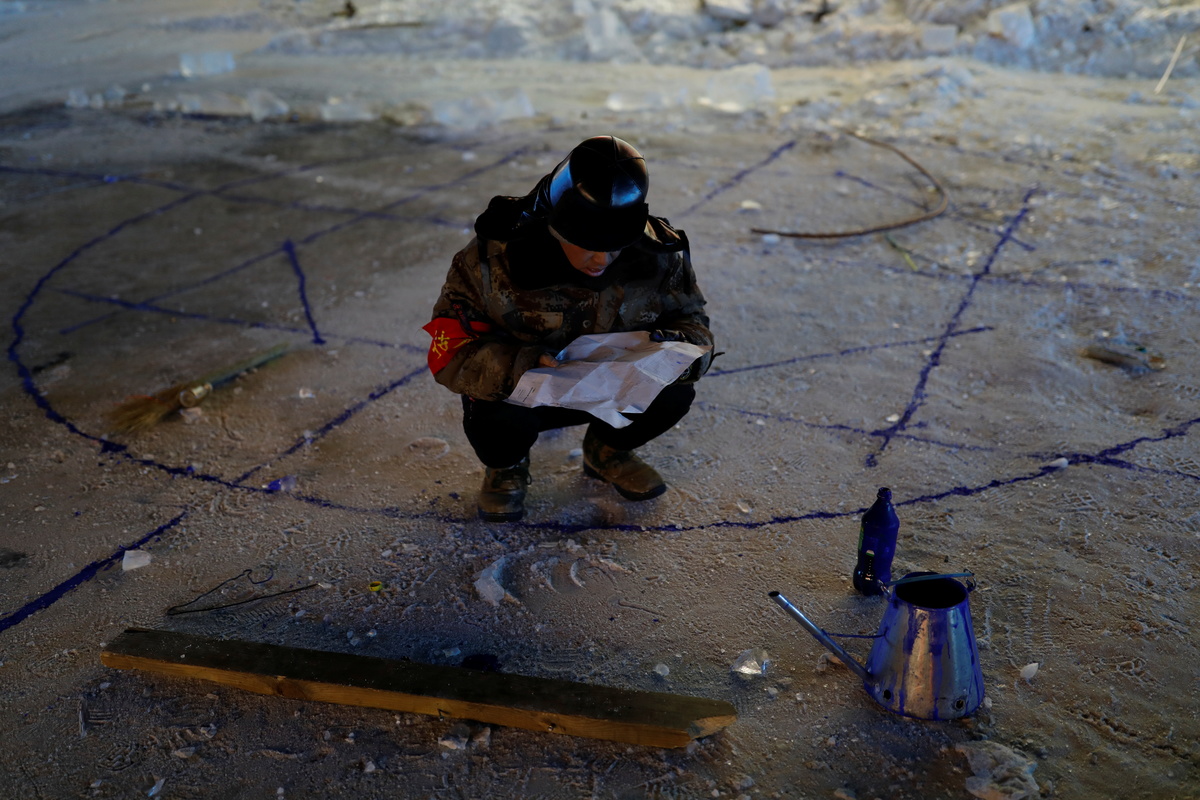
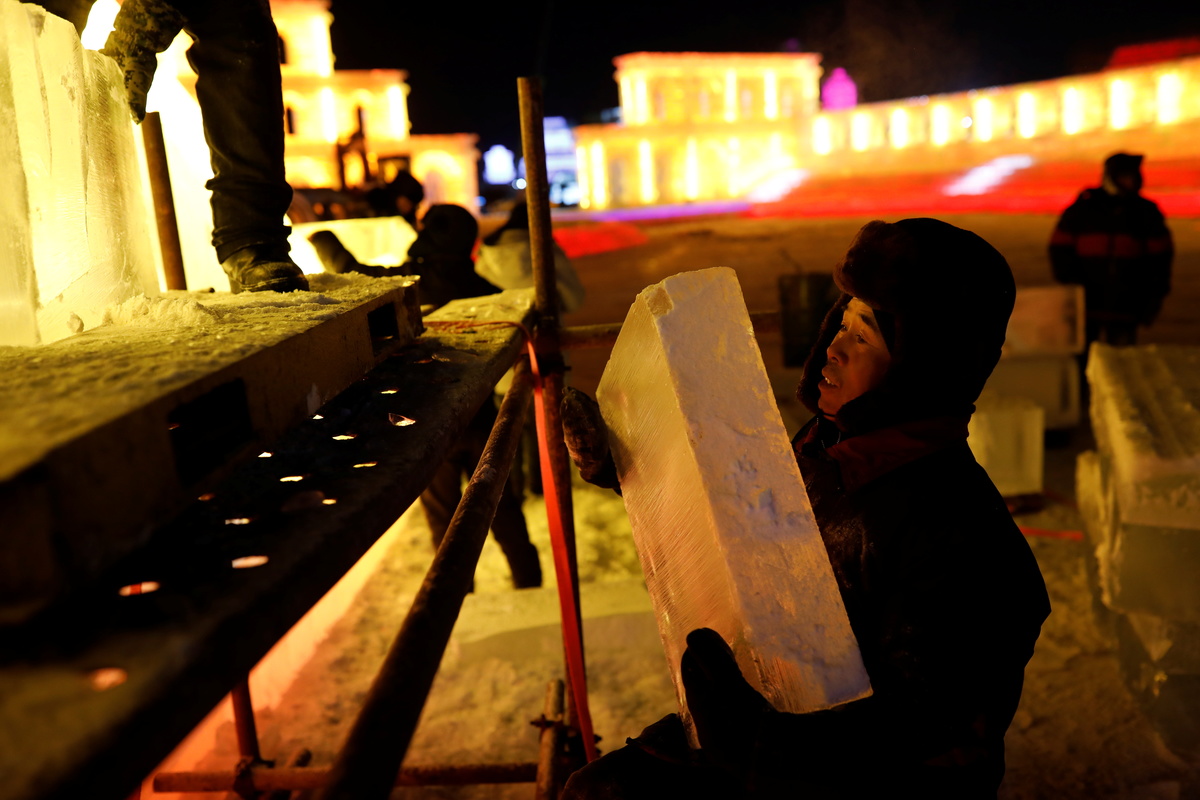
The ice blocks are painstakingly laid on top of one another while workers shape, trim and cut them to size with chainsaws, pickle forks and tooth chisels.
Workers place an ice block onto an ice structure at the site of the Harbin International Ice and Snow Festival before its opening in Harbin, China, December 16, 2020. REUTERS/Carlos Garcia Rawlins
The 37th Harbin International Ice Snow Festival is due to begin on Jan. 5, and will feature skiing, sledding, mass weddings, winter swimming and a theme park of ice sculptures bathed by coloured lights.
With China's international borders heavily restricted due to the coronavirus pandemic, domestic tourists are expected to account for the bulk of visitors marvelling at the ice sculptures next month in temperatures below minus 35 Celsius (minus 31 Fahrenheit).
(Reporting by Carlos Garcia and Xihao Jiang; Writing by Ryan Woo; Editing by Karishma Singh)
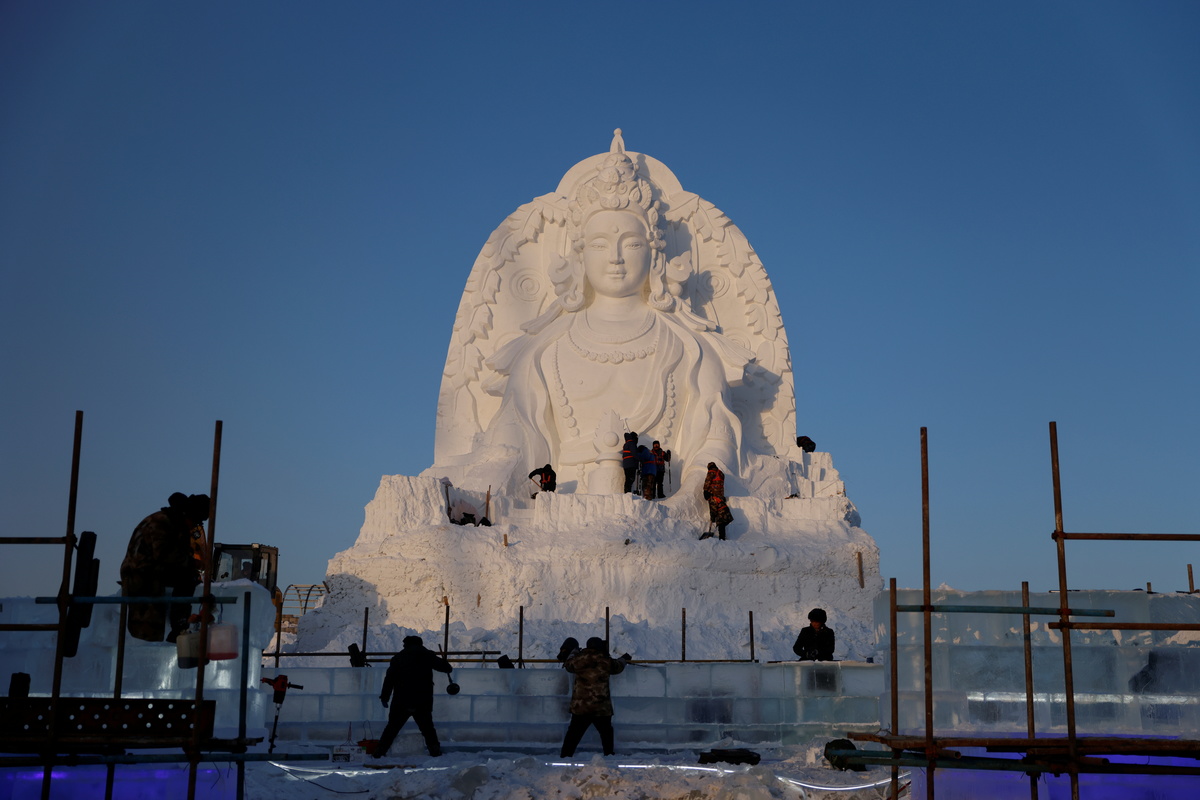
Workers on scaffolding build an ice structure at the site of the Harbin International Ice and Snow Festival before its opening in Harbin, China, December 16, 2020. REUTERS/Carlos Garcia Rawlins A worker holds his chainsaw as he poses for a photograph, while constructing ice structures at the site of the Harbin International Ice and Snow Festival before its opening in Harbin, China, December 16, 2020. REUTERS/Carlos Garcia Rawlins A worker stands on a block of ice block while breaking it into smaller pieces to be used at the Harbin International Ice and Snow Festival, at the frozen Songhua River in Harbin, China December 16, 2020. Picture taken with a drone. REUTERS/Carlos Garcia Rawlins Workers build ice structures at the site of the Harbin International Ice and Snow Festival before its opening in Harbin, China, December 17, 2020. REUTERS/Carlos Garcia Rawlins Trucks line up before being loaded with blocks of ice, to be used at the Harbin International Ice and Snow Festival, by the bank of the frozen Songhua River in Harbin, China, December 17, 2020. REUTERS/Carlos Garcia Workers prepare a giant Buddha snow sculpture at the site of the Harbin International Ice and Snow Festival before its opening in Harbin, China, December 18, 2020. REUTERS/Carlos Garcia Rawlins A worker uses a hand tool to shave a block of ice while building ice structures at the site of the Harbin International Ice and Snow Festival before its opening in Harbin, China, December 16, 2020. REUTERS/Carlos Garcia Rawlins A worker carries a tool called a gaff at the frozen Songhua River while extracting blocks of ice ahead of the Harbin International Ice and Snow Festival in Harbin, China, December 18, 2020. REUTERS/Carlos Garcia Rawlins A truck driver sits in his cab as blocks of ice to be used for the Harbin International Ice and Snow Festival are loaded onto his truck, before being transported to the site of the festival from the frozen Songhua river in Harbin, China, December 15, 2020. REUTERS/Carlos Garcia Rawlins A worker posses for a photograph outside the site of the Harbin International Ice and Snow Festival, before its opening in Harbin, China, December 17, 2020. REUTERS/Carlos Garcia Rawlins Workers wait to be served lunch at a food stall selling dumplings and buns outside the site of the Harbin International Ice and Snow Festival, before its opening in Harbin, China, December 17, 2020. REUTERS/Carlos Garcia Rawlins A worker carries a bowl of noodles inside a food stall's makeshift plastic tent, outside the site of the Harbin International Ice and Snow Festival, before its opening in Harbin, China, December 17, 2020. REUTERS/Carlos Garcia Rawlins A worker looks at construction plans at the site of the Harbin International Ice and Snow Festival before its opening in Harbin, China, December 16, 2020. REUTERS/Carlos Garcia Rawlins A worker checks a kettle while working by the bank of the frozen Songhua River, before the opening of the Harbin International Ice and Snow Festival, in Harbin, China, December 16, 2020. REUTERS/Carlos Garcia Rawlins Workers build ice structures at the site of the Harbin International Ice and Snow Festival before its opening in Harbin, China, December 18, 2020. REUTERS/Carlos Garcia Rawlins A worker carries a block of ice while building an ice structure at the site of the Harbin International Ice and Snow Festival before its opening in Harbin, China, December 16, 2020. REUTERS/Carlos Garcia Rawlins A worker uses a chainsaw to carve a block of ice, while constructing ice structures at the site of the Harbin International Ice and Snow Festival before its opening in Harbin, China, December 16, 2020. REUTERS/Carlos Garcia Rawlins Workers build an ice structure at the site of the Harbin International Ice and Snow Festival, before its opening in Harbin, China, December 17, 2020. REUTERS/Carlos Garcia Rawlins Workers build ice structures at the site of the Harbin International Ice and Snow Festival before its opening in Harbin, China, December 18, 2020. REUTERS/Carlos Garcia Rawlins A worker uses a forklift to load blocks of ice to be used for the Harbin International Ice and Snow Festival, onto a truck transporting them to the site of the festival, by the bank of the frozen Songhua River, in Harbin, China, December 15, 2020. REUTERS/Carlos Garcia Rawlins
Sign up to read this article
Read news from 100’s of titles, curated specifically for you.