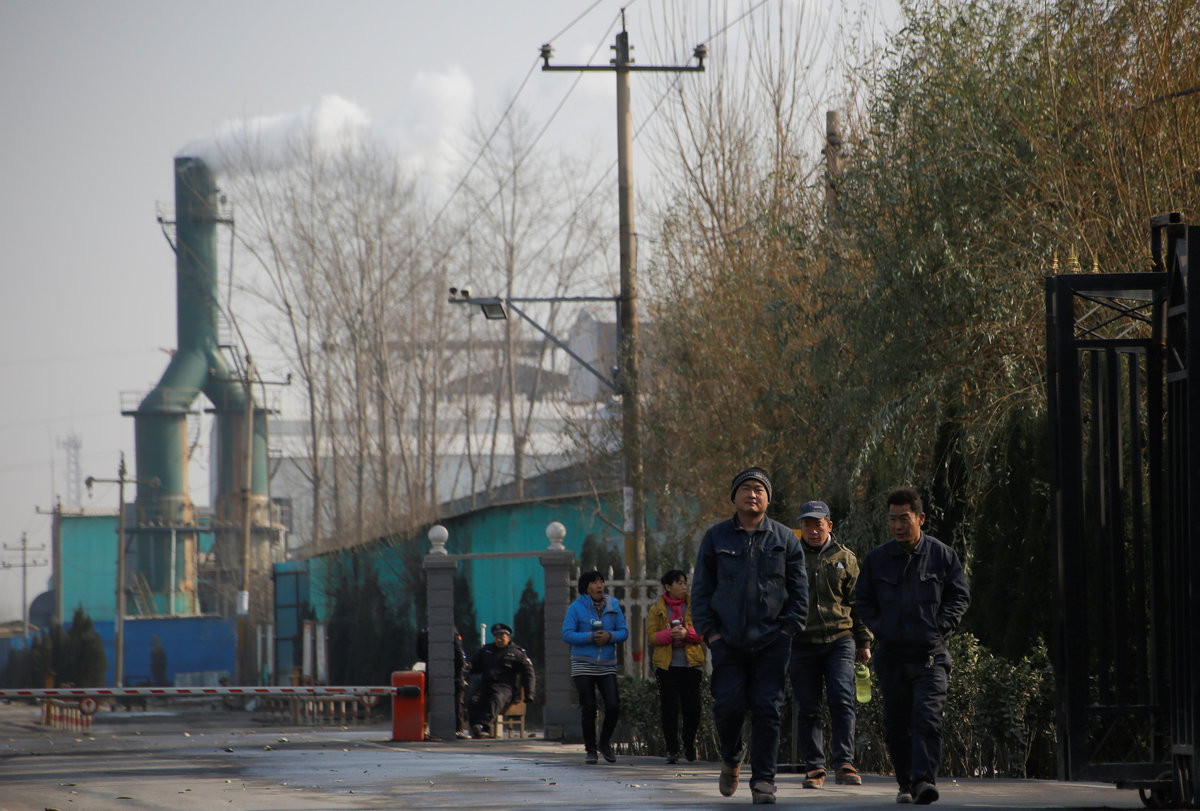
BEIJING (Reuters) - China is considering allowing its northern provinces to decide individual output cuts by heavy industry to rein in emissions during the winter, ditching an earlier plan for blanket cuts in a bold bet to clean the country's notoriously toxic air.
Talk of the move drove down steel and industrial raw material prices and comes as Beijing looks to end its "one-size-fits-all" fight on pollution, devising more nuanced policies reflecting local conditions to limit economic disruptions.
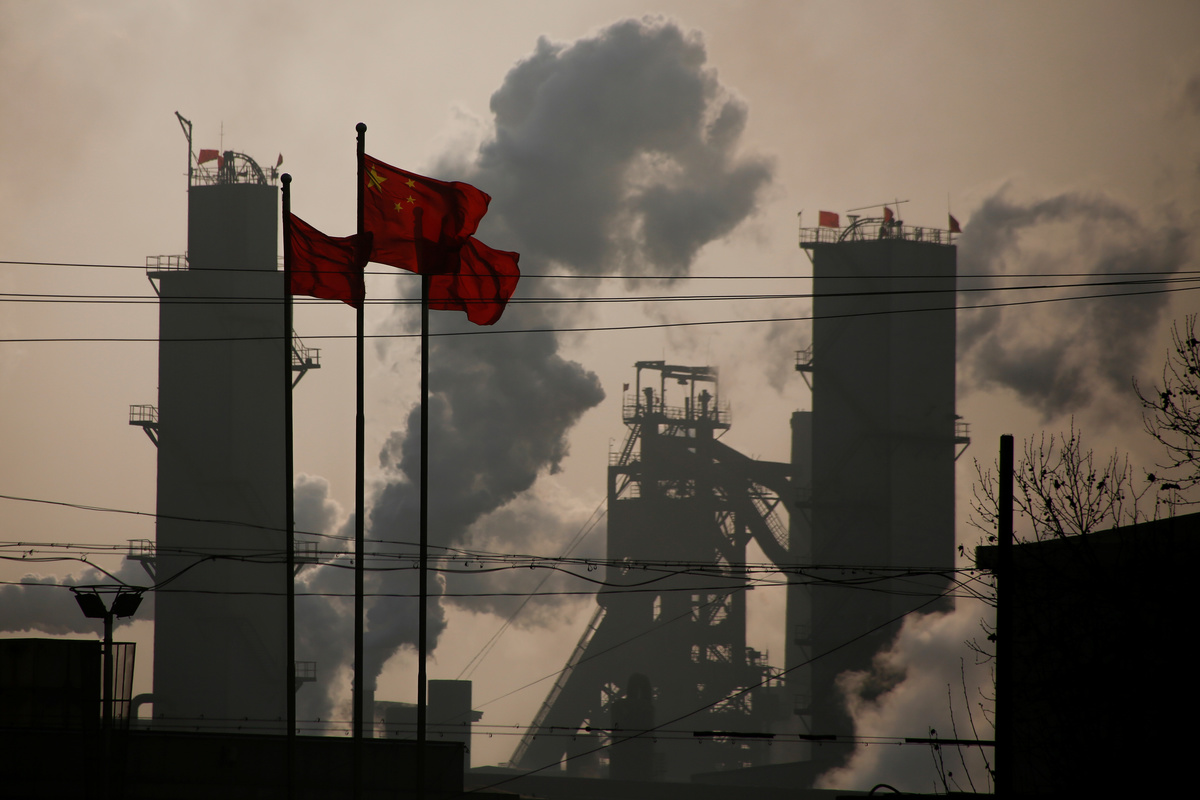
"Production cuts on heavy industry will remain this winter, but detailed cutting rates will be set by local authorities based on their own situation," said a source, who is involved with the plan.
It is not clear when the Ministry of Ecology and Environment (MEE), will announce a formal decision, added the source, who declined to be identified as the plan has not been made public.
The MEE did not respond to a request for comment.
If adopted, the move would be another sign of Beijing fine-tuning policy in its years-long fight against smog.
It would also ease sweeping proposals in the MEE's draft plan, reported by Reuters last month, for cuts of 50 percent in steel production and 30 percent in primary aluminum in some areas, which were similar to last winter's measures.
This will be the second year that China forces steel mills, aluminum smelters and other heavy industry in the smoggy northern regions to cut output during the winter, when emissions from the country's coal-fired power stations increase as they meet rising heating demand.
The heating season starts in November and ends in March.
Handing responsibility for those curbs to provincial governments is risky though as regional authorities may set more lenient targets than Beijing desires, putting economic growth and jobs over the pollution battle.
However, any easing on pollution measures may release some of the pressure on the world's second-largest economy as Washington's trade war with Beijing shows no signs of ending.
"The policy switch may indicate production cut rates could be lower than market expectations," said Zhuo Guiqiu, an analyst at Jinrui Futures.
"Local authorities, especially those relying largely on heavy industry, would have less incentive to carry out output curbs if pressure from the central government eases."
FALLING PRICES
Some authorities, however, may introduce more stringent plans to meet the politically significant environmental targets. Last year, Shanxi province voluntarily expanded its production cuts to more cities and enacted the curbs earlier than Beijing required.
Still, the pressure on some of the country's worst air pollution offenders remains high.
The city of Tangshan, China's top steelmaking hub, has introduced strict measures this summer to improve its air after failing to meet 2017 targets.
The move also raises concerns that the MEE may be easing its tough stance on smog. Last month, it lowered air improvement targets in northern regions for this winter.
Concentrations of particulate matter must fall by around 3 percent from October to March compared to the same period last year, a MEE spokesman said at a briefing last month, down from a 5 percent cut outlined in the draft plan.
Steel and industrial raw material prices fell on news of the potentially looser output cuts.
The most actively traded coke future, for January delivery <DCJcv1>, plunged as much as 5 percent, while hot-rolled steel coil <SHHCcv1> and rebar <SRBcv1> futures fell by the most since March.
(Reporting by Muyu Xu and Josephine Mason; Editing by Clarence Fernandez and Christian Schmollinger)