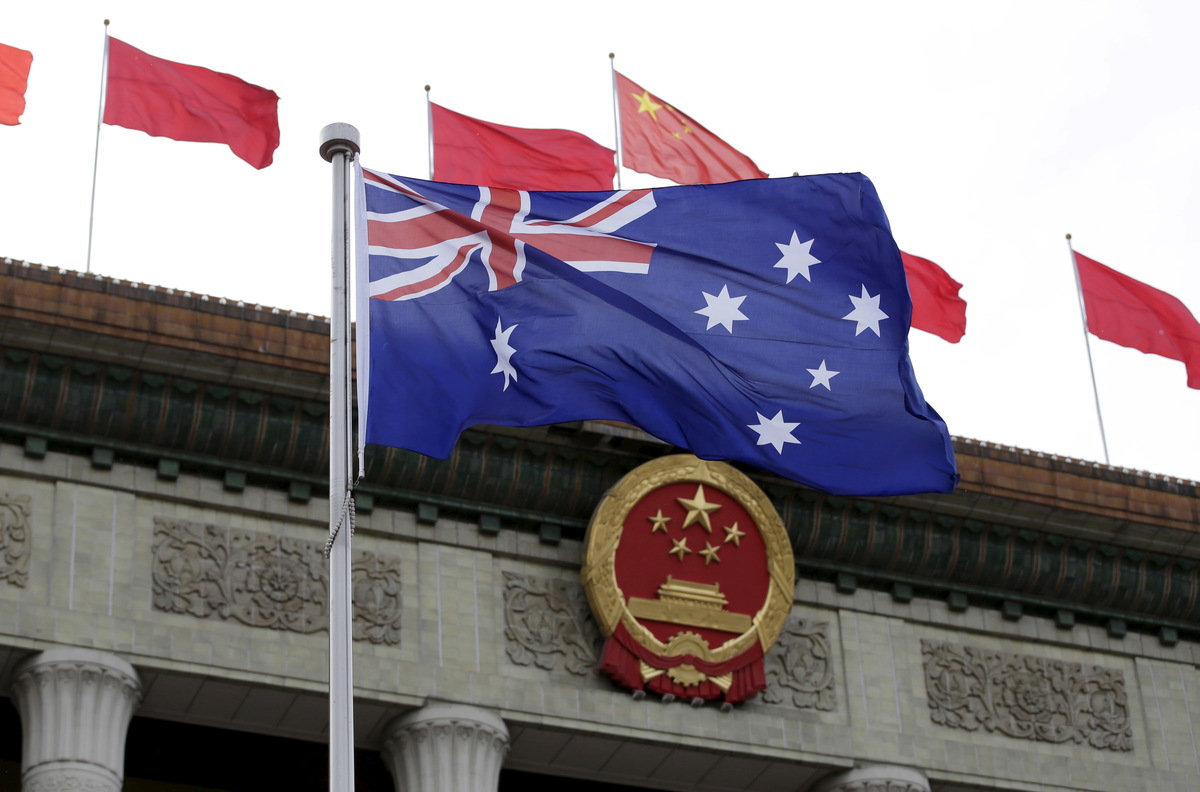
Beijing downplayed on Tuesday the significance of Sweden's decision to deny Beijing the use of its antenna at a satellite station in Australia, saying China's space programme and navigational capabilities in the Pacific region remained intact.
On Monday, Sweden's state-owned space company said it would not renew contracts with China or accept new Chinese business due to changes in geopolitics.
Since at least 2011, the Sweden Space Corporation (SSC) has had contracts giving Beijing access to its antennas in Sweden, Chile and Australia. It told Reuters those contracts would not be renewed.
There is at least a decade left on the contract for the Australian antenna, which has not been used or visited by working personnel from China for many years, state-backed tabloid Global Times reported, citing Chinese space insiders.
The Australian antenna is located next to an SSC satellite station used mainly by the United States and its agencies, including NASA.
China's contract in Australia started in 2009, and is "good for decades," the insiders told the paper, published by the People's Daily, the official newspaper of the ruling Communist Party.
China will renew its collaboration with SSC after the current contract expires, they added, without saying if that covered the Australian facility.
SCC's global capabilities and management have attracted many countries and firms, Chinese foreign ministry spokesman Wang Wenbin told a regular briefing on Tuesday, when asked how politics had affected the contract.
China last used the Yatharagga Satellite Station, 350 km (250 miles) north of Perth, in 2013, to support the three-person Shenzhou-10 mission which completed a series of space docking tests.
The Australian facility played a far less important role than the Kiribati ground station on that mission, the insiders said.
Global Times said China's homegrown Beidou navigation system had inter-satellite links to reduce reliance on ground stations and ensure the continuity of high-precision global services.
Global Times did not mention the SSC contracts with China in Sweden and Chile.
(Reporting by Ryan Woo; Additional reporting by Yew Lun Tian; Editing by Clarence Fernandez)