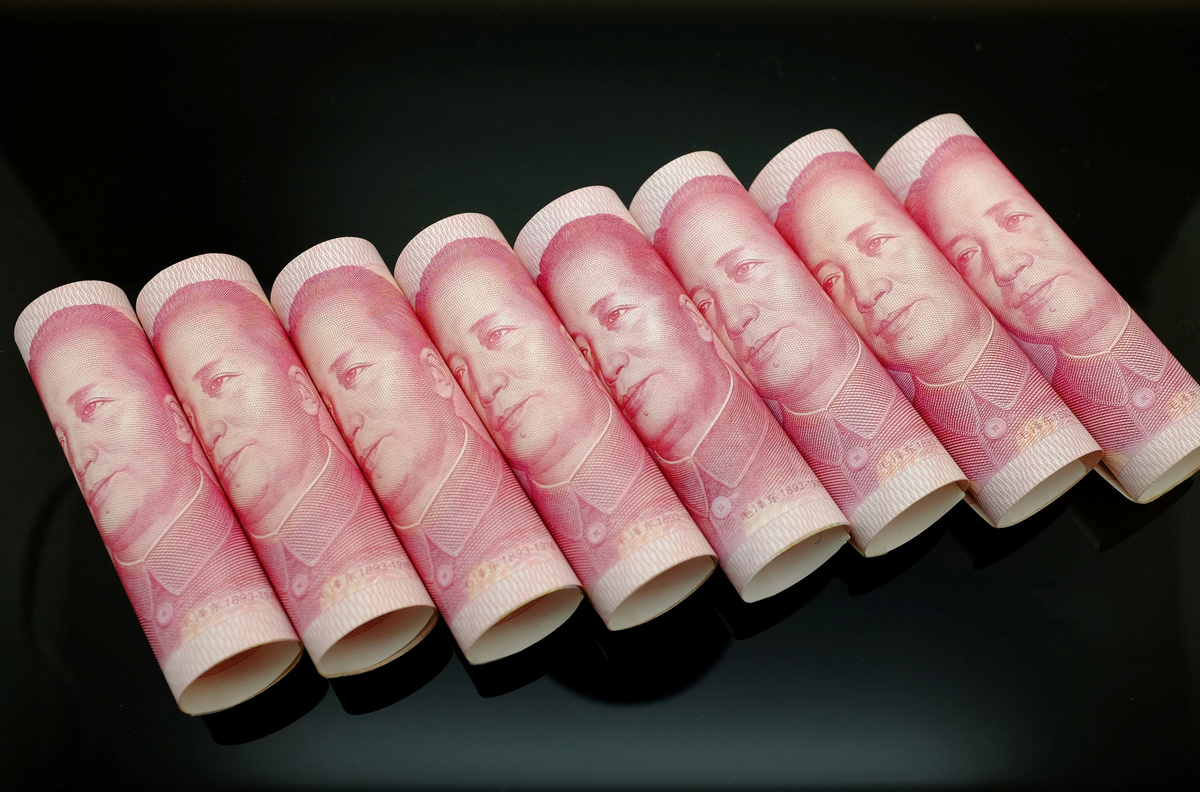
LONDON (Reuters) - The share of China's currency held by central banks rose to nearly 2 percent of global reserves, according to a quarterly report by the International Monetary Fund.
In a report released on Friday, the IMF noted the share of the Chinese renminbi <CNY=CFXS> is now at levels equivalent to the Australian dollar <AUD=D3> and the Canadian dollar <CAD=D3> in central bank portfolios.
The increase in the holdings in the second quarter came as trade tensions between the United States and China escalated and drove the renminbi down more than 5 percent.
The increase indicated that global reserve managers had a strong appetite for the Chinese currency, said Steve Englander, head of global G10 FX strategy at Standard Chartered Bank.
"It is also possible that reserve managers were diversifying out of the dollar, either for portfolio reasons or because of political differences with the United States," Englander said.
Central banks' reserves are the biggest players in the $5.1 trillion-a-day currency markets. Their portfolio allocations and changes can have a major impact on a currency over months and even years.
By the end of June, central banks had amassed $11 trillion in global reserves of which they had allocated $10.5 trillion.
The U.S. dollar <=USD> remained the top holding for global central banks with a market share of 62.2 percent, followed by the euro currency <EUR=> at 20 percent and the yen at 5 percent.
The Chinese currency's rise underscores the desire of reserve managers to diversify away from their large dollar holdings.
The IMF admitted the Chinese currency to the Special Drawing Rights basket alongside the dollar, euro, pound sterling and yen in November 2015, and its share has rapidly increased among global reserve managers.
By the end of June, the Chinese currency had amassed a market share of 1.8 percent, overtaking the Australian dollar at 1.7 percent and nearly catching up with the Canadian dollar at 1.9 percent.
In dollar terms, the share of the Chinese currency remained tiny compared with the dollar, euro or yen, IMF data showed.
In percentage terms, the share of the British currency among global portfolios declined by 20 basis points to 4.48 percent.
(Reporting by Saikat Chatterjee, editing by Larry King)