
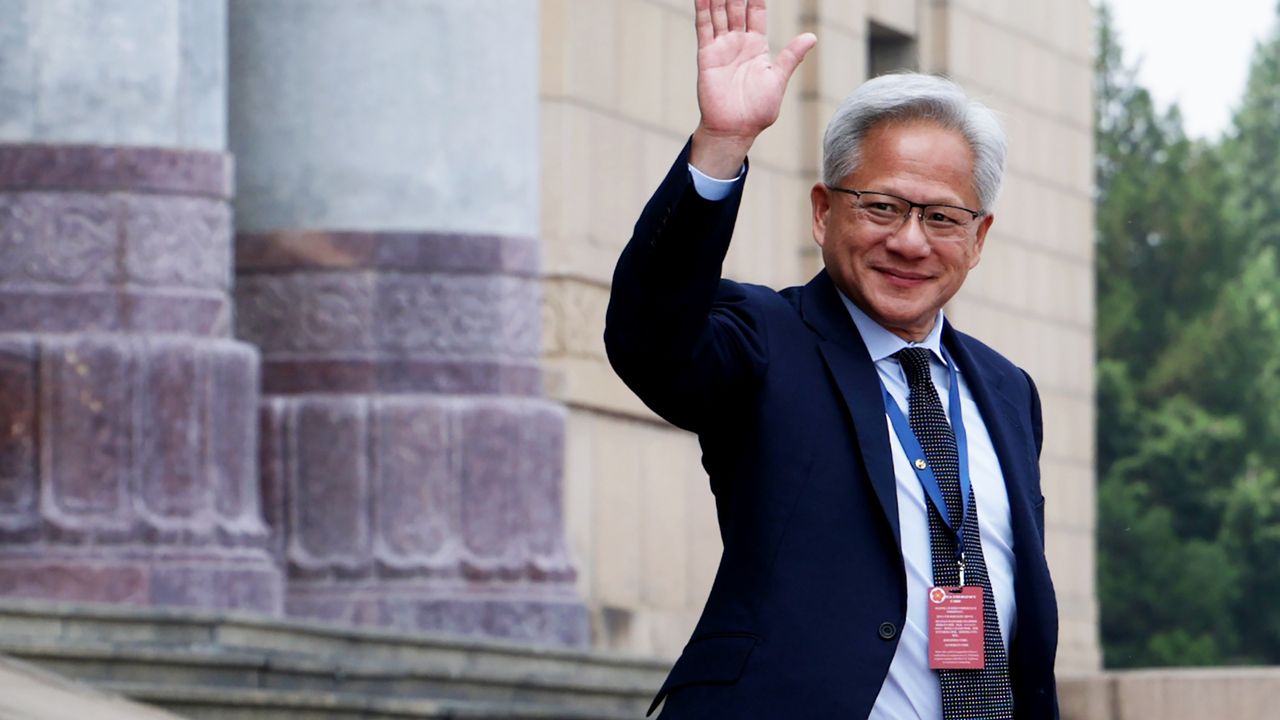
China reportedly banned Nvidia's RTX 5090D V2, an export-friendly version of its top-end RTX 5090 GPU, while CEO Jensen Huang was visiting the country as part of President Donald Trump's state visit last week, the Financial Times reports. The report claims the chip has been added to a list of banned goods at Chinese customs. Huang was a late addition to Trump’s entourage last week, boarding Air Force One in Alaska after he was initially not included on the President’s guest list.
Go deeper with TH Premium: Taiwan, trade, and tariffs

- China's latest round of rare-earth export controls explained
- Analyzing Washington's new AI accelerator export rules
- U.S. government plans tariff exemptions for TSMC
- Nvidia wants China's market share to secure the future of CUDA in the region
FT cites a document confirming the chip was added to the list, as well as two people "with knowledge of the matter," stating that the card was added to the list on Friday, May 15.
The Nvidia RTX 5090D V2 is a version of the company’s top-of-the-line gaming GPU designed to comply with U.S. export controls. This graphics card, which has less VRAM and lower bandwidth compared to the vanilla 5090, is designed for Chinese gamers and 3D artists. However, AI developers have also been taking advantage of this relatively powerful GPU, especially as they’ve been cut off from Nvidia’s more potent Blackwell-powered AI GPUs.
The most powerful Nvidia AI processors available to Chinese firms at the moment are H200 chips, which Trump approved for export to China in a surprise move in late 2025. But despite that, Beijing refuses to give its AI companies the green light to purchase these GPUs. Instead, the central government wants them to buy domestically manufactured chips, allowing Huawei to leapfrog Nvidia’s market share position in the country.
China’s alleged move to ban the RTX 5090D V2 while Trump and Jensen were still in town, paired with the continuing restriction on H200s, may be Beijing’s signal to the U.S. that it does not need its de-fanged AI chips. This is what the Nvidia chief is worried about — that if Chinese AI firms start ditching the American tech stack, the U.S. will lose its hardware advantage in the AI race. Still, others argue that the United States’ rivals shouldn’t have access to its latest technologies, as they can potentially be used to close America’s technological edge when it comes to defense and the military. Tom's Hardware has reached out to Nvidia for comment on this report, and we'll update this story accordingly if it responds.
Both those for exporting American AI chips to China and those against giving them access to this advanced hardware have valid points, but we can only know which side is right years, if not decades, from now. The Nvidia chief remains hopeful, though, saying on Bloomberg TV, “My sense is that over time, the market will open.”