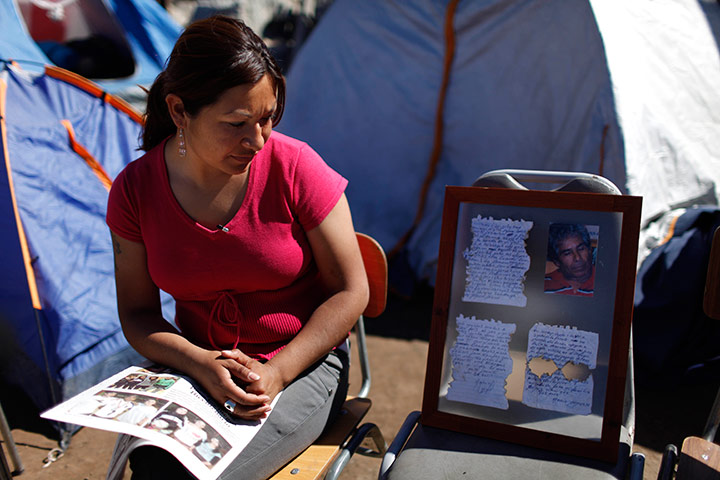
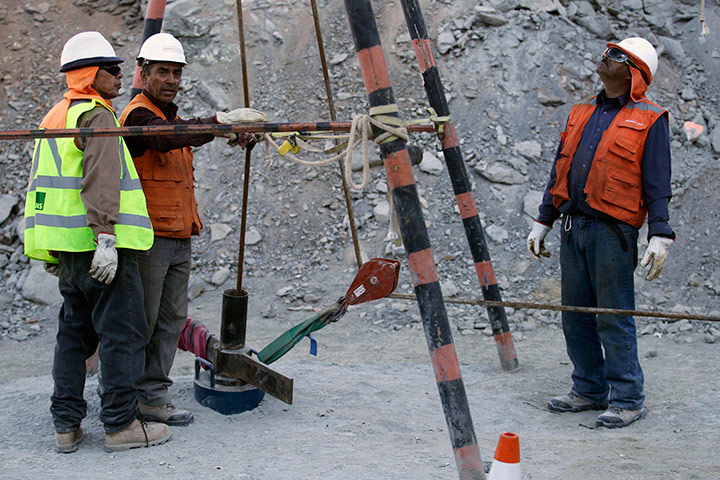
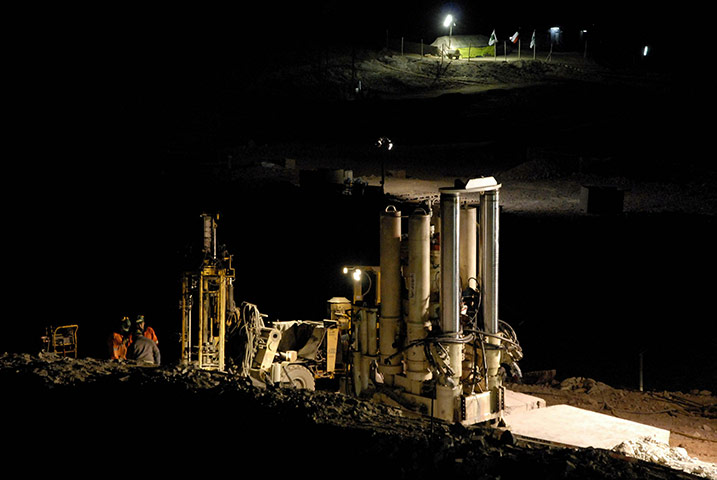
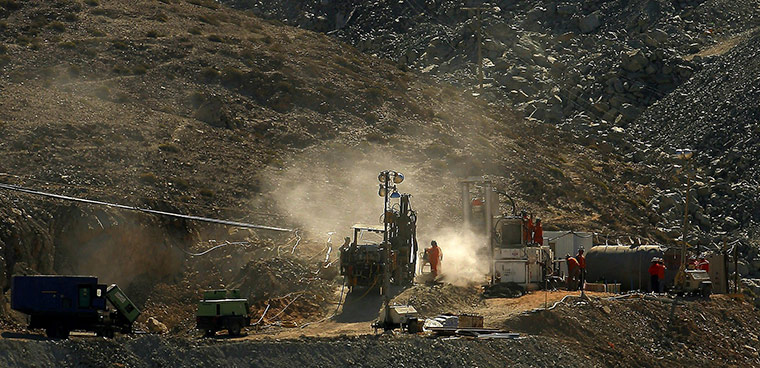
25 August 2010: A team prepares the land where an escape hole will be drilled for the minersPhotograph: Ivan Alvarado/Reuters25th August 2010: The Xtrata 950 drill which will be used to make an escape route. The work could take till the end of the yearPhotograph: Ivan Alvarado/Reuters25th August 2010: Lilianett Gómez looks at the first letter sent by her father, Mario Gómez, from inside the minePhotograph: Roberto Candia/AP
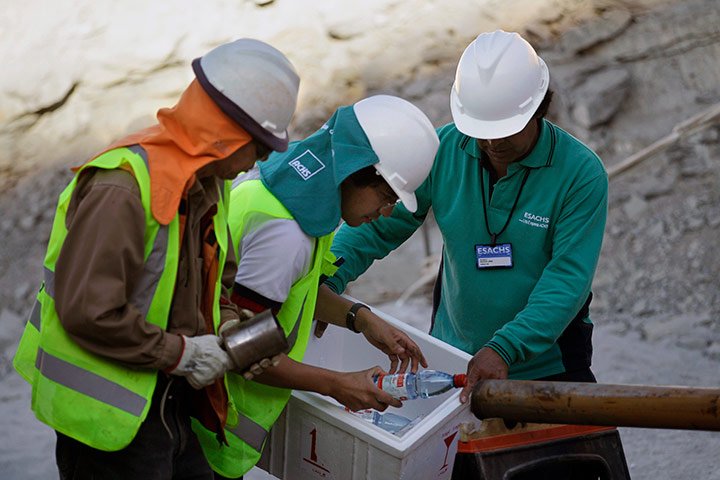
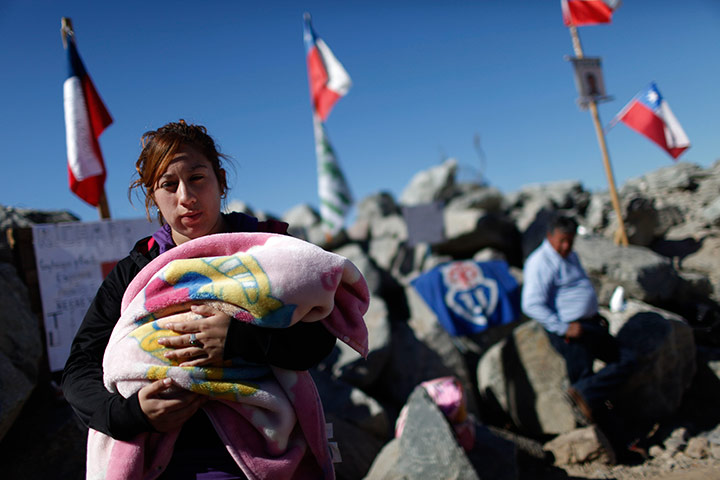
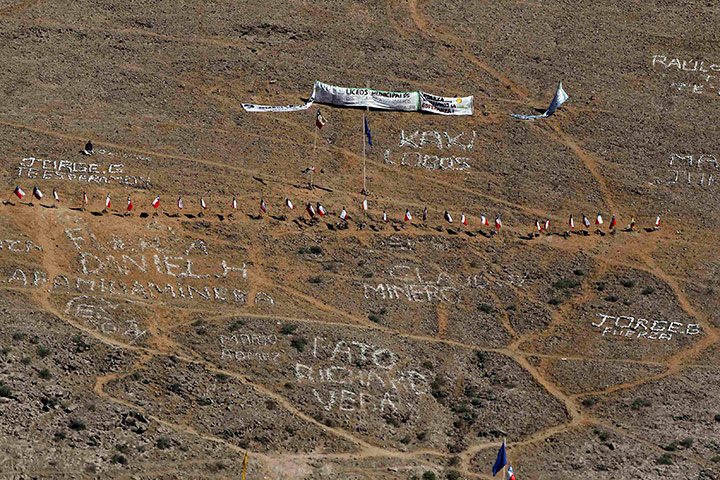
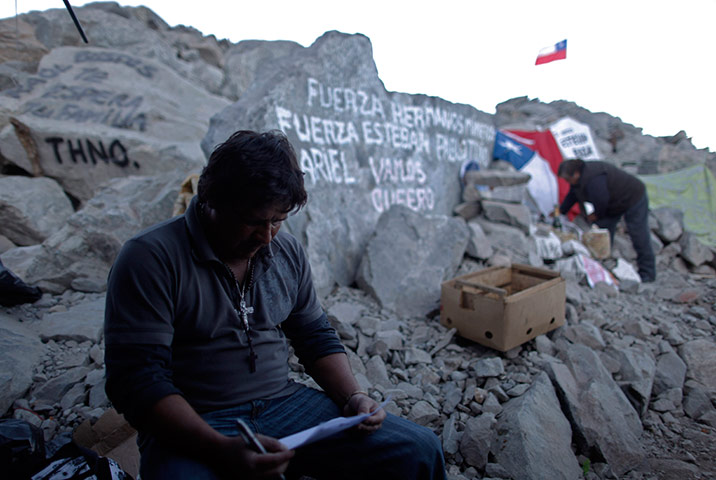
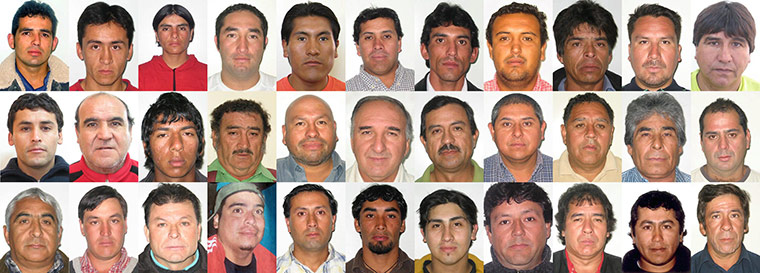
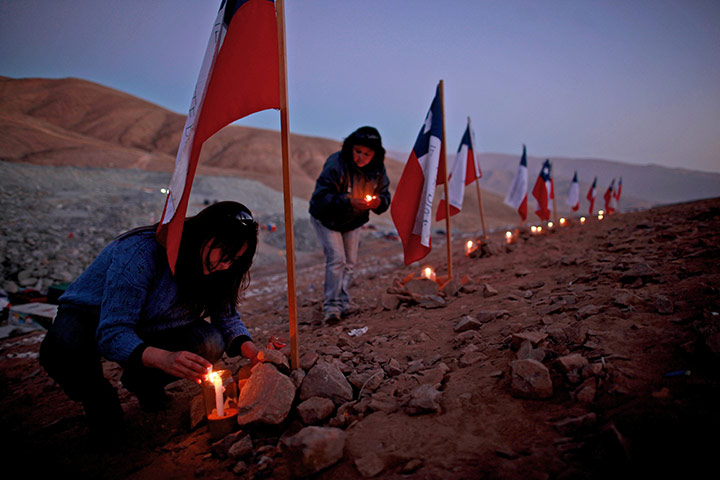
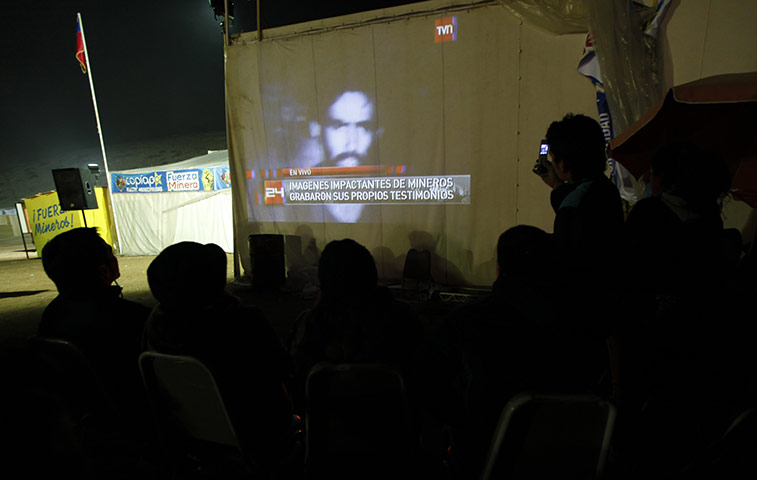
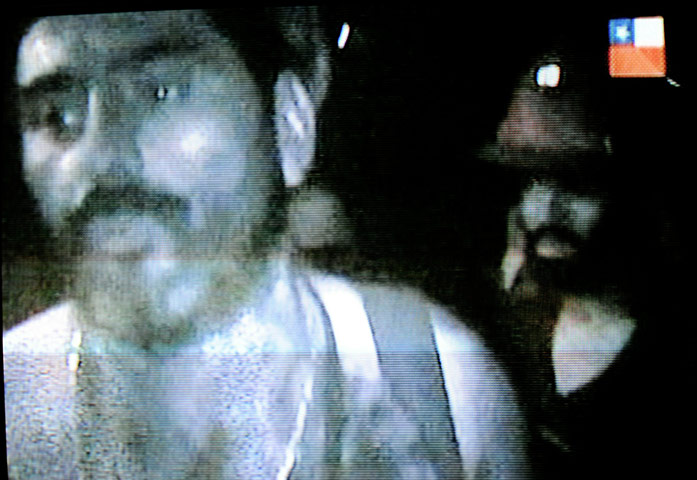
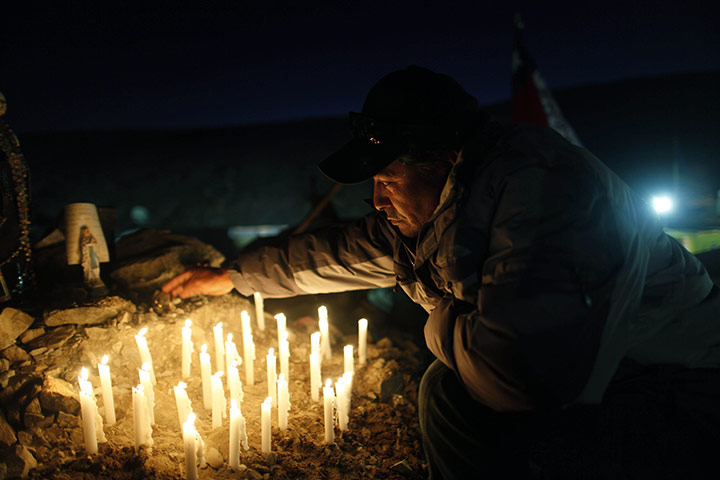
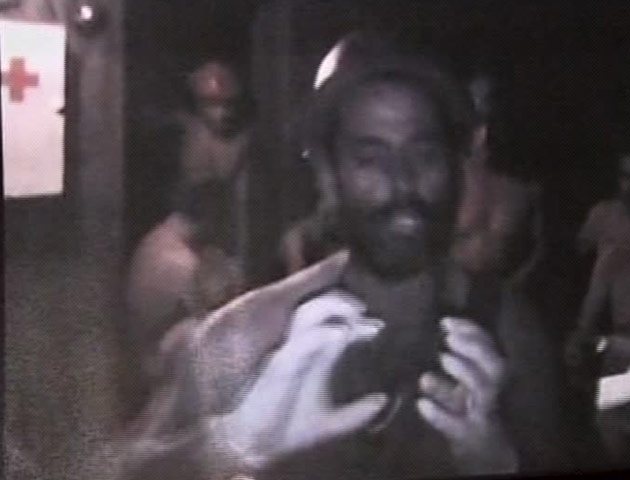
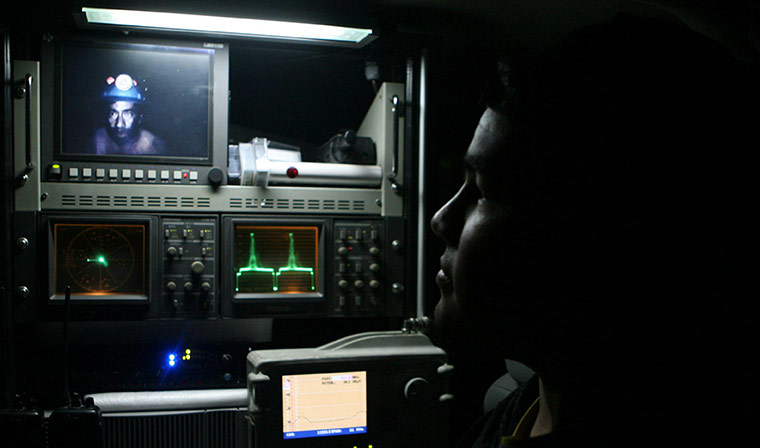
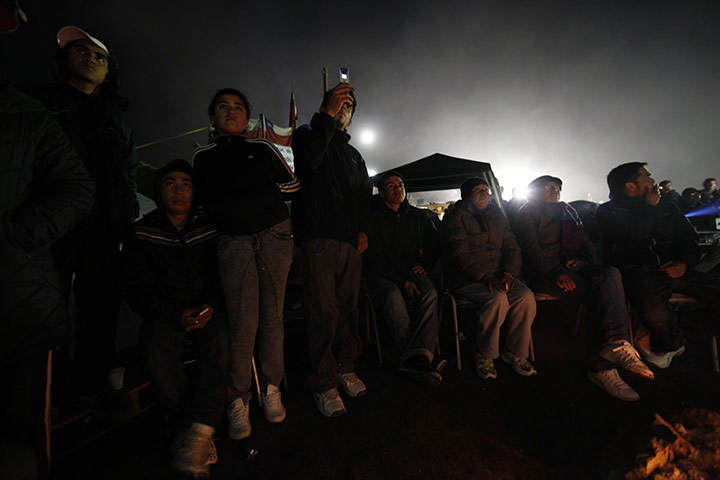
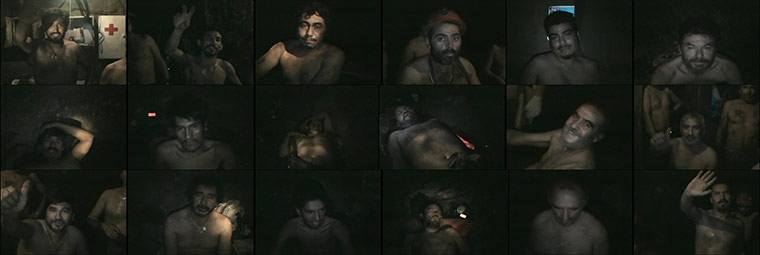
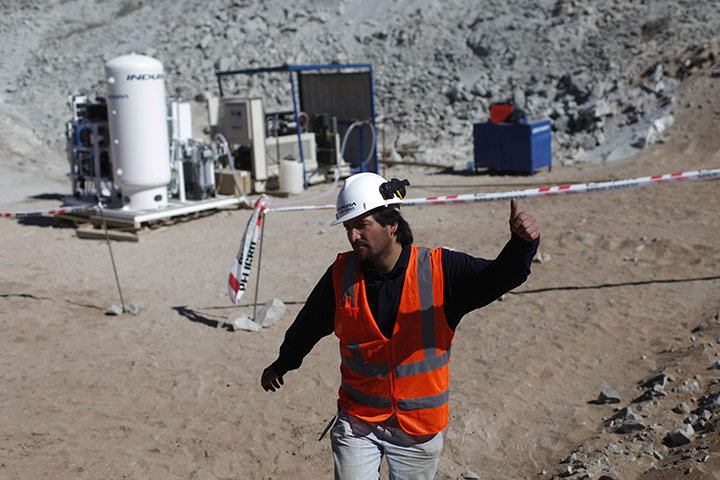
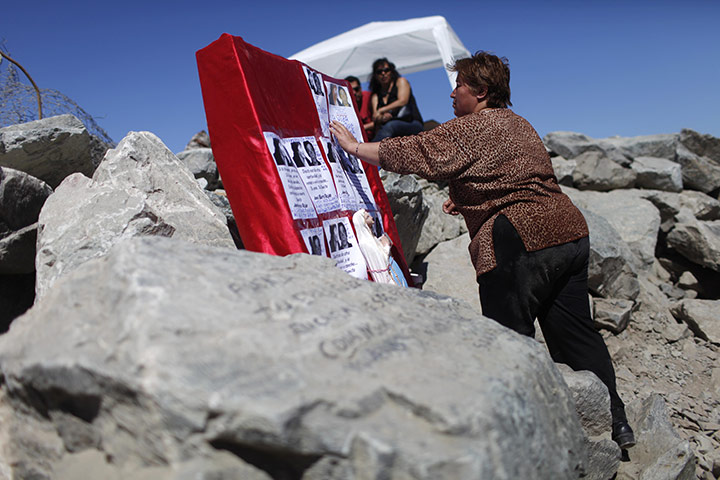
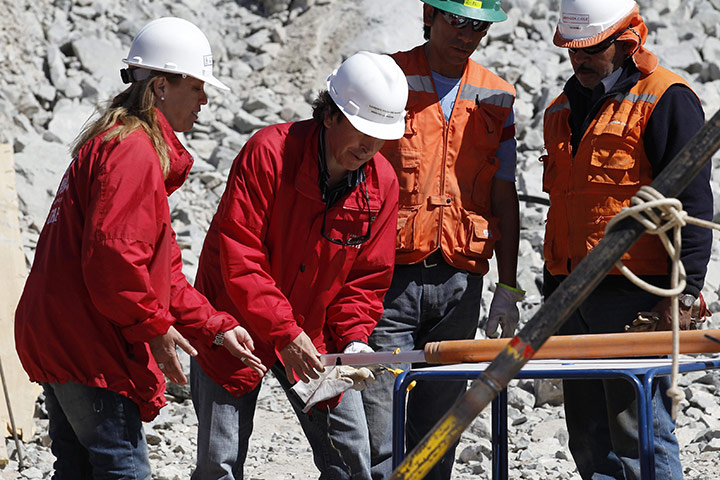
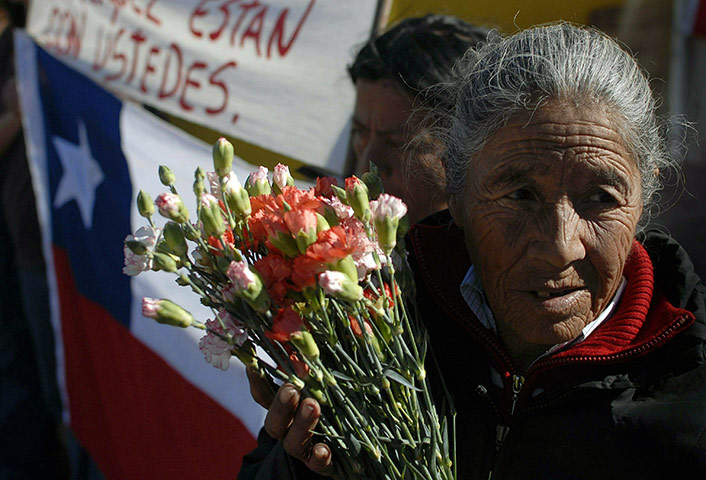
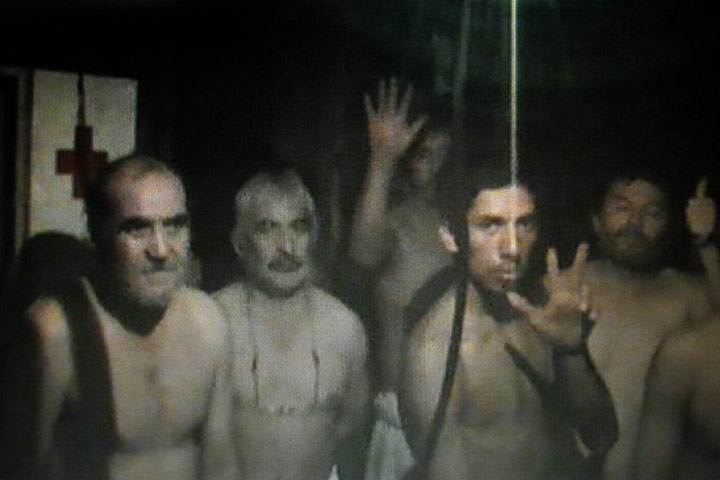
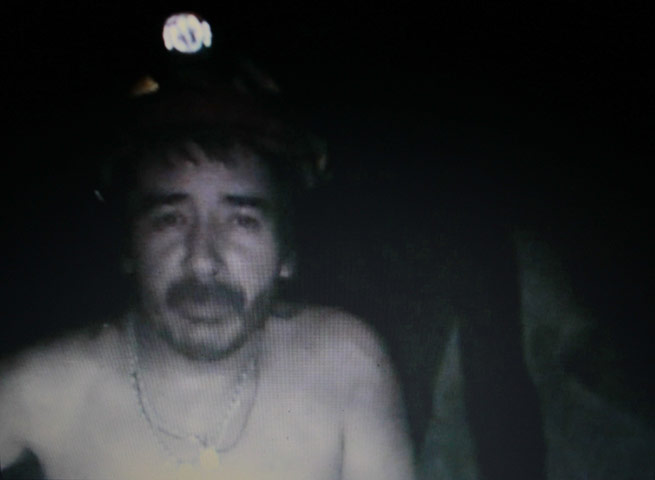
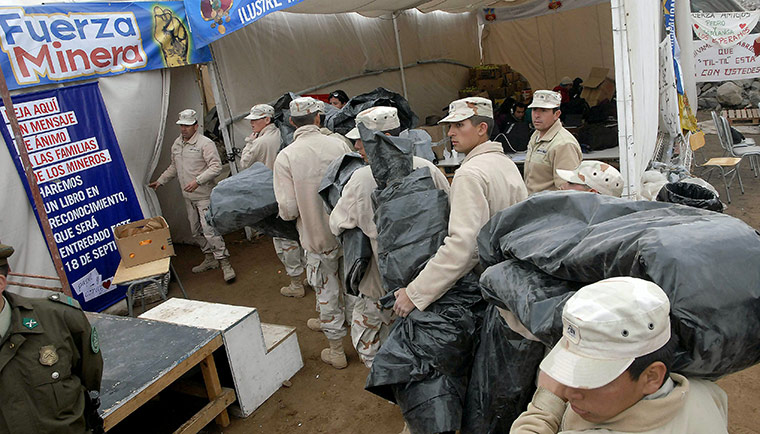
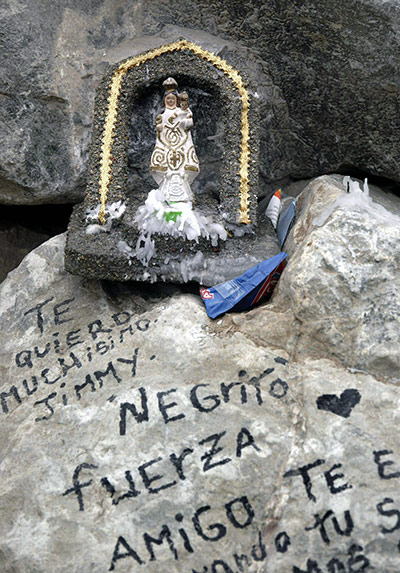
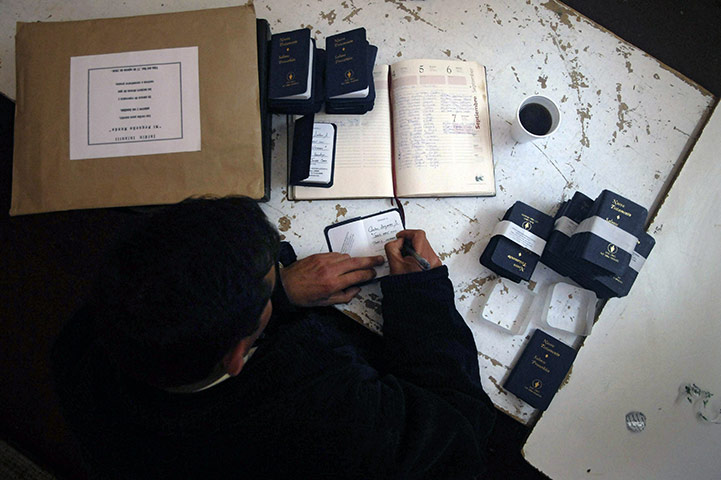
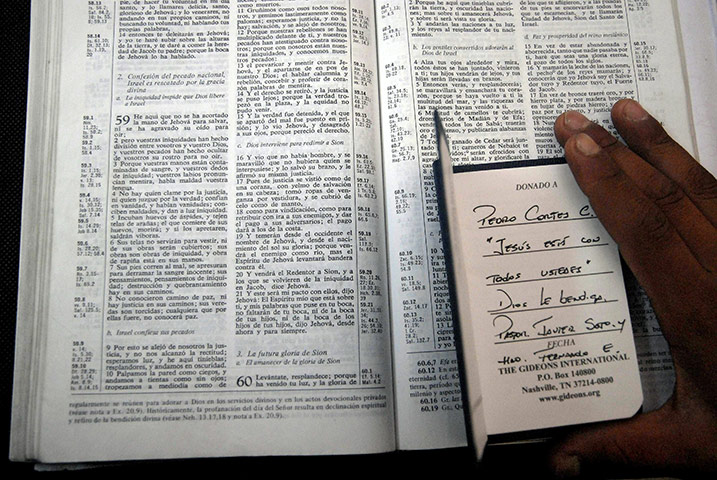
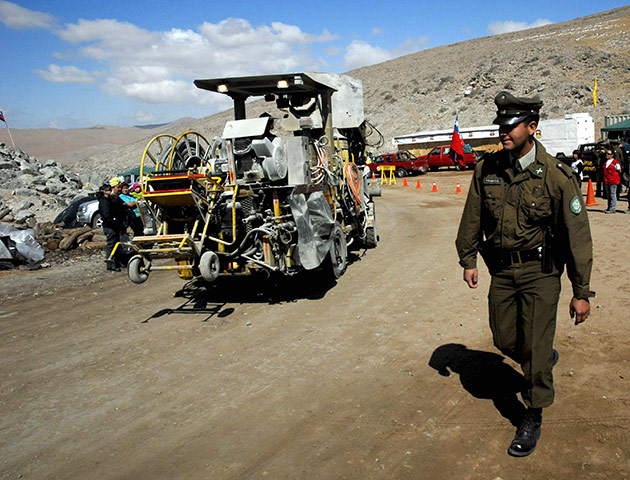
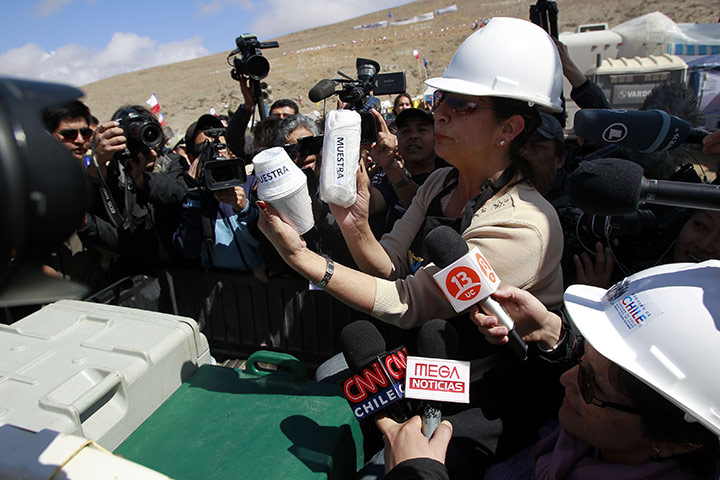
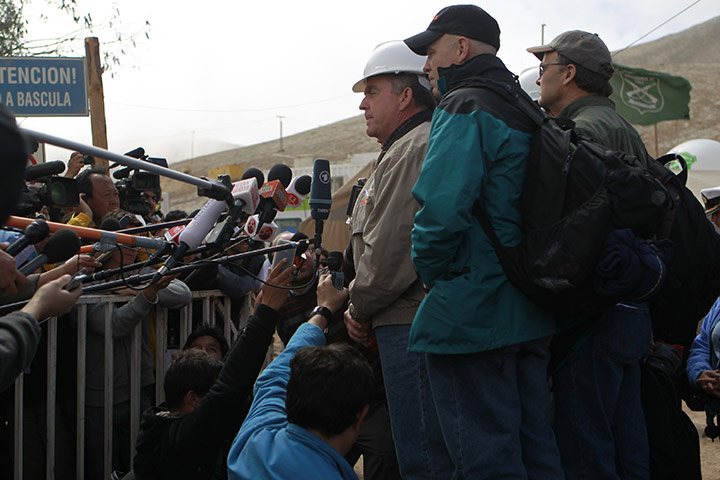
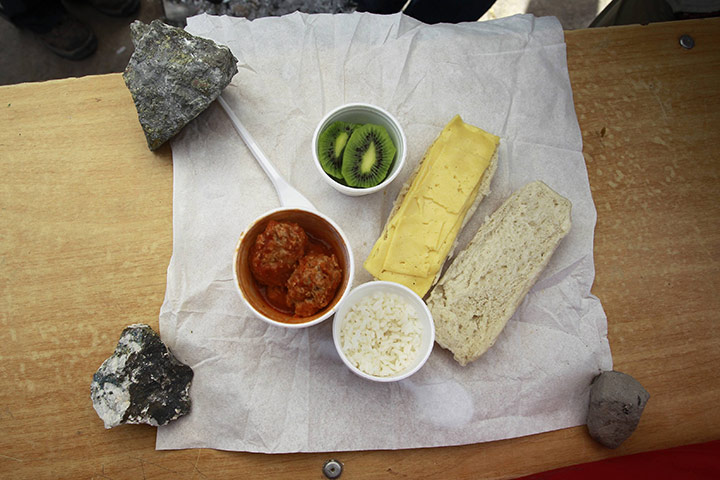
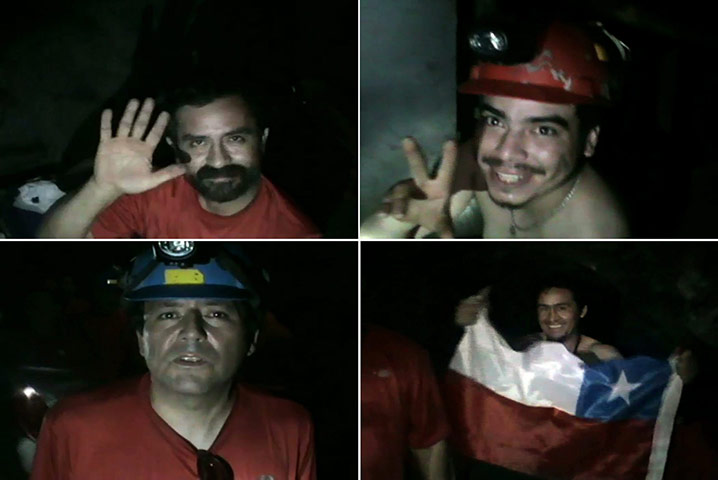
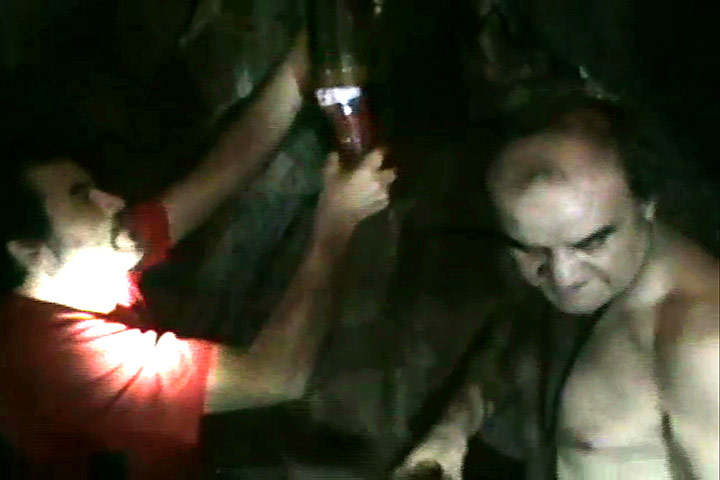
25th August 2010: Workers place a bottle of water inside a tube that links the trapped miners to the outside worldPhotograph: Roberto Candia/AP25th August 2010: Men work on a pipeline at the mine site. Food, clothes and antidepressants will be sent down to the trapped menPhotograph: Roberto Candia/AP25th August 2010: Helen Avalos, whose husband, Jimmy Sanchez, is trapped underground, holds their two-month-old baby outside the minePhotograph: Roberto Candia/AP25th August 2010: The names of the men trapped in the mine are displayed on a nearby hillPhotograph: Ivan Alvarado/Reuters25th August 2010: Sandro Rojas Carrizo works on a letter before sending it down to his brother EstebanPhotograph: Natacha Pisarenko/APThe 33 trapped miners: Top row (left to right): Alex Vega Salazar, Ariel Ticona Yanez, Carlos Bugueno Alfaro, Calros Barrios Contreras, Carlos Mamani Solis, Claudio Acuna Cortes, Claudio Yanez Lagos, Daniel Herrera Campos, Dario Segovia Rojas, Edison Penaa Villarroel, Esteban Rojas Carrizo. Second row: Florencio Avalos Silva, Franklin Lobos Ramirez, Jimmy Sanchez Lagues, Jorge Galleguillos, Jose Ojeda Vidal, Jose Henriquez Gonzalez, Juan Illanes Palma, Juan Aguilar Gaete, Luis Alberto Urzua, Mario Gomez Heredia and Mario Seplveda Espina. Third row: Omar Orlando Reygada Rojas, Osman Isidro Araya Acuna, Pablo Amadeos Rojas Villacorta, Pedro Cortez, Raul Enriquez Bustos Ibanez, Renan Avalos Silva, Richard Villarroel Godoy, Samuel Avalos Acuna, Victor Segovia Rojas, Victor Zamora Bugueno, Yonny Barrios RojasPhotograph: Diario Atacama/EPA25th August 2010: Women light candles next to Chilean flags representing the 33 men trapped in the San José minePhotograph: Natacha Pisarenko/AP26th August 2010: Above ground, the gold and copper mine is a bustle of activityPhotograph: Ariel Marinkovic/AFP/Getty Images26 August 2010: Relatives and journalists watch new images of the miners that were released to local TV stationsPhotograph: Roberto Candia/AP26 August 2010: A screengrab of the video recorded using a probe camera, showing two unidentified minersPhotograph: AFP/Getty Images26 August 2010: Alberto Segovia, brother of one of the trapped miners, lights candles at the surfacePhotograph: Natacha Pisarenko/AP26 August 2010: An image from a video released by Television Nacional de Chile via the Chilean government, showing the miners in their underground chamberPhotograph: AP27 August 2010: Relatives watch a video recorded by the trapped miners. Chilean television aired footage of the miners showing them in good spirits and explaining the organisation of their shelterPhotograph: Hector Retamal/AFP/Getty Images27 August 2010: Relatives and journalists watch new images of the minersPhotograph: Roberto Candia/AP27 August 2010: Video stills of the trapped minersPhotograph: Chilean Mining Ministry/Reuters28 August 2010: Rescuers install the hydraulic bore, an Australian-made Strata 950, which will dig down to the 33 minersPhotograph: Ariel Marinkovic/AFP29 August 2010: A worker gives a thumbs-up next to the oxygen plant used to send breatheable air to the trapped miners Photograph: Roberto Candia/AP29th August 2010: A relative of miner Yonni Barrio touches a portrait of him at the camp where relatives are waiting outside the partially-collapsed San Jose minePhotograph: Roberto Candia/AP29th August 2010: Chile's mining minister, Laurence Golborne, puts a camp bed in a tube used for sending supplies to the trapped miners Photograph: Ivan Alvarado/Reuters29th August 2010: A relative of one of the trapped miners carries flowers during a religious service at the minePhotograph: Ariel Marinkovic/AFP/Getty Images30 August: The Raisebore Strata 950 drill, which will drill the hole to rescue the 33 trapped miners, is installed at the San Jose minePhotograph: Esteban Gonzalez/EPA31st August 2010: Video footage shows some of the trapped minersPhotograph: Codelco/EPA31st August 2010: A screengrab of Victor Segovia, one of the 33 Photograph: Hand Out/Reuters31st August 2010: Chilean soldiers arrive at the minePhotograph: Ariel Marinkovic/AFP/Getty Images31st August 2010: A statue of the Virgen del Carmen, Chile's patron saint, placed outside the mine Photograph: Ariel Marinkovic/AFP/Getty Images31st August 2010: Javier Soto, an evangelical minister, writes in one of the mini-Bibles being sent down to the minersPhotograph: Ariel Marinkovic/AFP/Getty Images31st August 2010: The minister dedicates one of the BiblesPhotograph: Ariel Marinkovic/AFP/Getty Images1st Sept 2010: A drilling machine crosses the encampment toward the San Jose mine to work in the rescue operation of the miners still trapped inside, near Copiapo, Chile. The 33 miners trapped in a collapsed Chilean mine have survived for a record 27 days and join the few who have survived longer than a few days confined in the Earth's crustPhotograph: Ariel Marinkovic/AFP/Getty Images1st Sept 2010: A woman holds up packed examples of food, which includes rice, meatballs, fruits, cheese and bread, meant for the 33 miners trapped underground in a copper and gold mine at Copiapo, about 725 km (450 miles) north of Santiago, September 1, 2010Photograph: Ivan Alvarado/Reuters1st Sept 2010: Deputy chief doctor of Nasa, James Michael Duncan (l) speaks to the mediaPhotograph: Ivan Alvarado/Reuters1st Sept 2010: Food, which includes rice, meatballs, fruits, cheese and bread, meant for the 33 miners trapped underground in a copper and gold mine, are displayed at Copiapo, about 725 km (450 miles) north of SantiagoPhotograph: Ivan Alvarado/Reuters1st Sept 2010: A composite image shows four of 33 trapped miners waving at mine San Jose, near of Copiapo, ChilePhotograph: Codelco/EPA1st Sept 2010: Miners receive supplies, sent to them through a pipe from the surfacePhotograph: AP
Sign up to read this article
Read news from 100’s of titles, curated specifically for you.