
Puberty blockers will be tested on children with gender dysphoria, researchers have announced, after a major independent inquiry led to the overhaul of NHS gender services.
Researchers from King's College London will recruit around 226 children over the next three years to test the benefits and risks of puberty blockers on young people.
The youngest children expected to be recruited will be 10 to 11 for biological females and 11 to 12 for biological males, and the upper age limit will be 15 years and 11 months.
The first participants are expected to be recruited in the new year, following strict selection criteria, and the trial will take “at least” four years.
One group of children will be given puberty blockers for two years, while the other will be given the drugs after a one-year delay. Both groups will be followed up for two years and will be aware of when they should expect to be given the medication.
The children’s health, well-being and development will be monitored throughout the trials.
The second study is called Pathways Connect, and will use scans to look at the brain development of youngsters taking puberty blockers and those who are not.
Some children could remain on the drugs after the study ends if deemed “clinically appropriate”, despite the treatment currently being banned in the UK to treat under-18s with the condition, researchers have said.
Participants' results will also be compared with a group of children with gender incongruence who have not been given the drugs.
Both studies form part of a wider Pathways research programme, which is aiming to find out how the NHS can support children attending gender services.
Puberty blockers are typically given as an injection, with the most common – called triptorelin – usually administered every six months.
The drugs were first licensed in the 1980s to treat early puberty, which occurs before the age of eight in girls and nine in boys.
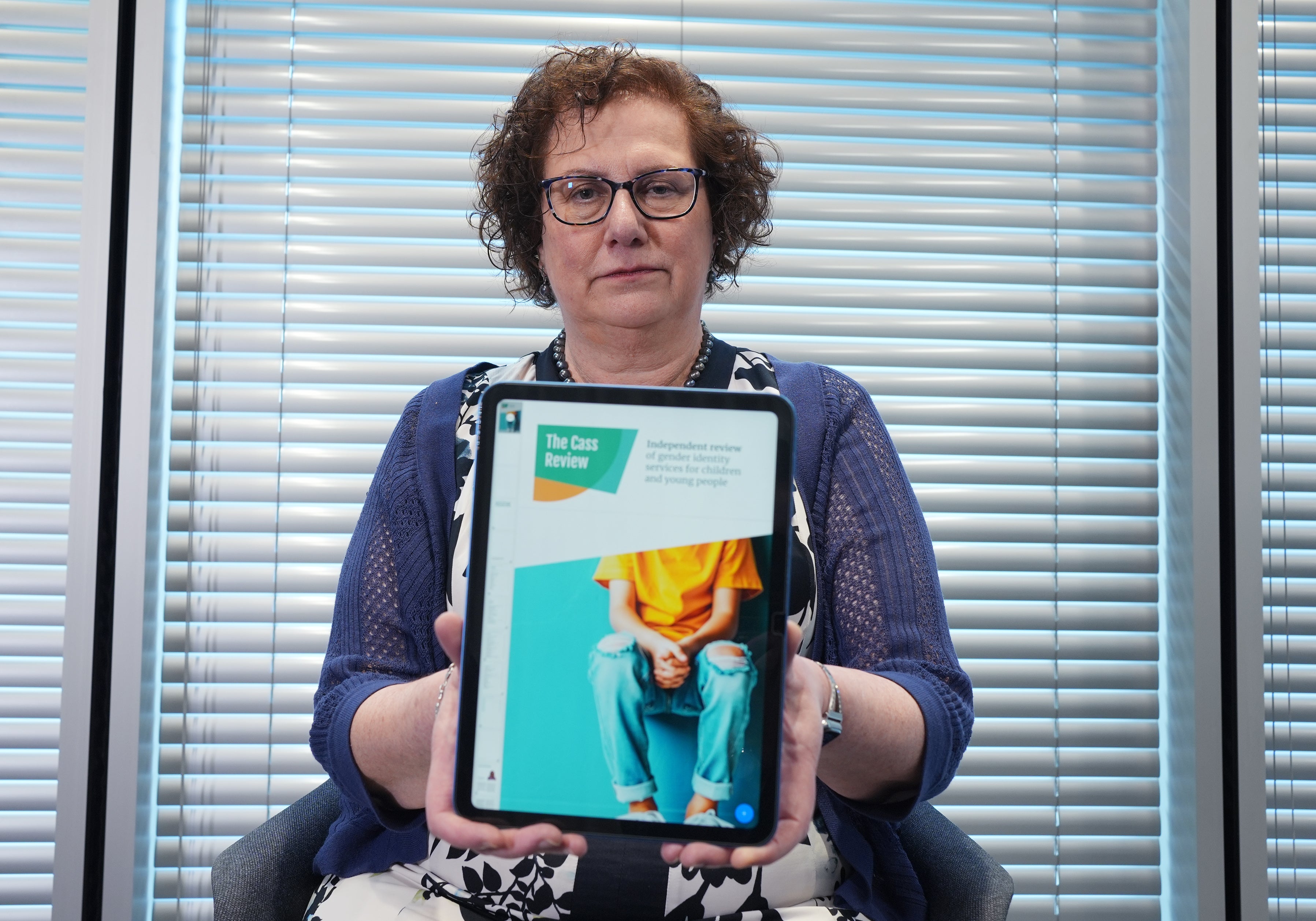
Plans for a puberty blockers trial were announced in 2024 following the publication of the Cass Review, which concluded that the quality of research claiming to show the benefits of such medication for youngsters with gender dysphoria was “poor”.
The drugs are not prescribed on the NHS to children for the treatment of gender dysphoria after a ban in 2024 was made permanent last December.
In response to the trial announcement, Dr Cass, paediatrician and Chair of the Cass independent review of gender services for children and young people, said: “My review uncovered a very weak evidence base for benefits from the use of puberty blockers for children and young people with gender dysphoria. In fact some children had more negative than positive effects.
“However, given that there are clinicians, children and families who believe passionately in the beneficial effects, a trial was the only way forward to make sense of this.”
Researchers have been collaborating with clinical services to develop a process that enables patients to undergo psychological and social care, while also providing informed consent.
Chief investigator Emily Simonoff, professor of child and adolescent psychiatry at KCL’s Institute of Psychiatry, Psychology and Neuroscience (IoPPN), said: “At the end of the trial, each young person will be reviewed individually and clinically to look at their ongoing care needs, which may include remaining on puberty-suppressing hormones, if that’s deemed clinically appropriate for them.”
To take part in the trial, children must have entered puberty and must have a diagnosis of gender incongruence, which is when they feel a mismatch between their gender and their sex at birth.
They must have had these feelings for more than two years, as well as a “persisting desire” to take puberty blockers following psychological care.
The parents or guardians of patients must also support the option of using puberty blockers.
It is hoped that the research will shed light on whether suppressing puberty impacts the development of the brain.
Dr Ronny Cheung, NHS Consultant Paediatrician, and Honorary Senior Lecturer, King’s College London, said: “I strongly welcome this study, which addresses an area of conflicting, poor quality evidence.
“Practising clinicians are always at pains to understand that the treatments we give (and withhold) may appear to be beneficial to the individuals we treat, but without robust evidence we are prone to human biases which overplay the benefit and underestimate the harms.”
The Pathways research programme is being led by KCL, and is co-sponsored by King’s College London and the South London and Maudsley NHS Foundation Trust.
A Department of Health and Social Care spokesperson said: “Young people with gender incongruence need access to high-quality, safe and effective care. We are following the Cass Review, which was clear that the evidence on care for these children is lacking, and proposed this research to help provide it.”
Flu activity is low, but experts worry about a new strain and vaccination rates
UK private sector growth slows due to business caution ahead of Budget
Budget cannot see UK ‘muddle through’, says Reeves
The 200-year-old paintings blocked from leaving the UK
US legislators hit out at Andrew after Epstein probe request: ‘He continues to hide’
Mormon church makes major rule change in bid to get more women serving missions