Heat is the deadliest weather event in America — killing more people every year than hurricanes, tornadoes, and floods combined. And it does not kill equally. The June 18–19, 2026 Juneteenth heat wave, which has placed approximately 80 million Americans under some form of heat advisory or excessive heat warning, is activating the same public health vulnerabilities that produce preventable deaths in every major summer heat event: elderly adults who live alone without air conditioning, unhoused individuals without access to cooling, outdoor workers in industries that provide inadequate cooling and hydration access, infants whose thermoregulatory systems are not fully developed, and people whose medical conditions or medications impair their body's ability to shed heat.
Health departments across the affected region — spanning Texas, the central Plains, Midwest, and Northeast — have activated specialized response protocols designed not merely to advise the public but to actively reach the people least likely to access general public advisories.
In Philadelphia, the city's heat health emergency advisory activated field teams whose specific mission is to conduct home visits to high-risk residents identified through public health databases — including elderly adults receiving home services — and to deploy outreach workers to serve the unhoused population at locations where people typically shelter. This is not a telephone hotline approach; it is a proactive, door-to-door health intervention at a population scale that requires advance planning and pre-identified vulnerable resident databases.
Governor Hochul activated New York State's Emergency Operations Center on June 18, 2026, and the state's beaches and public pools opened early ahead of Juneteenth to give residents — particularly those without air conditioning — access to cooling water and shade. The NYC Health Department's 2026 Heat-Related Mortality Report confirms approximately 500 New Yorkers die from heat-related causes annually, with approximately 80% of those deaths occurring not during extreme heat emergencies but on regular hot days — temperatures between 82 and 94°F.
Who Dies in Heat Waves — and Why
Understanding why certain populations face dramatically elevated heat death risk requires understanding what the body does — and what can interfere with it — in extreme heat.
The human body maintains a core temperature of approximately 98.6°F through a continuous process of heat dissipation. In hot environments, the primary mechanisms are: sweating (which cools via evaporation) and vasodilation (widening of skin blood vessels to increase heat transfer from core to surface). When the environment is both hot and humid, evaporation of sweat slows significantly — making the heat index (apparent temperature accounting for humidity) a better predictor of physiological stress than ambient temperature alone.
Multiple factors impair this system:
Advanced age. Older adults produce less sweat, have reduced skin blood flow response to heat, have diminished thirst perception (a critical problem when dehydration reduces sweat production), and are more likely to be on medications that further compromise heat tolerance. The NYC heat mortality report consistently finds that the vast majority of heat stress deaths occur in adults 65 and older.
Living alone without air conditioning. In New York City, the dominant predictor of heat mortality is not age alone — it is the combination of age and social isolation without air conditioning. Elderly adults who live alone, do not have AC, and do not have regular check-ins from family, neighbors, or social services face the highest absolute risk. They may not know they are in danger until too late.
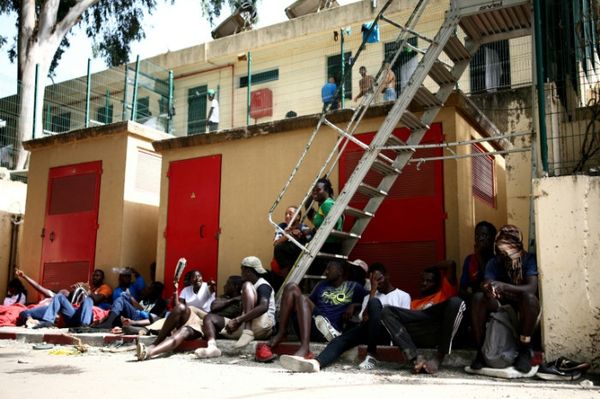
Unhoused status. People experiencing homelessness face multiple simultaneous heat risk factors: no air-conditioned shelter to access during the hottest hours, difficulty obtaining clean water for hydration, limited ability to rest and reduce metabolic heat generation, higher rates of chronic illness and medication use, and — in many cities — a law enforcement environment that makes accessing shade in private commercial spaces difficult.
Psychiatric medications. Several of the most commonly prescribed psychiatric medications — antipsychotics (particularly older typical antipsychotics and some atypical agents), anticholinergics, lithium, and certain antidepressants — directly impair heat regulation by inhibiting sweating. People on these medications may not sweat adequately in extreme heat even when they are aware of the danger. They are at high risk specifically because their pharmacological impairment of the thermoregulatory response is not visible or predictable without clinical knowledge of their medication.
Infants and young children. Infants cannot communicate distress, cannot access water independently, cannot remove clothing layers that trap heat, and have a higher surface-area-to-mass ratio that increases heat absorption relative to body weight. They are also entirely dependent on caregivers who may underestimate the risk. Vehicles are particularly dangerous: the temperature inside a parked car can rise 20°F in 10 minutes and exceed 150°F within 30–40 minutes even in moderate outdoor temperatures.
Outdoor workers. Agricultural workers, construction workers, road maintenance crews, landscapers, delivery workers, and other outdoor occupational groups have elevated heat illness and death rates. OSHA's heat illness prevention standards provide guidance, but enforcement is variable and the populations most affected are frequently migrant workers and others with reduced ability to assert workplace rights.
| Heat Wave Vulnerable Population Risk | Risk Factor |
| Elderly adults living alone without AC | Highest absolute risk category in most heat mortality studies |
| Psychiatric medication users | Inhibit sweating (anticholinergics, antipsychotics); impair thirst; reduce heat awareness |
| Unhoused individuals | No cooling access; dehydration; chronic illness; no shelter |
| Infants and children under 4 | Cannot regulate or communicate; car heat danger; dependent on caregiver awareness |
| Outdoor workers | Prolonged exposure; occupational heat stress; limited legal protection |
| Obese adults | Reduced sweating efficiency; increased metabolic heat production; cardiovascular strain |
| Heart disease patients | Cardiovascular system under increased strain from heat-driven vasodilation |
| Dehydrated individuals | Reduced sweat production; impaired heat dissipation |
What Health Departments Are Doing to Reach High-Risk Populations
Home visits. Philadelphia's heat health emergency advisory specifically activates field teams conducting home visits to high-risk elderly residents identified through city databases. This proactive approach addresses the isolation problem directly.
Cooling center networks. Every major city in the heat alert corridor has activated cooling centers — air-conditioned public buildings (libraries, community centers, shopping malls designated by health departments) that residents can access without payment or identification. In New York City, residents can call 311 to find the nearest cooling center.
Early pool and beach opening. Governor Hochul announced that New York's beaches and public pools opened early for the Juneteenth holiday weekend, providing cooling access in high-density communities.
Outreach to the unhoused. Multiple cities are deploying outreach workers to encampments and locations where unhoused individuals are known to congregate, providing water, sunscreen, cooling towels, and information about where to access cooling centers.
Wellness check systems. Some cities have wellness check programs where trained volunteers or social service workers contact elderly residents by phone or in person during heat emergencies. New York's text alert system (text 333111) allows residents to sign up for direct heat emergency alerts.
Heat action plans at hospitals and ERs. Emergency departments have been put on alert for increased heat illness presentations. Heat stroke must be recognized and treated immediately — core cooling with ice packs to the neck, armpits, and groin while awaiting emergency services.
Frequently Asked Questions
Why does heat kill more people than hurricanes and tornadoes?
Extreme heat causes widespread physiological stress across large populations simultaneously and produces deaths that are diffuse — they happen in private homes and apartments, not dramatically or visibly, which reduces public awareness. Heat kills through cardiovascular collapse, organ failure, and heat stroke, often in people who are already medically vulnerable and do not recognize they are in danger until it is too late.
Who is most at risk from the 2026 Juneteenth heat wave?
Elderly adults living alone without air conditioning, people experiencing homelessness, people taking psychiatric medications that impair sweating, outdoor workers, infants and young children, and people with heart disease, obesity, or chronic dehydration. Multiple risk factors compound: an elderly person living alone, on antipsychotic medication, without AC faces catastrophic combined risk.
What is Philadelphia's heat health emergency protocol?
Philadelphia's heat health emergency advisory activates specialized field teams conducting home visits to high-risk residents identified through city databases, and outreach workers deployed to serve the unhoused population at known locations. This is a proactive outreach model, not a passive hotline approach.
How do I find a cooling center?
In New York City, call 311. In most other cities, check the local health department's website or call 211 for social services referral. The Red Cross also maintains a cooling center finder at redcross.org.
What should I do if I see someone showing heat stroke signs?
Call 911 immediately. While waiting: move the person to a cool area, remove excess clothing, apply ice packs or cold wet towels to the neck, armpits, and groin, and fan them if possible. Do not give fluids to anyone who is confused or unconscious. Heat stroke is a medical emergency.