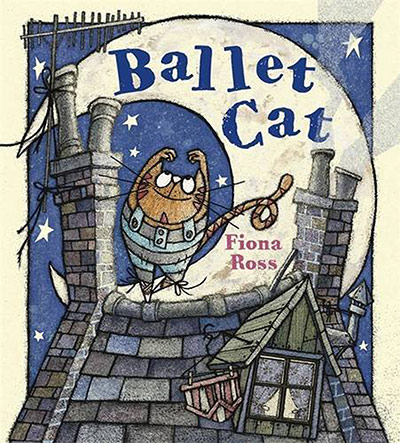
We are introduced to a gang of alley cats with a comically dissolute quality. They party nightly: 'Sid moved, Griff grooved, Budgie bopped.' Arthur always leaves the party early – and we follow him. He finds a musical box sporting a twirling ballet dancer. But what no one is prepared for is Arthur’s enthusiastic metamorphosis into the cat equivalent of Billy Elliot. His love of ballet initially disgusts his fellow felines, but they are missing the point – or points. Children will cotton on faster and Ross does not put a foot wrong. (3 up) Photograph: pr
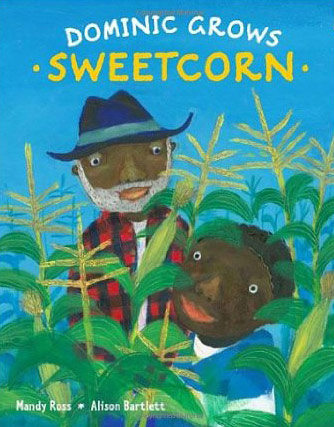
The West Indies dominates this book in brilliant splashes of colour as Dominic’s grandfather plants sweetcorn in the UK and remembers his Jamaican roots. There is a natural progression to the story; as the work of planting the corn stirs the grandfather’s memories, he relives his arrival in England (he is pictured next to his wife, looking shivery and lost, recently decanted from a plane). It is an affectionate and sympathetically educative book, with a tasty recipe for sweetcorn fritters thrown in. (4 up) Photograph: pr
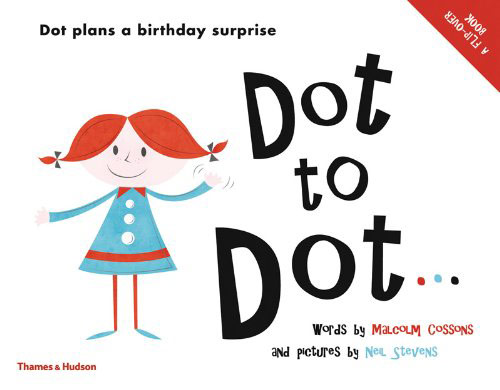
Although its colours are elegantly limited- scarlet, turquoise, black and white - this book has ambition. It can be read in opposite directions, as two journeys coincide and a grandmother and granddaughter, each called 'Dot’ ,meet in the middle. But it is grandma Dot who, it turns out, is the more serious globe-trotter, taking China and India in her frisky stride. The idea is fun, forward-going and stylish. It ends with the two Dots joyously joined in an embrace. (3 up). Photograph: pr

Sakai’s pictures pull you in – they have painterly depth. She is a Japanese artist with a beguiling tenderness that avoids sentimentality. The book is nocturnal in its pallet: blacks, midnight blues and sleepy charcoal grey. It is about a child’s experience of waking in the night and what happens when she is left to her own devices: her playfulness, the helping herself to cherries without asking, the sighting of a dove. It is sweetly convincing. And the night ends for Hannah in the way it ought to have begun: she sleeps. (2 up) Photograph: pr

You might think the self-advertising pun was surplus to requirements, except that a 'warm and witty yarn' is exactly as described and Tatyana Feeney's drawing has a capricious, clear, child-like charm. I love the mother and son owl (the mother distinguished by her fab eyelashes). The son's problem is that, like many a child of one's acquaintance, he dislikes his scarf: it is too long, too itchy and far too orange. The adorable, feel-good conclusion is knitted together without a dropped stitch in sight. (3 up) Photograph: pr
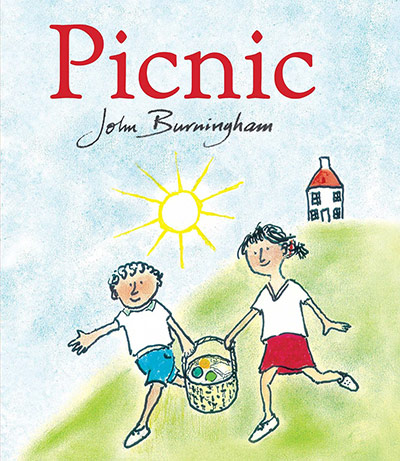
John Burningham leads a charmed life as an illustrator. Here he is with a spirit-lifting book to remind readers of the summer we all hope to be having. A boy and girl scamper downhill carrying a picnic basket, but there are no broken crowns involved: the most serious threat is a rampaging bull. All ends safely and the picnickers retire home. Burningham suggests to the reader, by the light of a banana-yellow moon: 'Shall we see if we can find your bed? (2 up) Photograph: pr
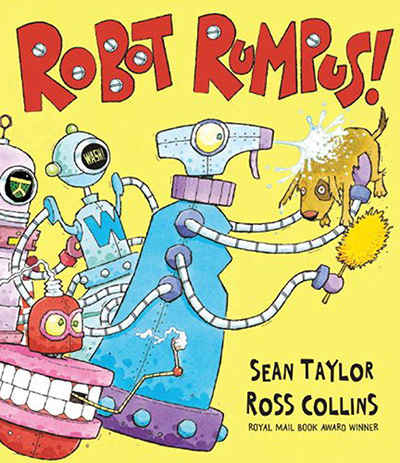
This brilliant idea is guaranteed to amuse parents and children – for slightly different reasons. Mum and Dad decide to hire robots to do their work for them. As a parent, you feel positively gleeful watching Cook-bot and Clean-bot conquering the chores while Wash-bot runs a bath. And, for a while, everything runs like clockwork. But children will be entertained and parents possibly vindicated (nice to know you might, after all, be useful) when spaghetti lands in the bathtub and the robots get their mechanical arms in a twist. (3 up) Photograph: pr

Set out like a silent movie, with black-and-white captions, this leanly told story is not what it seems. It starts off as the tale of a fox in pursuit of a gormlessly compliant chicken. The chicken seems, hilariously, to have a death wish. It is the egg, as we advance ever nearer to the fox’s kitchen, who exclaims: That is NOT a good idea. But the kitchen tables are, as you will see, about to turn, as Williams makes a witty meal of it. (2 up) Photograph: pr

Psychologically spot on: there is nothing like boosting a child usurped by a baby with the comforting truth that babies are useless. There is so much they cannot do - and a range of satisfying inadequacies, jovially illustrated, is listed here. The baby cannot dress himself, choose his clothes, brush his teeth, blow his nose….And you do not want to know what he CAN do. The conclusion – that whenever he smiles, his sister is pleased about his existence – may be wishful thinking, but the lead-up is grand. (3 up) Photograph: pr
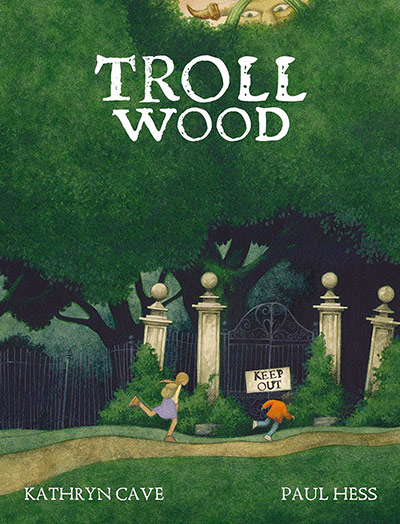
The cover of this book, with its dark forest behind wrought-iron gates, is perfectly balanced between the forbidding and the inviting. But look carefully and you will spot a pair of troll's eyes peering down at you. Paul Hess's illustrations make Troll Wood a mysterious, sombre, tantalising place. Kathryn Cave writes with rhythm, restraint and polish: 'This is Troll Wood. No one goes there. Will you? "We will." And they did.' The book is about overcoming fear and what home means – a fine enterprise. (4 up) Photograph: pr