The children and grandchildren of deceased Australian terrorist Khaled Sharrouf will be coming home from Syria to a large and well-resourced support network, the family’s lawyer has said.
On Sunday a group of eight children born to Australian foreign fighters and taken to Islamic State-held territory were extracted from a northern Syrian camp and taken across the border into the care of Australian officials.
Sharrouf and his wife, Tara Nettleton, took their five children to Syria in 2014. Nettleton died from illness the following year and Sharrouf is believed to have died in 2017 alongside his eight- and nine-year-old sons in a US airstrike.
The repatriated group included the three remaining children: Hamzeh, Zaynab and Hoda, and the two young children of Zaynab, who is also pregnant and expected to give birth in coming days.
The other three are the children of the foreign fighter Yasin Rizvic and his wife, Fauzia Khamal Bacha, who joined Isis in 2014. They are expected to arrive in Australia before the Sharroufs.
On Sunday the Sharrouf children were reunited with their maternal grandmother, Karen Nettleton, who made three trips to Syria looking for them and finally located them in the al-Hawl camp.
Robert Van Aalst, a lawyer and friend to Nettleton, told Guardian Australia the family would be returning to Australia to live with their grandmother.
“They’ve told me what they want to do when they get back – to catch up on five years of education loss, and to get into a career that gives back to the community,” he said.
He said the children would receive extensive assistance and counselling from both the government and the Muslim community, some of whom had offered to pay for the counselling of all children and mothers extracted from the northern Syrian camps.
“One day Karen and I will be able to say thank you to literally the hundreds of volunteers in this exercise who have been nameless,” he said.
Van Aalst said the religious community had been in the background and “very generous in their support” of the family, and he had been working with them for months to assist others still in the camp.

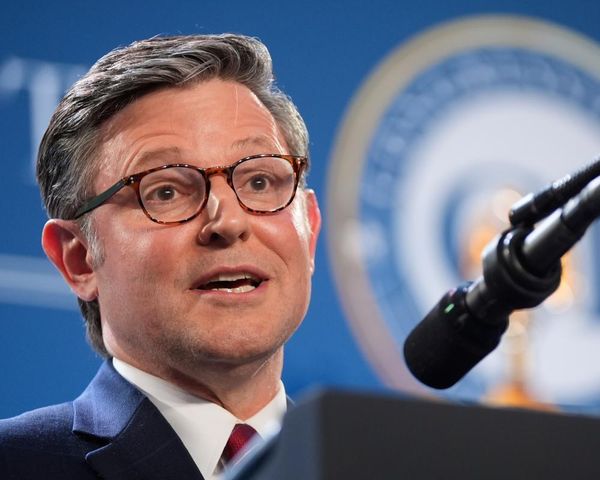
Scott Morrison said on Monday the children would be supported to “fully integrate into a happy life in Australia”.
“They have got off to a horrible start in life as a result of the appalling decisions of their parents, and they’ll find their home in Australia and I’m sure they’ll be embraced by Australians and as a result of that embrace, I’m sure they’ll live positive and happy lives.”
Van Aalst said deradicalisation programs would form part of the counselling and treatment for the family, but he said the emphasis on its need was “overblown”.
“I’ve been in direct communication with Zaynab and Hoda while they were in the camp, and considering what they had been through and how they conversed with me, they were no more radicalised than the man in the moon,” he said.
“They were frightened, they were hurt, physically and emotionally. But … in all these years we’ve been working, we’ve never had – from Tara or the girls – one expression that they were radicalised.”
He said the main focus would be on counselling for post-traumatic stress disorder.
“When Isis was being defeated, around about the end of March, April, they were in the last holdout of Isis in Baghuz. The Kurds were making an assault, the crap was being bombed out of it, they were living literally in a ditch. No water, no toilet. Every day bullets and bombs,” he said.
“Then around about early April, there must have been a lull in the fighting and trucks went in. Hoda made a break for it. She’d suffered a wound to one of her legs.
“Somehow she got herself out of the fight and on to a truck which got her to the al-Hawl camp. Three days later Zaynab got out with Hamzeh and her two little ones.”
He described the family as “the most resilient kids I’ve come across in my lifetime”, and said they remained in danger at the camp, alluding to but not detailing further incidents.
He said there were about 70 Australians still in the al-Hawl camp, and he urged the government to get them out as quickly possible. About two-thirds of the group were children under five, he said, and the rest mostly mothers.
Australians in the camps were under threat, he said, because of misconceptions that they had money (which Van Aalst said they didn’t) and that they had newer tents, which he said was an accident of timing.
That eight of them had been extracted from the camp could add to the idea Australians received special treatment, he said.
“Australia has an obligation to its women and children in harm’s way,” he said.
On Monday Morrison said there was no “blanket policy” and every case would be assessed on its merits, including identity verification processes.