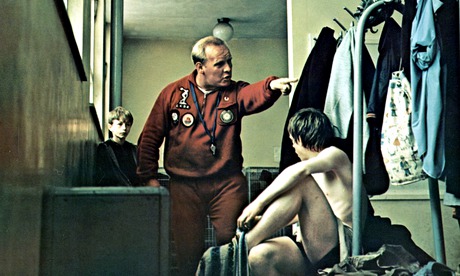
There is a memorable scene in Ken Loach’s 1969 film Kes when a bullying sports teacher, played by Brian Glover, takes control of the school football game. He pushes, shoves, bawls and insists on winning.
I thought of Glover when I came across the now famous sign at Beddau RFC, encouraging over-excited parents to calm down a little. It is, as they say, not the Six Nations – the coaches are indeed volunteers, the referees are human.
This is, of course, true. You can’t possibly justify the behaviour of some touchline parents, swearing at the poor refs. Heavens, even spitting and fist-fights. But I find myself wondering whether there isn’t something to be said in favour, not of spitting of course, and especially not of Sarah Palin-style hockey moms – but of taking things seriously.
I am not anyone’s idea of a tiger father, still less a tiger mother. More cabbage than carnivore. More blancmange than buffalo. I find myself drifting into the same modern middle-class sentiments – don’t get too upset, it’s only a game, of course you’re good at football.
“I didn’t know they made ninth-place ribbons,” Robert de Niro’s character says in Meet the Fockers, as he gazes stupefied at the shrine for his future son-in-law, made by his adoring parents. I’m already nervous about similar conversations about my own children.
What do I say? We didn’t want him to feel like a failure? Don’t get me wrong. I’m all for being encouraging. I’m all for tolerance – I’m a member of the Liberal Democrats, for goodness’ sake. But I do wonder whether my children might benefit from a few uncompromising demands from the touchline of life.
I’ve laughed over the years at my friends’ competitive parenting. The mother who managed to track down the eventual universities of her local playgroups’ alumni to check which produced the highest number of Oxbridge entrants. Or those who persist in tutoring from the age of five, before the children go through the great, unspoken ordeal of the 11-plus, weekend after weekend, at all the super-selective grammar schools around the M25.
I won’t do that. But then, I’m an older father. My parents were competing vaguely to cajole us into a burgeoning middle class. Now the competition is to squeeze into a shrinking global elite – 100 million students worldwide last year; 260 million by 2025.
It’s tough out there. So tough that I’m not planning to compete by the usual rules. But I’m aware that I do have to buck up a bit. I’m tired of the old maxims: letting children decide on religion or politics or careers when they are older. I’m finished with the I-don’t-want-to-foist-my-ideas-on-them style of parenting.
The truth is, I do want to foist my ideas on them. In fact, I’m wondering whether my failure to do so risks letting them grow up like Bertrand Russell, of whom it was said that he had lived with an open mind for so long that he couldn’t get the damn thing shut.
The psychologist James Hillman suggested that failing to give your children a steer may not give them anything to react against, and they may need that to find their own way. I insist that my children go to church – I even manage to get them to do so occasionally. I insist that they should also be Liberal Democrats. This policy is working: my 10-year-old realises that he can irritate me by praising the Labour party.
But there is another, more serious, edge to this. Failing to demand from the touchline means that we are allowing our children to fall for one of the great lies of celebrity culture: that they are born good or bad at things – football, drawing, acting, maths, you name it. It is the fantasy that you don’t have to try hard at anything – that you are born either brilliant or bad at it. Malcolm Gladwell suggested that we need to practise for 10,000 hours to be good at something. It may therefore make sense for them to start practising now.
So, let’s practise not getting angry at the little things that make us see red – when we’re driving or maybe even when the coach substitutes your child halfway through a match – and save our energy for the urgent things in life. The times when you say: this is important.
I might not spit at the referee. I might actually not be involved in school rugby at all. But I’m saying goodbye to cabbage fatherhood. It is time to show our children that some things matter.