
This may sound almost impossible in the age of cell phones becoming obsolete after only a couple of years. But, according to Air & Space Forces Magazine , the children born in 2026 could still be able to witness the Boeing B-52 Stratofortress operating missions when they turn twenty-five.
Get breaking news anytime, anywhere. Download the TOI app now!
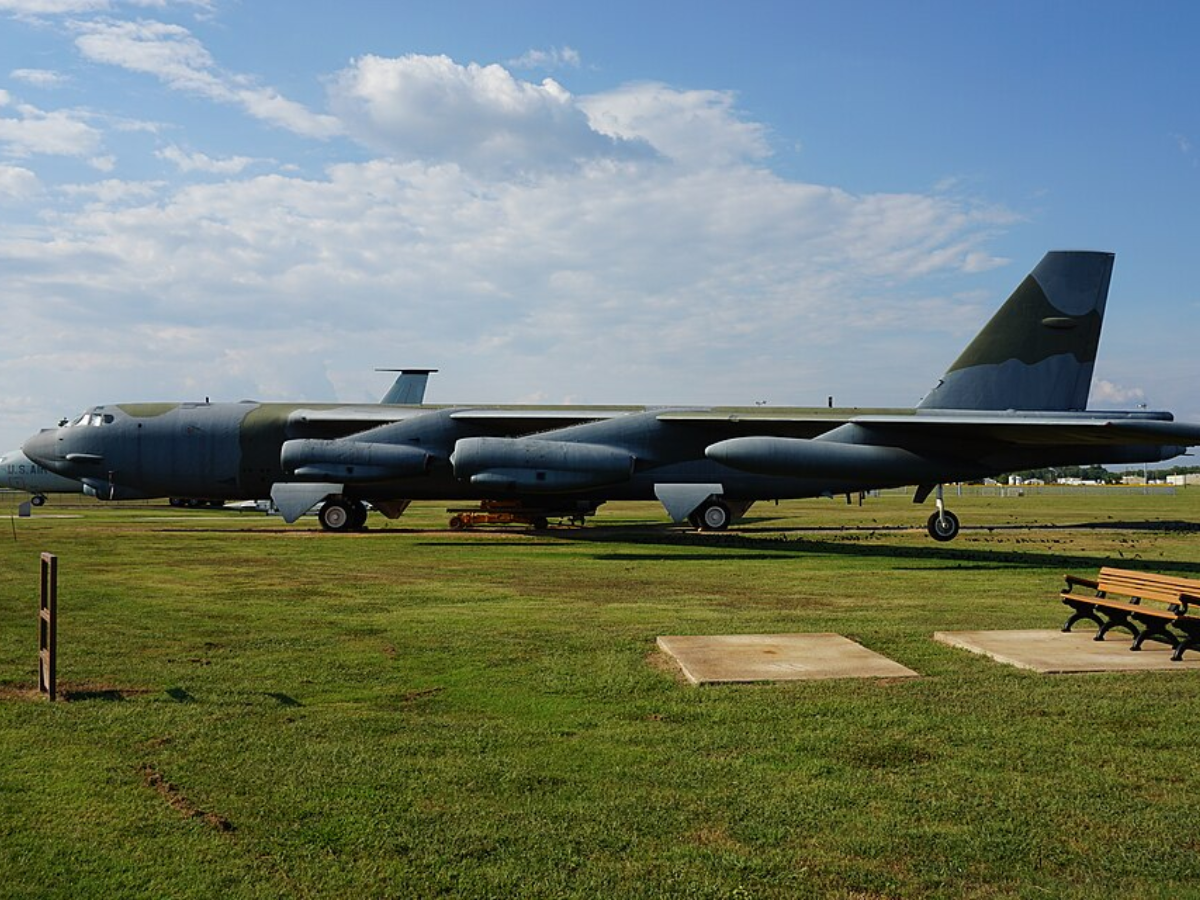
Since its introduction into service in 1955, the legendary American bomber is expected to stay in service until the 2050s. If the current modernisation plans are completed on schedule, some of these bombers could reach a century of service.
It is important to note that the longevity of the aircraft is not dictated by sentimentality. Instead, it reflects a major engineering effort to modernise the bomber.
An old bomber older than many grandfathers
The latest B-52 bombers were manufactured in the early 1960s. According to the data provided by the U.S. Air Force, there are 76 B-52H bombers that are currently used by the U.S. military. The majority of these bombers were built in 1961 and 1962. The production of B-52 bombers ceased in October 1962 at the Boeing Wichita, Kansas, plant. This means that B-52 production began in the early 1950s.
Most combat planes can be withdrawn from service after several decades due to age-related problems, high cost of repairs, and the development of new technologies. Nevertheless, the bomber B-52 managed to surpass all expectations due to constant upgrading that allows replacing almost all equipment without changing the airframe.
As reported by DefenseNews , according to the U.S. Air Force Commercial Engine Replacement Program, the bomber is supposed to serve until the 2050s after installing new engines and avionics.
Rolls-Royce gives B-52 new life
The first and foremost enhancement includes fitting of newer Rolls-Royce F130 engines in place of old Pratt & Whitney TF33 engines that date back to the sixties of the last century.
The Rolls-Royce F130 is based on the BR725 commercial jet engine produced by Rolls-Royce. The program claims to be aimed at ensuring B-52 operations in the upcoming three decades. In February 2026, Rolls-Royce reported success in altitude and operability testing of the F130 engine, which is one of the key steps in the B-52J upgrade program.
It is noted that Rolls-Royce F130 uses more than 30 million flight hours of experience gained with the family of commercial engines.
From Cold War Anachronism to Modern Missile Delivery System
The modified plane will be re-designated the B-52J.
Even though the aircraft looks very similar on the outside, many of its components will get a massive overhaul. Military experts consider the upcoming B-52J as the long-range standoff strike delivery system equipped with advanced cruise missiles, smart munitions and even possible future hypersonic capabilities.
The B-52H aircraft also gets new radar systems, digital avionics and updated communication systems that allow it to remain competitive against other newer airplanes, like the upcoming B-21 Raider.
According to DefenseNews, the Air Force has just approved a crucial design review for the engine replacement program, which now allows Boeing to proceed with modifications of the first aircraft to B-52J standard.
Why the B-52 doesn’t want to retire
One of the reasons is the very initial design of the aircraft.
The B-52 bomber was designed for long-range strategic strikes and has an exceptionally large carrying capacity. Throughout the years, it has been able to evolve to fit the military needs of different eras, starting from Cold War deterrence and ending with modern strikes. Modern military planners use the bomber as a "standoff" platform that is capable of launching missiles from afar instead of entering the enemy territory directly.
It makes the aircraft still relevant despite changes in war.
According to Rolls-Royce, the F130 engine programme will allow the aircraft to operate for at least 30 more years, while the Air Force plans show that it can serve up until the middle of the 21st century.
A flying centenarian
Military aviation is generally characterized by constant innovation. New aircraft, unmanned aerial vehicles and missiles tend to appear almost simultaneously.
The B-52 is an exception. Thanks to its resilient body design and numerous modernization programs spanning decades, the US has been able to maintain a bomber developed in the era of Eisenhower as a relevant vehicle in the age of artificial intelligence and hypersonic weapons.
Should everything go according to the current schedule, an individual born in the UK or any other country in 2026 will reach 25 years of age and still see the B-52 in action. Such longevity is rare for any military hardware.
But possibly even rarer is the fact that it achieved such longevity using technologies that its inventors could not imagine.