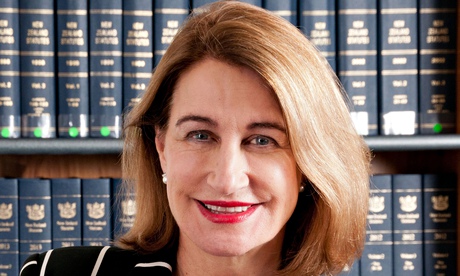
The New Zealand judge appointed to be the third head of the troubled investigation into historic allegations of child abuse has confirmed that she will consider looking into cases as far back as 1945 and that the inquiry could last four years.
Justice Lowell Goddard said there was a balance to be struck between the need for a thorough investigation and making it manageable and timely. But in radio interviews she confirmed that she would consider claims going back before 1970 – the cut-off point of previous inquiries.
Speaking to Radio New Zealand, Goddard said: “I believe there are some persons involved in this who are survivors of abuse who would like to see it go back to the end of World War II and the beginning of the welfare state. The breadth of the inquiry is something that will need to be seriously discussed when I get to England. Clearly, people want to have the experiences they have suffered exorcised. It is a question too of making the inquiry manageable ... and outline the way forward in a relatively timely way. But I’m under no illusion that this will take several years.”
Asked how long, she said: “The indication I have been given is three years, possibility into a fourth. I can’t predict anything further than that at this stage.”
Goddard suggested that she had insisted the inquiry be reconstituted on a statutory basis before agreeing to chair it. She said: “I made it clear that an inquiry of this magnitude, and if I were to be willing to chair it, needed to have all the powers available to it. And it is now going to be reconstituted as a statutory inquiry.”
In an interview with BBC Radio 4’s Today programme, Goddard said survivors of child sexual abuse would be “at the centre of this inquiry”.
She said: “Their views will inform the inquiry throughout, and at the outset will be hugely beneficial in formulating the composition of the [new] panel and setting the terms of reference and scoping the inquiry.”
Goddard conceded that the scope of the inquiry covered a “very broad landscape” after it was pointed out that it had been asked to cover allegations of child abuse, and the way they were handled, in state and non-state institutions including government departments, parliament, police, prosecuting authorities, schools, local authorities, health services, prisons, churches, political parties and the armed services.
Goddard, who conducted an inquiry into the police handling of child abuse in New Zealand, said: “It needs to set goals that are achievable in the interests of the survivors of child sexual abuse, but also the state.
“An inquiry that drags on and does not have achievable goals, that does not deliver, is not an effective inquiry. And I’m interested in conducting a very effective inquiry.”
Goddard will arrive in Britain next week when she will face a confirmation hearing before the Commons home affairs committee.
Her appointment as the third head of the troubled inquiry was welcomed by survivors’ groups and MPs. Announcing the move, home secretary Theresa May said she was determined that the newly constituted inquiry would expose “the hard truths” about past child sex abuse, those who had failed to act and those who “positively covered up evidence of abuse”.
May’s two previous choices to head the inquiry, Elizabeth Butler-Sloss and Fiona Woolf, were forced to resign because of perceived links to the establishment.
Asked whether she would confront members of the establishment without fear or favour, Goddard said: “Well I’m a judge, so that’s not a new thing for me.”