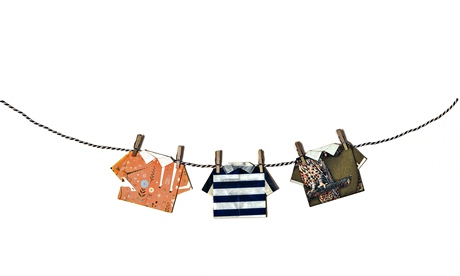
Even though origami’s roots are ancient, it is all around us. “Satellite dishes, car airbags and simple takeaway boxes all use the principles of origami; it’s the basic idea of how you fold down something into a smaller size,” explains origami teacher Sam Tsang. “It’s in Japanese art and religion but also has applications far beyond what you’d expect.” Indeed, it is art, maths, geometry, physics, philosophy and religion all rolled – or rather folded – into one
Physicist and origami theorist Robert Lang uses a computer program and laser cutter to create complex designs, from insects to cuckoo clocks. His TED talk, The Math And Magic Of Origami, has had nearly two million views. Tsang’s classes are a little more accessible.
Like colouring books, origami is a children’s activity with appeal for adults. It is easy for beginners but you quickly feel you’ve achieved something with the simplest folds. It is pleasurably nostalgic (remember your first paper aeroplane or writing on your fortune teller at school?) and ticks the “mindful” box for grown-ups.
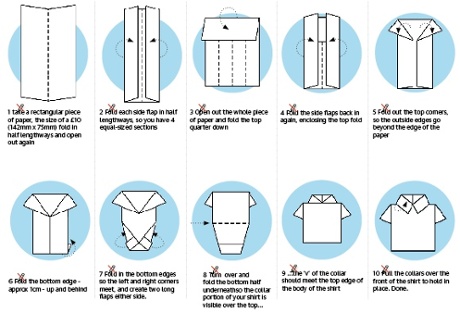
“It’s almost like meditation,” says Tsang. “You become so involved in folding your paper it can block out everything else around you.” If you don’t believe us, try his simple origami shirt. It’s the perfect birthday present, he says, especially if you make it out of a £10 note.
For more on Sam Tsang’s classes go to sesames.co.uk/lessons.html