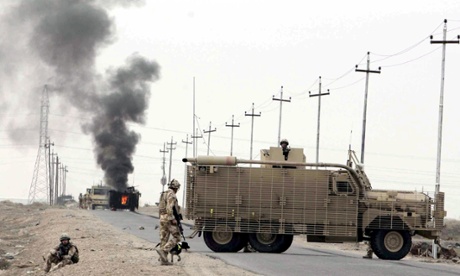
And here are two good articles about the Chilcot report.
The initial cause of the delay was Chilcot’s determination, strongly supported by another inquiry panel member, Sir Roderic Lyne, to publish much more of the contents of classified documents – including 130 records of conversations between Blair and Bush – than the government machine wanted.
Officials in the Cabinet Office, who saw their task as guarding hallowed British traditions of secrecy, were horrified when they first heard of Chilcot’s intentions. Chilcot made clear that in his view the notes went to the heart of the inquiry – how Blair led Britain to join the invasion of Iraq.
The notes, “illuminate prime minister Blair’s positions at critical points”, he said. “The question when and how the prime minister made commitments to the US about the UK’s involvement in military action in Iraq, and subsequent decisions on the UK’s continuing involvement, is central to its considerations”, Chilcot stressed.
He made the point that it was a bit rich for cabinet secretaries to stop the release of the documents given that Blair and his closest advisers, including Jonathan Powell and Alastair Campbell, had been allowed to publish freely on the same events and on the same private conversations.
Last summer I heard a very senior US Republican foreign affairs representative tell a seminar that George W Bush’s invasion of Iraq was the “biggest US foreign policy error since the decision to withdraw from Europe in 1919.” The historical reference was fascinating (and correct) but this man was a top George W Bush official who had held high office in the US administration of the time. (The seminar was held under Chatham House rules so he cannot be named.) ...
what is discreditable and barely honourable is the position of all the retired diplomats who now shake their grey locks and say the decision was a terrible thing and Saddam should have been left in peace with a few more year’s useless UN inspection visits to deal with.
Other than a junior FCO lawyer no ambassador, diplomat or Whitehall official resigned or made any public protest. I do not recall any FCO official inside the building objecting to the invasion. After all the Camel Corps had been pretty keen on other invasions or toppling of Arab or Iranian leaders in past years when it conformed to their beliefs.
Now everyone has the wisdom of hindsight. I asked the senior American official if Mr Bush could ever come to admit that Iraq was in Talleyrand’s words “worse then a crime, an error”?
“No”, was the reply, “I don’t think that President Bush can look the 4,500 families who lost a son or husband in Iraq in the face and tell them the sacrifice was wasted.”
That’s all from me for today. I’ve got to wrap up now because I’ve got a meeting.
I won’t be blogging tomorrow, but I think a colleague will be blogging instead.
Thanks for the comments.
Here is some more Twitter comment on the Chilcot announcement.
From the Guardian’s Nicholas Watt
Those who say @UKLabour happy with Chilcot delay miss point. @Ed_Miliband to trash @tonyblairoffice as says: am 1st post Iraq main UK ldr
— Nicholas Watt (@nicholaswatt) January 21, 2015
From the BBC’s Nick Sutton
.@bbcworldatone understands that for two witnesses Chilcot papers were sent yesterday and on Monday of this week. #wato
— Nick Sutton (@suttonnick) January 21, 2015
From the Guardian’s George Monbiot
By the time the #ChilcotReport is published, will anyone remember what it was about? Delays are shielding perpetrators of an illegal war.
— GeorgeMonbiot (@GeorgeMonbiot) January 21, 2015
Here’s James Forsyth’s verdict on PMQs for Coffee House. And here’s how it starts.
David Cameron cantered home at PMQs today. Armed with both good employment numbers, praise from Obama and the IMF for the UK economy and the delay in publication to the Chilcot Report, he held off Miliband with ease.
Lunchtime summary
- Sir John Chilcot has triggered a furious, but predictable row with the confirmation that his long-awaited report into the Iraq war will not be published until after the general election. Some political figures, like Nigel Farage, has claimed that this is evidence of a cover-up, and others, like Tim Farron, have suggested that Tony Blair is to blame, although Blair has strongly rejected. David Cameron and Ed Miliband have both said they regret the delay, but neither of them have gone down the “cover-up” route, or alleged impropriety. The row seems likely to benefit the anti-war parties by fuelling suspicions of establishment foot-dragging - both Ukip and the Lib Dems have launched petitions which seem to be little more than attempts to harvest email addresses of potential supporters - but, in truth, this does not feel like a bombshell political event, not least because it was widely expected that the report would be delayed. (Looking at the traffic on my blog this morning, among other things, I also get the impression that there is considerable less interest in this now than there was five years ago.)
- Chilcot has revealed that the report will involve the publication of 29 notes from Blair to President Bush. (This may turn out to be the key Chilcot revelation today.)
-
Cameron has rejected claims that the report is being deliberately delayed. Speaking at PMQs, he said:
My understanding is that there is no mystery in why this is taking so long. It is a very thorough report and you have to give the people who are criticised in a report the opportunity to respond to all those criticisms. That is what is happening at the moment. I don’t believe, from what I understand, that anyone is trying to dodge this report or put off this report.
But Sir Peter Tapsell, the Conservative MP and father of the Commons, attacked the inquiry’s “disgraceful incompetence”. He asked Cameron:
Do you fully recognise the contrast in efficiency between the inquires into the Crimean war and the Dardanelles campaign when compared to the disgraceful incompetence of the Chilcot inquiry into widely held suspicions that Mr Blair conspired with president George W Bush several months before March of 2003 and then systematically sought to falsify the evidence on which that action was taken?
-
Cameron has backed calls for Chilcot to give evidence to the foreign affairs committee about the delay in publishing the report. The committee has written to Chilcot asking him to appear within the next two weeks. It is not clear yet whether he will appear. Asked about this in the Commons, Cameron said:
My view is that when people are asked to appear in front of a select committee, when they are public servants, they should try to meet that obligation.
- Cameron has confirmed that illness may have played a part in the Iraq inquiry taking so long to report. After Sir Menzies Campbell raised this at PMQs, Cameron said everyone would want to send their wishes to Martin Gilbert, the Churchill biographer and inquiry member, who has been ill. Earlier Sir Richard Ottaway said Chilcot himself had been ill too.
-
Cameron has rejected claims that he is considering reducing the size of the army to 60,000. Asked about this at PMQs, he replied:
These ideas are absolutely not on the table and as long as I am prime minister, the regular army will stay at it current size.
- Cameron has said the groceries code adjudicator should have the power to levy fines on supermarkets that mistreat their suppliers. He has also said its remit should be extended.
-
Cameron has condemned next week’s plannned ambulance strike, and urged Labour to condemn it too. At PMQs he said:
I hope there is something which all sides of the House can unite over - that it would be completely wrong for the ambulance strike that is proposed to go ahead next week. I unreservedly condemn any attempt to go on strike and to threaten our services, particularly at this time of heightened national concern. I hope members of the Labour party - irrespective of which union they are sponsored by - will do the same thing.
- Nicola Sturgeon, Scotland’s first minister, has told the BBC that the SNP will vote on English health matters after the election because of the knock-on impact on Scotland. Until now, the SNPs has avoided voting on England-only matters.
-
Allegations of “unnatural sexual” behaviour at Westminster are contained within a previously top-secret file found at the National Archives, it has emerged. As the Press Association reports, university lecturer Dr Chris Murphy uncovered the once-classified document late last year at the archives in Kew, south West London. Murphy told Sky News he was shocked to come across the file in November, entitled: “PREM19/588 - SECURITY. Allegations against former public [word missing] of unnatural sexual proclivities; security aspects 1980 Oct 27 - 1981 Mar 20.” He said: “I think I did a double-take and then started wondering what the potential implications of the title, which is a little vague, could be.”
Updated
Blair says he has not delayed publication of Iraq inquiry report
Tony Blair’s office has also just released a statement saying that Blair has not delayed the publication of the Iraq report. This is from a spokesman.
While we do not intend to provide a running commentary on the process involved in the publication of the report, it is important to state the following for the sake of clarity.
We have repeatedly said that it is not true to say that Tony Blair has caused the delay in the report’s publication.
Sir John’s letter makes reference to notes and records concerning Mr Blair, which some may interpret as an implicit suggestion that Mr Blair caused the delay, this is not true. On the contrary, he regrets this delay in its publication.
Incorrect allegations and politically motivated speculation do nothing to shine a light on the issues involved. It is an independent inquiry and it should be allowed to proceed with its work.
This is aimed at people like Tim Farron. (See 10.17am.)
Blair defends the Iraq war
Tony Blair has rejected claims that the Iraq war fuelled Islamist extremism. He has been speaking to a panel at the World Economic Forum in Davos, where someone in the audience told him: “I think you have a great responsibility for the conflicts we have now.” Blair replied:
You can have a debate about whether this was the right or the wrong decision. But I would also point out, and I think many people in Iraq would, that Saddam Hussein wasn’t exactly a force for stability, peace and prosperity for his country and was responsible for killing many, many hundreds of thousands of people.
So, look, we can debate this but what interests me is that there is always a reason - you are suggesting the extremism all comes from that decision.
But then we see the extremism in France that, by the way, was opposed to Iraq, and then it’s the cartoons.
And then you have what happens in Belgium - what is the reason for that? And then you see what is happening in Nigeria, or Central African Republic or Mali, and then you see, when Gaddafi was removed in Libya we also now have huge instability there.
And when we didn’t intervene, in Syria, we have got probably the worst situation.
So my view is you can debate the political decisions, but at some point we have got to understand this extremism has grown up over a long period of time, over decades, its roots are deep within a perversion of the religion of Islam.
Updated
George Eaton at the Staggers has posted his verdict on PMQs. Here’s an excerpt.
Miliband sought to end on a high note by crowbarring in Cameron’s avoidance of the TV debates (“If he’s so confident about leadership, why is he chickening out of the TV election debate?”). But it couldn’t help feeling rather desperate. With the Greens enjoying a Tory-induced surge in the polls, today’s session added to the sense that, this week at least, the wind is blowing in the Conservatives’ favour.
PMQs - Verdict from the Twitter commentariat
Political journalists who have called it on Twitter all seem to be giving it to David Cameron.
Easy win for Cameron - even if the stuff about Ed M being mocked by small children did sound a bit like bullying. #pmqs
— Iain Martin (@iainmartin1) January 21, 2015
Cameron didn't seem too troubled by any of Miliband's attacks - had a lot of good economic news to fight back with #PMQS
— Vicki Young (@VickiYoung01) January 21, 2015
Armed with the heavy artillery of falling unemployment and growing economy Cameron pummelled Miliband today #PMQs
— Martyn Brown (@MartynExpress) January 21, 2015
Cameron having his best #PMQs for months. Labour faces grim
— James Chapman (Mail) (@jameschappers) January 21, 2015
A definitive Cameron win - and I don't day that very often. #pmqs
— ann treneman (@anntreneman) January 21, 2015
"Oh dearie me" - a phrase that sums up @Ed_Miliband's overall #PMQs performance today: http://t.co/x29Y5kuZBn pic.twitter.com/rIZEX16A05
— Sun Politics (@Sun_Politics) January 21, 2015
PM had a lot of ammo for that #PMQs ... Most hit his target. Exactly what the Conservatives would want re central economic/election pitch
— Faisal Islam (@faisalislam) January 21, 2015
Miliband drew blood on the election debates but otherwise an easy Cameron win this week. 5-1
— Tim Shipman (@ShippersUnbound) January 21, 2015
And here are some general comments that are interesting.
Miliband opposed Iraq War but wasn't MP in 2003. Cameron voted for it and recall him saying he'd do so again after no WMDs found #PMQs
— Kevin Maguire (@Kevin_Maguire) January 21, 2015
This #pmqs spat on living standards is all very well, but we could've had it any week of last four years. It doesn't feel urgent
— Gaby Hinsliff (@gabyhinsliff) January 21, 2015
Cameron trying to weaponise Chilcot #pmqs
— Jack Blanchard (@Jack_Blanchard_) January 21, 2015
Not wise of MPs to groan at Reckless when he's called to ask a question - just stokes UKIP's outsider rhetoric. #PMQs
— Mark Wallace (@wallaceme) January 21, 2015
Key Q at PMQs from DUP dep leader Nigel Dodds asking PM to back 2% GDP def spending. PM doesn't... Imagine Dodds asks in coalition talks.
— Allegra Stratton (@BBCAllegra) January 21, 2015
The 750th anniversary of Simon de Monfort Parliament this week, England's 1st. How he must be turning in grave over quality of today's PMQs.
— Tom Newton Dunn (@tnewtondunn) January 21, 2015
(I’m not so sure about that. What makes Tom think it was any better in 1265?)
Alex Belardinelli, Ed Balls’s press officer, says David Cameron should be not citing President Obama as a supporter of his economic strategy.
Er, President Obama wants to raise taxes for the top 1 per cent of earners - the exact opposite of what David Cameron has done
— Alex Belardinelli (@abelardinelli) January 21, 2015
PMQs - Verdict
PMQs Verdict: My colleague Roy Greenslade wasn’t very impressed by the Mail on Sunday splash about what happened when Ed Miliband was campaigning to become elected as Labour’s candidate in Doncaster. But David Cameron clearly liked it, because it provided the substance to his best reply to Miliband.
[Labour have] got a homes tax that has done the impossible and unite the Hon Member for Hackney with Peter Mandelson. Now, to be fair to the Hon Gentleman, we learnt at the weekend what he could achieve in one weekend in Doncaster, where he couldn’t open the door, he was bullied by small children and he set the carpet on fire. Just imagine what a shambles he would make of the country.
It was that sort of PMQs; heavy on knockabout, and light on illuminating argument. (Maybe the Sir Bernard Crick Centre will have to revise its opinion - see 11.59am.) It’s not that Miliband and Cameron did not have anything to say; it is just that they did not recalibrate their messages in ways that were particularly new, or striking. Miliband attacked Cameron over the cost of living.
This will be the first government since the 1920s to leave office with living standards lower at the end of the Parliament than they were at the beginning.
And Cameron dismissed Labour’s stance on the economy generally.
[Miliband] told us there’d be no growth; we’ve had growth. He told us there’d be no jobs; we’ve had jobs. He told us there’d be a cost-of-living crisis; we’ve got inflation at 0.5%. He’s wrong about everything.
Earlier I said it was scrappy and unedifying; perhaps I should have said, to be precise, even more scrappy and unedifying than usual. Cameron’s attempt to squeeze party political advantage out of the Iraq report delay was over-done (as Miliband pointed out, Gordon Brown had a reasonable case for not launching the inquiry until combat operations were over), but Cameron, overall, was stronger, not least at the end, when he quoted Christine Lagarde’s comment about the UK economy.
She said this: ‘The UK, where clearly growth is improving, the deficit has been reduced, where unemployment is going down, certainly from a global perspective, this is exactly the sort of result we’d like to see.’
John Bercow is making his statement. It is about the anniversaries of Magna Carta and the de Montfort parliament.
Nigel Dodds, the DUP MP, asks if Cameron looks back at the last five years, and thinks what he might be doing after the election, will he commit to maintaining defence spending at 2% of GDP.
Cameron says the UK is one of the few Nato countries that does spend 2%. We are going to see the armed forces getting new equipment.
That’s it. PMQs is over.
Labour’s Gemma Doyle asks why the government’s evidence to the Low Pay Commission did not mention raising the minimum wage to £7.
Cameron says Labour’s minimum wage policy would lead to it going down.
Glyn Davies, a Conservative, says the dairy industry is in difficulty. Will the government consider extending the power of the groceries code adjudicator?
Cameron says this is a serious issue. It is time to ensure the groceries code adjudicator can levy fines, and to give it a remit to investigate more widely.
Sir Gerald Howarth, a Conservative, says he represents Aldershot, home of the British army. Will Cameron assure him that press reports saying the army could be cut to 60,000 are untrue?
Cameron says they are. As long as he is prime minister, the army will stay at its current size.
Cameron says Labour has not even got to base camp in terms of working out why the deficit matters.
Sir Menzies Campbell, the former Lib Dem leader, says he has followed the Iraq inquiry very closely. There is no evidence of witnesses trying to delay it, he says. But there have been members who have been ill, in one case very seriously, he says.
Cameron says he agrees. Campbell is right about the panel members, particularly Martin Gilbert, Churchill’s biographer. Everyone will be wishing Gilbert well.
Labour’s David Winnick says there should be no excuse for antisemitism.
Cameron says he went to Auschwitz recently. The sight of all those children’s clothes was very powerful, he says.
Updated
Cameron says he is glad that mental health is getting a higher profile today than in the past. One of the key challenges his helping people with mental health conditions get into work.
Labour’s Diane Abbott says the Chilcot delay is “widely considered to be a scandal”. Isn’t it important to find out what went wrong, because the public do not want powerful people to be able to delay the child abuse inquiry for year after year after year.
Cameron says there is nothing sinister in the delay. He does not believe that anyone is trying to delay, or dodge this report.
Sir Bob Russell, the Lib Dem MP, says the East Anglia rail manifesto should be implemented.
Cameron says he wants to see real improvements in the East Anglia service.
Toby Perkins, the Labour MP, says the A&E crisis has its roots in the shortage of GPs.
Cameron says there are 1,000 more GPs in the NHS now than when be became prime minister.
Charlie Elphicke, a Conservative, asks Cameron if he agrees with the IMF and President Obama about the British economy doing well.
Cameron says it was very kind of Obama to say that the governent is doing something right.
Cameron condemns the planned ambulance strike next week. He urges Labour to condemn it.
Sir Richard Ottaway asks Cameron if he supports his call for Sir John Chilcott to appear before the foreign affairs committee to explain the delay in publishing his report.
Cameron says, when public servants are asked to appear before a Commons select committee, they should.
Earlier Cameron says that Ukip was a minor party, and that, if it were included in the debates, the Greens should be too.
Nigel Farage has responded on Twitter.
And don't think, Mr Cameron, that I didn't notice you calling UKIP a "minor party" when Ofcom's guidance says otherwise. #Chicken #TvDebates
— Nigel Farage (@Nigel_Farage) January 21, 2015
Labour’s Andrew Gwynne says the government is not upholding key rights for cancer patients.
Cameron says half a million more people are being referred for cancer treatment. Referrals are going up, he says.
Cameron says the Magna Carta anniversary is hugely important. It is important for it to be taught in schools, he says.
Labour’s Mary Glindon challenges Cameron to admit that his failure to create decent jobs with decent pay is a problem.
Cameron says nine out of 10 jobs being created are full-time. All the evidence is moving away from Labour. Jobs are full-time, and wages are moving ahead of inflation.
Snap PMQs Verdict
Snap PMQs Verdict: Scrappy and unedifying, with no decisive jibes from either Cameron or Miliband, but Cameron generally getting the upper hand.
Updated
Miliband says Cameron is showing “total complacency” on the basis of one month’s figures. We are a nation of food banks. We are not all in it together.
Cameron says Labour cannot talk about employment, or the deficit or the economy. Labour have an energy policy that does not work, and a homes tax that has achieve the impossible - uniting Lord Mandelson with Diane Abbott. We read at the weekend in the Mail on Sunday about Miliband in Doncaster. Just imagine if he were running the country.
Miliband says if Cameron is so confident about leadership, why is he chickening out of the leaders’ debate.
Cameron quotes Christine Lagarde, head of the IMF, saying the UK shows exactly the sort of growth the world needs to see. Every day the country is growing stronger; every day Labour looks weaker and more divided.
Miliband says a report came out this week saying half of all families with one person in work cannot make ends meet.
Cameron says the Rowntree report says the risk of falling below acceptable living standards decreases as work increases. And more people are in work. The government has raised the tax threshold. If he had listened to Labour, there would be more debt.
Miliband says Cameron has failed on the deficit. He is saying people have never had it so good. While normal people are worse off, executive earnings are up 21% in the last year.
Cameron says Miliband criticises him on the deficit, but he could not even remember the deficit. Miliband has not welcomed the rise in employment.
Ed Miliband says the Iraq inquiry was set up six years ago. It should be published as soon as possible.
Can Cameron confirm this will be the first government since the 1920s to leave office with living standards lower than at the start.
Cameron says if Labour had voted with the Conservatives before the election to set the inquiry up, it would have reported now.
Miliband says the inquiry was set up six years ago, after combat operations were over. His views on the war are well known.
Cameron did not answer on the economy, Miliband says.
Cameron says Miliband voted “again and again and again” against an inquiry.
The news today shows a record number of people in work. And disposable income is higher than under Labour. And Labour’s living standards figures do not include the coalition’s tax cuts. Labour told us there would be no growth, and higher unemployment, but they were wrong.
Robert Jenrick, a Conservative, says Labour are economically illiterate.
Cameron says freezing energy prices at the top of the market would deny the price cuts that are now coming.
Updated
Labour’s Siobhain McDonagh asks about a seven-year-old constituent with autism. Having to move four times has contributed to him having a breakdown. Does Cameron support longer-term tenancies.
Yes, says Cameron. The government is trying to encourage them.
PMQs
PMQs will be starting soon.
If you are one of the many people who, like Nick Clegg, think it is “ridiculous”, then you should read this blog on the Sir Bernard Crick Centre website defending it. Here’s an excerpt.
It goes without saying that the baying, howling and shouting by MPs of all colours needs to change, too, as it shows us only how juvenile politicians can be. But neither of those two facts take away from the crucial role that prime minister’s questions fulfils in our politics. We may not like the way that the (largely) scripted play is enacted by actors that we may not find especially convincing – but this does not mean we should shun the play completely.
Updated
Rose Gentle, whose son Gordon was killed while serving in Iraq, has said that she is disgusted by the delay in publishing the Iraq inquiry report, and that it will be a “whitewash”.
Rose Gentle on Chilcot delay tells BBC: "We feel let down, we feel it's going to be a total whitewash now"
— Jason Beattie (@JBeattieMirror) January 21, 2015
Disgusted but not surprised by delay to #chilcot - Rose Gentle
— norman smith (@BBCNormanS) January 21, 2015
Here’s a Guardian video of Tim Farron saying people will think the report is being delayed to protect those criticised in it.
And here is some more Twitter comment on the reports’s delay.
From the Labour MP Paul Flynn
BBC's Tory Nick at it again-rewriting history of Iraq War as monopoly Labour blunder. All but 6 Tories voted for it. 139 Lab MP opposed it.
— Paul Flynn (@PaulFlynnMP) January 21, 2015
From the Spectator’s James Forsyth
Suspect biggest political beneficiaries from Chilcot not being published before the election are the SNP, the Lib Dems and the Greens
— James Forsyth (@JGForsyth) January 21, 2015
From the writer Armando Iannucci
Chilcot Report just 'awaiting replies from all those killed in Iraq.'
— Armando Iannucci (@Aiannucci) January 21, 2015
From the Daily Mail’s James Chapman
Libs may profit more from railing against Chilcot not being published before election than actually seeing report. Like Greens + TV debates
— James Chapman (Mail) (@jameschappers) January 21, 2015
From the Sun’s Tom Newton Dunn
Much rage about the Iraq Inquiry's delay. A greater scandal is the MoD/No10 still refusing a public probe on what went wrong in Afghanistan.
— Tom Newton Dunn (@tnewtondunn) January 21, 2015
George Galloway, Respect MP, is calling the delay in the publication of the Chilcot report “an act of treason”.
decision to further delay the Chilcot Report an act of treason against this country and an abuse of parliament which is shortly to debate it
— George Galloway (@georgegalloway) January 20, 2015
Ukip has also set up an online petition calling for the publication of the Chilcot report.
Nigel Farage, the Ukip leader, is alleging a cover-up.
It beggars belief that here we are, four years after the end of the Chilcot Inquiry, still waiting for the report. It smacks of an establishment cover-up, and one which I suggest the British public will see right through.
On Twitter Russell Whiting points out that the John Bercow statement may just be about the Magna Carta anniversary celebrations. (See 11.20am.) Bercow has already indicated that he will make a statement on this.
The BBC’s Nick Robinson has been speaking to some of those likely to be criticised in the Chilcot report and they are rejecting claims that they are to blame for the delay. On his blog, he summarises what they are saying in private. Here’s an extract.
In summary this is what they say in reply. These are not my views but a summary of their’s and, yes, of course they have their own axe to grind:
They say:
- Chilcott has missed every deadline he’s set. This delay is nothing to do with the witnesses
- The opportunity to respond to draft criticisms before they are published is standard practice and a legal right in an inquiry of this sort (it is called Maxwell-isation and was established after a legal challenge following the Maxwell inquiry)
- Those criticised only received the draft report about them just before Christmas
- The report is ludicrously long and criticises many more people than just Tony Blair so responding to criticisms is bound to take a good deal of time
- They insist they have wanted this report out for a long time so that they can face the criticisms and answer them as best they can.
Some will believe none of this and fear an establishment stitch up. Others will note that nothing to do with Iraq can be free of politics.
Peter Riddell, the former Times journalist and director of the Institute for Government, is a brave man. He seems to be about the only person saying it does not matter if the Iraq inquiry report does not get published until after the election.
Of course delay to publication of Chilcot is frustrating but not sinister and irrelevant to election since none of key figures standing
— Peter Riddell (@_peterriddell) January 21, 2015
John Bercow, the Common Speaker, is making a statement at 12.30pm.
There will be a statement from the Speaker after #PMQs at 12.30pm. Watch live online http://t.co/bAmsOcegpt
— House of Commons (@HouseofCommons) January 21, 2015
I’m not sure yet what this is about, or whether it is Iraq-related. His office won’t say anything. But he may be angry that the news about the Iraq inquiry report being delayed appeared first in the press (or on the Guardian’s website).
The Lib Dems have launched an online petition calling for the Iraq inquiry report to be published.
If you agree, please SHARE and then sign the petition to get the Chilcot inquiry published:... http://t.co/aSdxmamgEf
— Tim Farron (@timfarron) January 21, 2015
(Given that it is clear that the report will not be published before the election, it is not entirely clear what the petition will achieve - apart from allowing the Lib Dems to harvest some email addresses - but never mind.)
Here’s Mark Urban, Newsnight’s diplomatic editor, on what the Chilcot report will say.
Don't expect Chilcot to say Blair knowingly misled ppl on Iraq intel. Do expect an indictment of whole foreign, intel, & mil establishment
— Mark Urban (@MarkUrban01) January 21, 2015
I think he’s right. I spent many hours listening listening to Iraq inquiry evidence and, although although it is clear that the panel is likely to be quite withering about how the war was conducted, and even, perhaps, about the wisdom of embarking on it in the first place, it is hard to see it going beyond what the Butler report said on the issue of whether Tony Blair lied about his reasons for war. Butler found that Blair’s dossier about Iraq’s weapons of mass destruction “went to (although not beyond) the outer limits of the intelligence available” and that there was no “deliberate distortion”. But there is a difference between lying, and not being entirely straight, and I do expect the report to conclude that Blair could have been more candid with the public about his pre-war thinking.
Ottaway says Chilcot's explanation for the report's delay is 'pretty thin'
Here are the main points from Sky News’s interview with Sir Richard Ottaway, the Conservative chair of the Commons foreign affairs committee.
-
Ottaway said that Sir John Chilcot’s explanation in his letter for the hold-up in his report’s publication was “pretty thin”.
I think [Chilcot’s letter is] fairly light on reasons. Quite clearly, he’s struggling with getting it out on time. And he’s got a number of difficulties. But the explanation [for the delay] is pretty thin.
- He said he was not criticising Chilcot personally for the hold-up. “I understand he’s not been very well, nor members of his committee,” he said.
- He confirmed that his committee wanted Chilcot to give evidence to it about the delay. “It’s very important that we get [the reasons for the delay] in the public domain,” he said.
-
He said he believed the report was intentionally being delayed. When asked if it was, he said yes. But, when asked by whom, he said he did not know.
I suspect the process - those involved would rather move on on this, and sometimes it does not take two days to reply to a letter, it takes two months and then two months to reply to that letter. Those of us who have seen this before - I sat on the original inquiry into the case for war in Iraq - we’ve seen how these things can be dragged out.
While I’ve been focusing on the Iraq inquiry, the unemployment figures have come out. Here’s the Guardian’s story. And here’s how it starts.
Unemployment in Britain has continued to decline over the past three months, but at the slowest pace since mid-2013, raising fears that the hiring spree is starting to slow.
Official figures showed that the number of people out of work declined by 58,000 in the three months to November, driving the unemployment rate down to 5.8%.
The Office for National Statistics said that was the smallest fall since July to September 2013. Analysts have warned that slowing growth in the eurozone and uncertainty about the outcome of May’s general election could lead businesses to hold back on investment plans.
In a short clip for Sky News, David Cameron rejected a suggestion that the delay in the publication of the Iraq inquiry report was a cover-up. He would be saying more at PMQs, he said.
Sir Richard Ottaway, the Conservative chair of the Commons foreign affairs committee, has just told Sky News that Sir John Chilcot’s explanation for the delay in the report’s publication was “pretty thin”.
He also said that he thought the report was being intentionally held up, although he did not say by whom. And he said that Chilcot himself had not been well.
I’ll post the quotes in a moment.
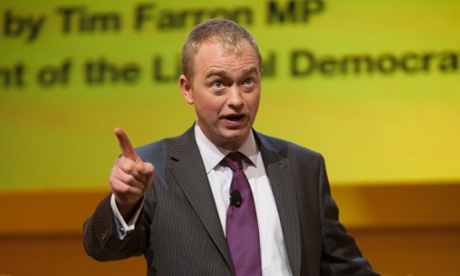
Tim Farron, the Lib Dem foreign affairs spokesman, has been giving interviews about the Iraq inquiry report this morning. He has accused witnesses to the inquiry of being to blame for the delays.
This is what he told Sky News.
I’m quite sure that Sir John Chilcot and his team are handling this in a professional and even-handed way. What I’m less sure of is the behaviour of some of the witnesses, those people who are stringing this out by challenging the evidence against them in a very, very lengthy way to make the inquiry six times longer than it should be.
He would not name those he thought were to blame, but he seemed to be referring to one T Blair. This is what Farron said:
I bet you we can all guess who we’re talking about.
And this is what he told the Today programme.
We understand that witnesses involved in the inquiry, very well-known names of course, who are pushing the thing back and forth, presumably seeking to water down the strength of criticism against them.
Tony Blair has repeatedly denied being to blame for holding up the report’s publication. For example, this is what he said in May last year.
I am not in charge of the inquiry or in charge of the government. All I can tell you is that it is not from me and I actually resent the suggestion. I have got as much interest as anyone in the inquiry publishing its findings and then I can go out and restate my case and defend my position.
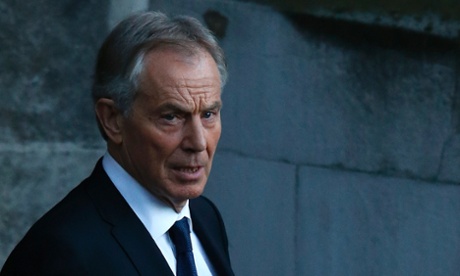
Sir John Chilcot's letter to David Cameron - Full text
Here is the full text of Sir John Chilcot’s letter to David Cameron, for those how have not opened the pdf.
Dear Prime Minister,
I last wrote to you in November 2013, and to Sir Jeremy Heywood in May 2014, with an update on progress of the Iraq inquiry.
My colleagues and I have made substantial progress since my last letter
I can confirm that individuals are currently being given the opportunity to respond to provisional criticism of them in the inquiry’s draft report. That is an essential and confidential process. It would not be appropriate for me to comment on it in detail.
We intend to finish our work as soon as it is possible to do so whilst being fair to all those involved.
Until we have received and evaluated responses from all those who have been given the opportunity to respond, I cannot give an accurate estimate for how long it will then take to complete our work, but it is clear that will take some further months. I therefore see no realistic prospect of delivering our report to you before the general election in May 2015.
Our report will be based on a thorough and comprehensive account of the relevant events from 2001-2009. We are determined to fulill the responsibility placed on us to identify lessons to be learned from the UK’s involvement in Iraq, including the way decisions were made and actions taken, over this long period.
In that context, I am pleased to record that since I last wrote the Inquiry has reached agreement with Sir Jeremy on the publication of 29 of Mr Blair’s notes to President Bush, subject to a very small number of essential redactions, alongside the inquiry’s final report.
Agreement has also been reached on the detail of what material the inquiry will publish in relation to records of conversations between Mr Blair and President Bush, consistent with the principles agreed last year.
I should like to place a copy of this letter on the inquiry’s website on Wednesday 21 January.
Yours sincerely,
Sir John Chilcot
Cameron says last Labour government to blame for the delay
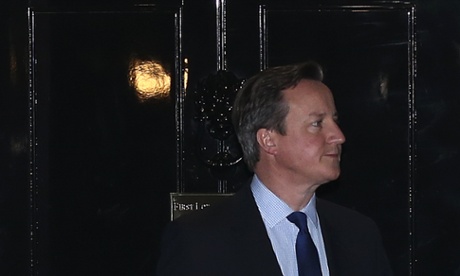
And here are the key points from David Cameron’s reply to Sir John Chilcot (pdf).
- Cameron says he will “respect” the decision to delay publication until after the election.
I would have liked to have seen your report published already and certainly well before the forthcoming election ...
However, it is important that the inquiry remains fully independent of government and therefore the timetable and processes for completing your work are entirely for you to decide - not for the government. So I have to respect your decision and fully accept that it will not now be possible for you to submit your final report to the government and parliament until after the election.
-
He blames the last Labour government for the delay, saying it should have set the inquiry up sooner.
Had the previous government established this inquiry when I first called for it, we would not be in this position today. But that cannot now be undone.
Updated
Chilcot says he will publish 29 of Blair's notes to Bush
Here are the key points from Sir John Chilcot’s letter to David Cameron (pdf).
- Chilcot says that the report will include publication of 29 of Tony Blair’s notes to George Bush, “subject to a very small number of essential redactions”.
- He says he has reached agreement “on the detail of what material the inquiry will publish in relation to records of conversations between Mr Blair and President Bush, consistent with the principles agreed last year”.
- He says publication of the report will take “some further months” and that there is “no realistic prospect of delivering” the report before the election.
-
He says that he still has not received replies from all those who have been offered the chance to respond to the report.
I can confirm that individuals are currently being given the opportunity to respond to provisional criticism of them in the inquiry’s draft report. That is an essential and confidential process. It would not be appropriate for me to comment on it in detail.
We intend to finish our work as soon as it is possible to do so whilst being fair to all those involved.
Until we have received and evaluated responses from all those who have been given the opportunity to respond, I cannot give an accurate estimate for how long it will then take to complete our work, but it is clear that will take some further months.
Updated
I will post them in full in a moment.
Stewart Hosie, the SNP deputy leader, told BBC Radio Scotland that the delay in publication of the report was “a scandal”.
To have [the report] pulled apparently such a short time before the election it really is a scandal. The public opposition to that war was such, and the demand for answers was so intense, that there is almost a duty of government for Chilcot to publish as quickly as is humanly possible. To have an announcement now, three and a half months before the election, that it won’t be is very very troubling indeed.
Nick Clegg's letter to Sir John Chilcot
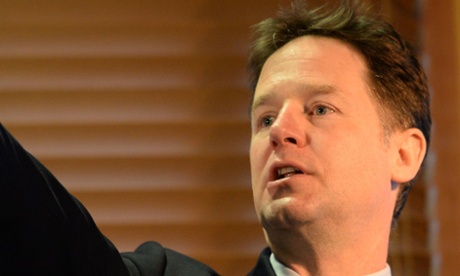
As the Guardian reports, Nick Clegg wrote to Sir John Chilcot last night complaining about the delay in publishing the Iraq inquiry report.
Here’s the full text of the letter.
And here’s an extract.
The public have waited long enough and will find it incomprehensible that the report is not being published more rapidly than the open ended timetable you have now set out.
We need to see a much clearer and more defined timetable, known publicly, with strict deadlines and a firm date for publication.
If the findings are not published with a sense of immediacy, there is a real danger the public will assume the report is being ‘sexed down’ by individuals rebutting criticisms put to them by the Inquiry, whether that is the case or not.
The Inquiry into Iraq will both resolve the issues of the past, and set the tone for future British foreign policy. We cannot wait any longer for these lessons to be learned.
Nicola Sturgeon, Scotland’s first minister, says delaying publication of the Iraq inquiry report until after the election is “absolutely outrageous”.
This is absolutely outrageous - Iraq War report 'not before election' http://t.co/wDUgwmSTU5
— Nicola Sturgeon (@NicolaSturgeon) January 21, 2015
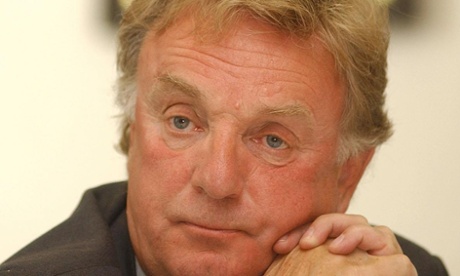
Sir Richard Ottaway, the Conservative chair of the Commons foreign affairs committee, wrote to Sir John Chilcot yesterday, before it was confirmed that the report would not be coming out before the election, summoning Chilcot to appear before the committee to explain why publication was taking so long. Ottaway said there could be “no justification whatsoever” for the process taking so long.
We have asked him to come to explain the delays and to discuss the wider issues surrounding this. We hope it will still happen and we will be able to have a rational, constructive conversation bringing out his thoughts about how these things could be speeded up in future.
The Tories were calling for this to be set up in 2007. If it had been done then it would all be over by now.
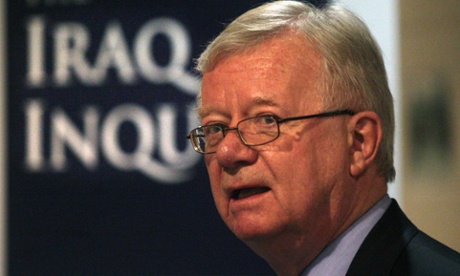
Even though the news that the Chilcot inquiry report into the Iraq war won’t now be published until after the election doesn’t come as a huge surprise, the anger this has provoked is real. Here’s the Guardian splash with the story that broke last night.
Today we’re going to get an exchange of letters between Sir John Chilcot, the committee chair, and David Cameron about the delay.
And, even though we won’t get the report before the election, we may see him give evidence to a Commons committee.
The foreign affairs committee wants to hear from him.
Richard Ottaway wrote to Sir John Chilcot yesterday calling on him to appear before the foreign affairs select committee. Rather timely!
— Amber de Botton (@AmberSkyNews) January 21, 2015
And Bernard Jenkin, the chair of the public administration committee, told the public administration committee that his members would be taking this up.
[Chilcot] is going to give an explanation in writing. That may give rise to correspondence between my committee and him. We haven’t done that so far.
Jenkin also said Sir Jeremy Heywood, the cabinet secretary, would give evidence to his committee this week and that the Iraq report could come up.
I’ll be covering all the latest developments.
Here’s the agenda for the day.
9.30am: Unemployment figures are published.
9.30am: Charities, academics and the PCS general secretary Mark Serwotka give evidence to the work and pensions committee about benefits sanctions.
10am: Ed Davey, the energy secretary, gives evidence to the Commons energy committee.
12pm: David Cameron faces Ed Miliband at PMQs.
12.30pm: Philip Hammond, the foreign secretary, and Michael Fallon, the defence secretary, hold talks with their Japanese counterparts, foreign minister Kishida Fumio and defence minister Gen Nakatani.
As usual, I will be also covering all the breaking political news from Westminster, as well as bringing you the most interesting political comment and analysis from the web and from Twitter. I will post a summary at lunchtime and another in the afternoon.
If you want to follow me on Twitter, I’m on @AndrewSparrow.
Updated