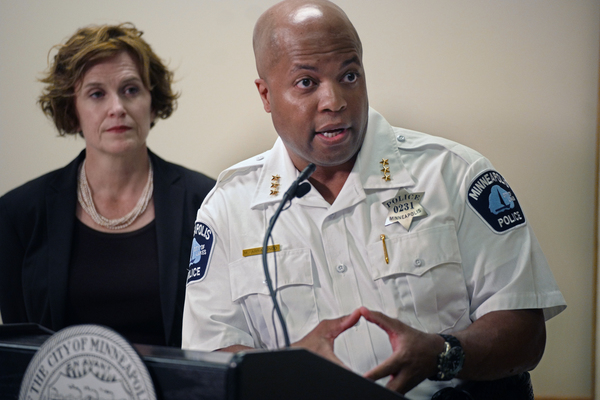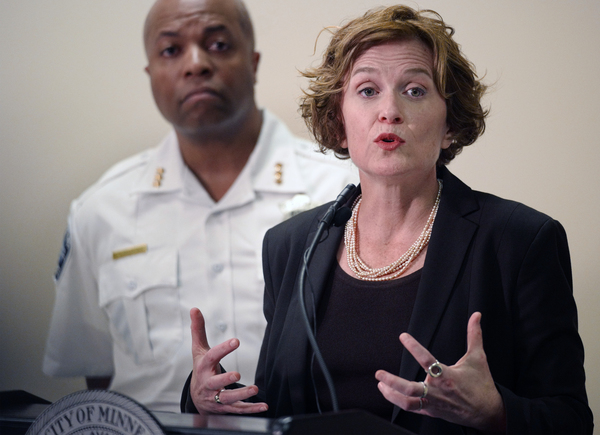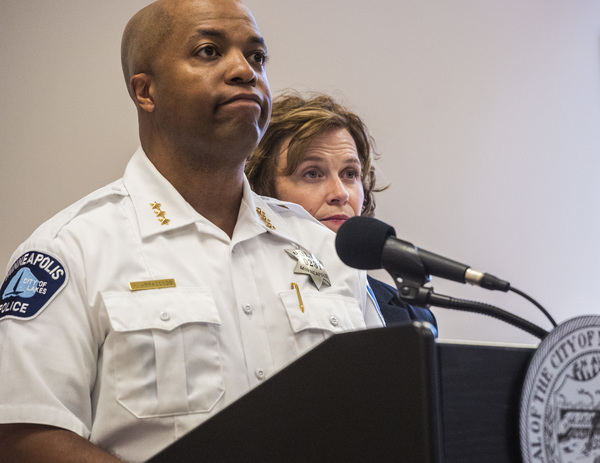
MINNEAPOLIS _ Minneapolis police must activate their body cameras when responding to any call, traffic stop or self-initiated activity, Acting Police Chief Medaria Arradondo said Wednesday, in a key change to city policy in the wake of Justine Damond's shooting death.
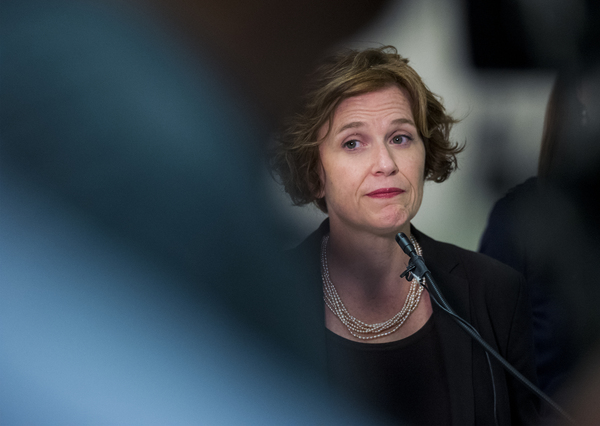
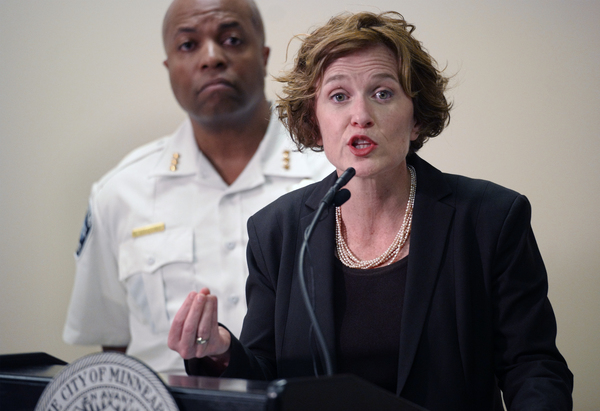
"What good is a camera if it is not being used when it may be needed the most?" Arradondo said at a news conference, where he and Mayor Betsy Hodges acknowledged some officers have not been using their cameras enough.
In the roughly eight months the equipment has been in use, officers have been given leeway on when to turn on the cameras. The new policy, effective Saturday, will require Minneapolis cops to turn on the cameras in any encounter with the public, heeding an until-now disregarded 2015 recommendation from the Police Conduct Oversight Commission that would have all but eliminated officer discretion in use of the cameras.
Within about two months, police officials said, the cameras will activate automatically whenever an officer flips on his or her patrol vehicle's emergency lights. Installation of the new technology on the department's 200 squad cars is underway.
"We are not casting judgment on a single officer, nor are we looking at a single event; we are responding to our communities and to recent ongoing assessment," Arradondo said. "This policy enhancement has been in process for a few months now and many officers are using their cameras a lot and as they're intended to be used. But there are some officers who are not using them nearly enough."
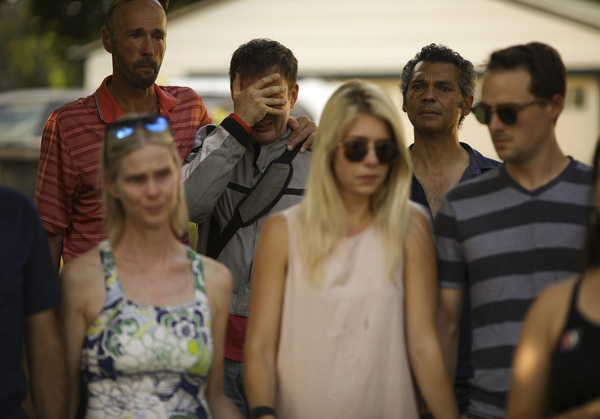
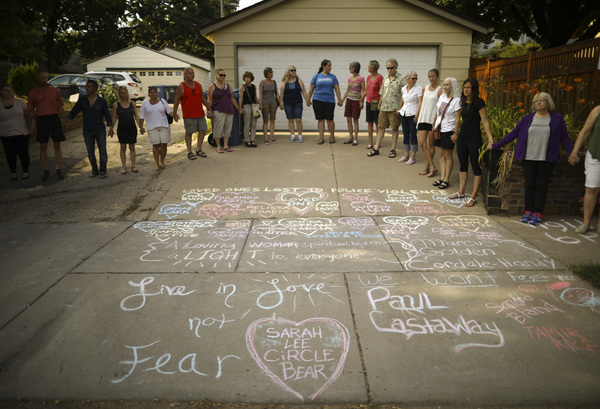
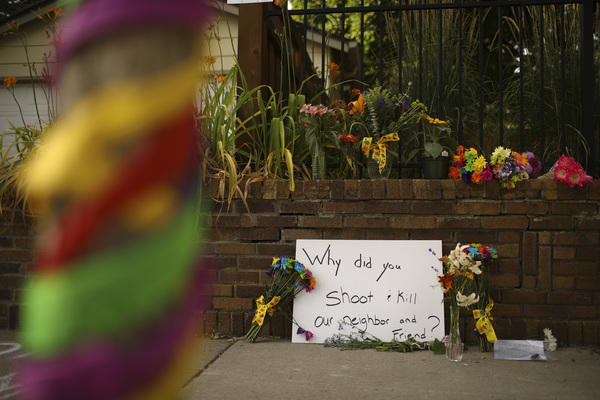
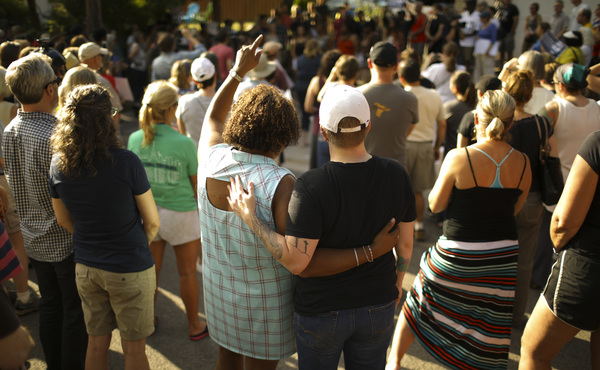
The July 15 shooting of Damond, also known as Justine Ruszczyk, by Officer Mohamed Noor was not captured on video because neither Noor or his partner, Officer Matthew Harrity, had turned on his body camera, and the police squad's dashboard camera was also not running. The incident has drawn international attention and sharp criticism of Minneapolis Police, and led to the resignation of Police Chief Janee Harteau on Friday.
There have also been persistent questions about why the officers' body cameras weren't turned on. Teresa Nelson, executive director of the American Civil Liberties Union of Minnesota, said the less discretion officers have about turning on the cameras, the better.
"What we have asked for is a policy that requires activation before any citizen encounter," Nelson said. "And the reason for that is, if we have policies when the officers are only capturing footage when they want to have the cameras on, then it becomes solely a tool for police surveillance. But when you have more mandatory policies and more footage, it becomes more useful for transparency and accountability for the officers."
Bob Kroll, the president of the Police Officers Federation, said Damond's death was a "terrible tragedy," but called the changes to the body-camera policy a "knee-jerk reaction," and objected to the possibility that officers' discussions of tactics while responding to a call would be publicly disseminated.
"Only the interactions taken at the call should be recorded," Kroll said in a statement.
Proposed discipline for not following the new policy is "vague and ambiguous," Kroll said, and he argued that the police union should have been consulted on the new policy.
"Changes need to be carefully examined and made collectively by the administration and the federation," he said.
State law requires law enforcement agencies that use body cameras to arrange for an independent audit of the programs every two years, starting in 2018.
The Minneapolis Civil Rights and Internal Audit departments will conduct a now expanded audit of the city's body-camera program over the next two months, reporting back to council members on Sept. 27. The audit will look at the equipment and software police use, how they use it, and study how consistently officers have turned on cameras, data that's "readily available," said Will Tetsell, the city's director of Internal Audit.
Minneapolis Council Member Blong Yang said he expects data about body-camera use to become public as standard procedure. He said the changes announced Wednesday by Hodges and Arradondo were "moving in the right direction," but he believes the Police Department should lay out more explicitly the consequences officers face if they don't follow the new rules. "It should be clear, and it should be there," Yang said.
Arradondo said the "full range of discipline" will be used to punish officers who don't turn on their body cameras, including firing, but went into no more detail. A spokeswoman for the department, Sgt. Catherine Michal, said Wednesday that discipline will be handled case-by-case.