Closing summary
- The number of coronavirus infections in the UK has exceeded 100, with 115 people having now tested positive, the Department of Health and Social Care has said. The announcement came as Sir Chris Whitty, the chief medical officer for England, told MPs that the government’s response to coronavirus had now moved from the point where it was mainly focusing on containing the disease to the point where it was mainly focusing on delaying its spread. But Boris Johnson said that for the moment it should be “business as usual” for people and that Britain would get through the coronavirus outbreak “in good shape”. (See 1.17pm.) For full coverage of the latest coronavirus developments, in the UK and around the world, do read our separate live blog.
- Drugs and terrorism have driven the recent rise in homicides - with each killing costing society an estimated £3.2m, according to a new report (pdf). The rate of murders and manslaughters in England and Wales soared by 39% between the year ending March 2015 and 2018, to a higher point than at any time between 1900 and 1970, Home Office research found. As the Press Association reports, there were four times as many homicide deaths in the year ending March 31 2018 as those resulting from terror attacks since 1980. Yvette Cooper, the Labour chair of the home affairs committee, said:
These are damning but frankly unsurprising findings. The home affairs committee has repeatedly warned that deep cuts to policing would have dangerous consequences for public safety. For years Home Office ministers have insisted that there is no direct relationship between the number of police officers and levels of crime on our streets – this report indicates that there is one and that more police officers mean fewer homicides.
That’s all from me for today.
Thanks for the comments.
Updated
This is from Sky’s Sam Coates, who has been at the No 10 lobby briefing.
Downing Street spokesman says that it is highly likely that coronavirus is going to be spread in a "significant way"
— Sam Coates Sky (@SamCoatesSky) March 5, 2020
They said officials will therefore accelerate preparation for "delay" phase of govt plan focussing on steps they can take seek to delay spread of the virus
The acting Lib Dem leader Sir Ed Davey has strongly criticised the government for refusing to commit to remaining signed up to the European convention on human rights as part of its trade agreement with the EU. (See 2.38pm.) In a statement he said:
The European convention on human rights empowers people to hold governments to account when ministers trample on individual rights and freedoms. It was largely a British creation and has helped to improve people’s lives across Europe.
Boris Johnson and Dominic Cummings are determined to take power away from the British people and hoard it for themselves. Now they are weakening the UK’s Brexit negotiating position by refusing to uphold our longstanding commitments on human rights.
Liberal Democrats will always stand up for individuals and their human rights, in the UK and around the world. We will oppose any Tory attempts to undermine the ECHR or water down the Human Rights Act.
The academic and Brexit expert Simon Usherwood has posted an interesting thread on Twitter exploring the advantages and disadvantages of governments avoiding making legal commitments to principles they profess to be committed to anyway. (See 3.07pm.) It starts here.
@AndrewSparrow in response to your query 15:07 https://t.co/JgGH7XZJ6W
— Simon Usherwood (@Usherwood) March 5, 2020
The House of Lords EU committee has published a report (pdf) on the negotiating positions adopted by the EU and the UK at the start of the trade talks. It says that since they agreed the political declaration last autumn the two sides have moved apart, and it says there is a particularly problem with state aid, where the positions taken by the UK and the EU “are essentially incompatible”.
None of this is very surprising. But the report will trigger a debate in the House of Lords, which could potentially be awkward for the government. This is a consequence of a section 29, an amendment passed to the EU (Withdrawal Agreement) Act 2020 that amended a section of the original EU (Withdrawal) Act 2018 that was originally included after a campaign to ensure parliament got a “meaningful vote” on Brexit. The amendment says if the Lords EU committee publishes a report on Brexit raising a matter of “vital national interest”, the government has to find time for a debate. For a debate to happen in the Commons, the European scrutiny committee would have to demand one using the same process.
The debate on this report will be the first so-called section 29 debate.

UK government welcomes 'constructive tone' of first round of talks with EU
The UK government has just released its own statement about the end of the first round of talks with the EU. A spokesperson said:
We have just concluded the first round of negotiations, and are pleased with the constructive tone from both sides that has characterised these talks.
This round was a chance for both sides to set out their positions and views. Following detailed discussions, we now have a good idea where both parties are coming from.
These are going to be tough negotiations – this is just the first round. In some areas there seems to be a degree of common understanding of how to take the talks forward. In other areas, such as fishing, governance, criminal justice and the so-called ‘level playing field’ issues there are, as expected, significant differences. The UK team made clear that, on 1 January 2021, we would regain our legal and economic independence – and that the future relationship must reflect that fact.
We look forward to continuing these talks in the same constructive spirit when the parties meet again in London on 18 March.
This is from Sky’s Lewis Goodall on Michel Barnier’s comments about the ECHR. (See 2.38pm.)
Following Barnier’s cryptic comments about the UK and the ECHR, I asked the govt if they remain committed to the European Convention on Human Rights.
— Lewis Goodall (@lewis_goodall) March 5, 2020
Number 10 told me that they are “but we believe that this does not require an additional international binding commitment.” pic.twitter.com/D19BxrGwWV
This, of course, begs the question, if the government really is committed to the EHCR, what’s the harm in putting it in writing? In his press conference Barnier made this exact point about the UK’s refusal to make a formal commitment to the level playing field standards it says it wants to maintain. (See 12.28pm.)
Michel Barnier's press conference after first round of UK-EU trade talks - Summary
During the first round of Brexit negotiations Michel Barnier, the EU’s chief Brexit negotiator, often held joint press conferences with his UK counterpart, David Davis. They were never happy occasions for Davis, because mostly they would consist of Barnier politely complaining that the UK could not make up its mind what it wanted, and David being unable to refute this (because it was true - the government was hopelessly divided).
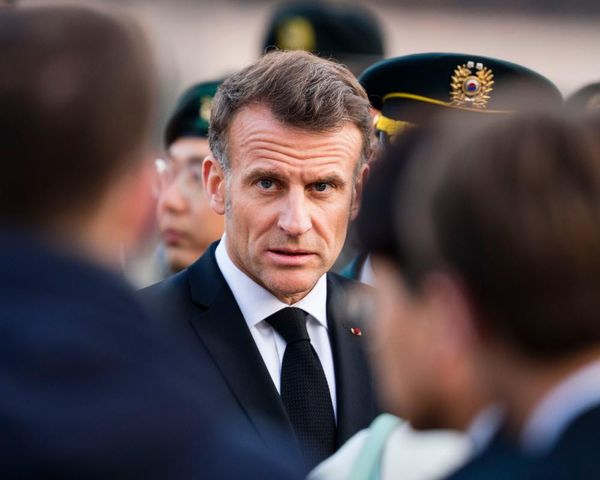
David Frost, the prime minister’s chief adviser on Europe and lead negotiator in these talks, is not keen to relive the Davis experience, and so Barnier was on his own when he summed up the outcome of the first round of UK-EU trade talks.
Both sides have set out their respective positions at length, in negotiating documents, and most of what he said was not particularly surprising. But his confirmation that the UK is refusing to sign up to a deal that would compel it to remain party to the European convention on human rights will alarm liberals in the UK.
Here are the main points.
- Barnier said that the UK was refusing to commit to remaining part of the European convention on human rights as part of any EU deal. (See 2.38pm.)
- He said that there were some “very serious divergences” between the two sides in the talks. He focused on four particular areas of disagreement: the level playing field, criminal justice policy, the nature of the agreement, and fisheries. He said that the talks this week had been “constructive”, and he complemented the professionalism of the British team. But he said:
To be completely frank with you ... there are many divergences. And they are very serious divergences. Which is probably quite natural after a first round of negotiations.
- He said he thought the difficulties that would be posed by Brexit in January 2021, with or without an agreement, were “underestimated”. He explained:
It will not be business as usual. I am very keen that this will be understood and I don’t think next January is the same as last January, it will be very, very different.
Why I am saying this quite so forcefully? It’s because the definitive changes which will happen because of the decision of the UK and the difficulties will be linked to that, my impression is that they are still very often underestimated.
On that today, the 1 January customs formalities will be applied to all our imports and all our experts to the IUK and the UK will do the same.
On that day, the 1 January next, the financial institutions will lose automatically the benefit of the financial passport, that is a consequence of Brexit.
Third example, UK certification will no longer mean it can be marketed in the European Union, industrial goods, vehicles medical devices, whatever those are the consequences of Brexit.
- He said that he was “quite surprised” to read the UK document about its position in trade talks with the US setting out British demands for a level playing field, in the light of the UK’s reluctance to make commitments in this area to the EU.
- He said it was unrealistic to expect the EU to agree to negotiate fishing access annually with the UK, as it does with Norway. “What we can do with Norway on five species simply isn’t possible for 100 species,” he said. He hinted that, if the UK were not willing to grant fishing access as part of a trade deal, the EU could refuse to grant it financial equivalence. (See 12.50pm.)
- He said Frost had assured him that the UK was committed to implementing the Northern Ireland protocol.
- He said the EU had proposed talks on foreign policy and defence, but that the UK said it did not want to negotiate any particular agreement in these areas.

Updated
Barnier says UK is refusing to commit to remaining signed up to ECHR as part of EU deal
In his opening remarks Michel Barnier said that one serious problem in the negotiations was the UK’s refusal to commit to remaining party to the European convention on human rights (ECHR). Barnier said this could make cooperation on criminal justice and law enforcement very difficult. He said:
Ambitious cooperation in [criminal justice and law enforcement] requires commitment on both sides with respect to fundamental rights of persons. Yet the UK informs us that they do not wish to commit formally to continuing to apply the European convention on human rights, nor do they wish the European court of justice to play its full role in interpreting European law.
When it comes to security and legal cooperation, judicial cooperation, you are talking for example about the exchange of personal data, sometimes very personal data, like DNA. In that area this is a must-have for us ...
I say this is serious, I say this is grave because if the United Kingdom’s position does not move, it will have an immediate and concrete effect on the level of ambition of our cooperation which will remain based on international conventions but will not be as ambitious as we wish.
In its document (pdf) setting out the UK negotiating position, the British government does not explicitly say it will reject an agreement that involves committing to continued membership of the ECHR. But it does hint at this, saying:
The agreement should not specify how the UK or the EU member states should protect and enforce human rights and the rule of law within their own autonomous legal systems.
The disclosure of the true nature of the government’s position will fuel fears that at some point in the future Boris Johnson would like withdraw the UK from the ECHR, which has always been unpopular with Tory rightwingers. As the Sunday Telegraph recently reported (paywall), Dominic Cummings, the prime minister’s chief adviser, is on record as opposing the ECHR. In 2018 he wrote:
If I get involved in politics again, then a referendum on the ECHR should be high on the agenda — and bear in mind most people probably think we’re already leaving it because of the 2016 referendum, so imagine how mad they’ll be when they realise we’re still in it.
However, withdrawing from the ECHR could be hugely problematic, not least because it is an integral part of the Good Friday agreement.
Asked on Monday at the No 10 lobby briefing if the government was committed to remaining a signatory to the ECHR, the prime minister’s spokesman just said that the UK was a signatory and that there was no change in the UK’s position.

Updated
The EU has released the text of Michel Barnier’s opening statement at the press conference. It is the original, mostly in French. The English translation should be available later.
MPs to get 3.1% pay rise, taking salaries to £81,932
MPs will receive a pay rise of 3.1% from April this year, the Independent Parliamentary Standards Authority (IPSA) has said. As the Press Association reports, the increase will raise MPs basic pay from £79,468 to £81,932 and will be effective from April 1. It follows a decision confirmed in 2018 by IPSA to adjust the pay of MPs at the same rate as public sector earnings, which are published by the Office of National Statistics. The announcement marks the first time MPs’ salaries have exceeded £80,000 and is an increase of £16,194 compared to the £65,738 salary in April 2010.
From the BBC’s Adam Fleming
Here's @MichelBarnier's book on future global risks that he wrote in the 90s. Anyone got a hard copy and can look up "coronavirus" in the index? https://t.co/uSnaJIfcTw
— Adam Fleming (@adamfleming) March 5, 2020
Michael Gove to lead for UK on joint committee with EU overseeing implementation of withdrawal agreement
Michael Gove is to be the UK’s representative on the all-powerful Brexit UK-EU “joint committee” which will oversee the implementation and enforcement of the withdrawal agreement, Michel Barnier has said.
As head of the exiting operations unit in the Cabinet Office and a member of the exiting strategy team, Gove has now cemented his position as the country’s Brexit tsar.
The joint committee will hold its first meeting on 30 March, Barnier has disclosed in a press conference at the end of the first round of talks.
Beneath it will sit six or seven specialised committees tasked with implementation of key issues including the Northern Ireland protocol, Gibraltar and EU citizens rights.
The EU side will be led by European commission vice president Maroš Šefčovič, but no other details have yet emerged on the appointments process or how often any of these committees will meet.
Boris Johnson and Chris Whitty, chief medical officer, on coronavirus - Summary and analysis
Boris Johnson and Prof Chris Whitty, the chief medical officer for England and the UK government’s chief medical adviser have both been speaking about coronavirus this morning. Whitty gave evidence to the Commons health committee for about an hour and a half, and Johnson gave a much shorter interview to ITV’s This Morning. They did not contradict each other in any way, but there was a marked difference in tone. Whitty was calm and factual, in no way alarmist, but also very honest about the fact that coronavirus is likely to lead to a significant disruption to normal life, and particularly to the NHS, for a short period later this year. In contrast, Johnson was much keener to gloss over the downsides and assure viewers that the UK was going to get through this “in good shape”.
Perhaps this is a sophisticated “good cop, bad cop” routine. But it is more likely that Johnson is just congenitally programmed for optimism, and resistant to anything that might make him sound like a “gloomster”. People expect their leaders to be positive, and at the moment Johnson is getting mostly plaudits for his handling of this crisis, but there may come a point where he does not seem to be acknowledging the risk.
Here are the main points
- Johnson said that for the moment it should be “business as usual” for people and that Britain would get through the coronavirus outbreak “in good shape”. Although the risks were appreciable, they were quite small, he said. At the end of his interview he summed up his message like this.
The most important message at this stage, as we start to see the spread, is number one, wash your hands, but number two, as far as possible, it should be business as usual for the overwhelming majority of people in this country, for the simple reason this is a great country, massively strong economy, the British public I think understands completely the balance of risk involved. The scientists have done a very good job of explaining to us what the risks are, and they are really quite small. They are appreciable, but quite small. And people can see that this country is going to get through this in good shape.
- Johnson said the government was trying to stop the outbreak reaching a peak. He summed up his approach like this, saying:
One of the theories is perhaps you could take it in on the chin, take it all in one go and allow the disease to move through the population without really taking as many draconian measures. I think we need to strike a balance.
I think it would be better if we take all the measures that we can now just to stop the peak of the disease being as difficult for the NHS as it might. I think there are things we may be able to do.
This is the approach that has been recommended by the health experts, but what was surprising was that Johnson seemed to accept that there was a case for “taking it on the chin” in the first place. This approach would lead to more deaths.
As the Spectator’s James Forsyth has pointed out, Johnson used to say that his hero was the mayor in the town features in the movie Jaws, because he kept the beaches open when he was under pressure to close them. (As Jeremy Vine wrote in a revealing article, Johnson was so fond of this argument he used it repeatedly.) Now (and, for anyone with an elderly relative, thankfully), Johnson seems to be adopting a different approach to risk.
The Economist has a good graphic showing the difference between the two approaches - letting the epidemic peak, to speed up the recovery, or reducing the peak, while prolonging the impact.

- Johnson said that closing schools and cancelling big public events was not favoured at the moment.
At the moment what they are telling me is, actually, slightly counter-intuitively, things like closing schools and stopping big gatherings don’t work as well perhaps as people think in stopping the spread.
- He rejected claims that the government was withholding information about the spread of coronavirus. Responding to a question about this story about the location of new cases not being published on a daily basis, he confirmed that this decision is being reversed. He said:
Let me clear that up immediately because it is very important that we are transparent, people understand that we are transparent.
Public Health England needs to be absolutely sure about the diagnosis of these cases so what they are doing is they are immediately identifying the region where they think there’s an incidence and then within 24 hours confirming the exact location to be sure that we have got the right thing.
- Whitty said that the government’s response to coronavirus had now moved from the point where it was mainly focusing on containing the disease to the point where it was mainly focusing on delaying its spread. (See 9.15am.)
- He said that for a short period of time at the peak of the epidemic the NHS could end up looking “quite different” because of the number of normal services or operations that might have to be suspended or postponed. (See 9.48am.) Under a worst case scenario, the NHS could run out of beds, he said. (See 9.33am.) And he said access to critical care beds could come under pressure first. He said:
The bit of the system which will come under pressure first will be those conditions that require people to have oxygen and particularly to have critical care beds, and that bit, I think, will come under pressure at quite an early stage if we have a high-end-of-the-range epidemic for this.
- He said in future, as the outbreak got worse, older people would be told to avoid crowded spaces. (See 9.38am.)
- He said it might be necessary to give medical students more responsibility to help the NHS at the peak of the epidemic. (See 10.25am.)

Updated
Q: Will coronavirus affect the talks?
Barnier says there are a lot of people at these meetings. At most there are 200 people at a meeting. But the EU will be taking steps to protect people.
He says he is very interested in this. Some years ago he even wrote a book about global risks.
And that’s it. The press conference is over.
I will post a summary soon.

Q: What happens if there is no agreement on fisheries by 1 July? Will you tie fisheries to the rest of the trade talks, or to a deal on equivalence?
Barnier says the agreement commits the EU to using “best endeavours”. Fishing is a dangerous profession, he says. He will do his utmost to get a deal on fisheries by July. If he cannot get one then, he will try to get it in the overall agreement.
He says there are other issues on which the EU will not compromise, such as financial equivalence and adequacy decisions (ie, whether the EU will acknowledge the UK’s laws).
- Barnier hints that the EU could withhold financial equivalence if the UK refuses to consider fishing as part of the trade deal.
Q: The UK published its terms for a trade deal with the US this week. In it they acknowledge the need for a level playing field. Why won’t they accept one with the EU?
Barnier thanks the questioner, and says he does not have much to add. He was surprised to read the UK document. Good luck to the UK getting a trade deal with Donald Trump, he says. He says the philosophy, to use a word David Frost uses a lot, is the same; the EU wants a level playing field, to stop the UK getting any unfair advantages.
Q: You accept there will be changes after Brexit. So why won’t you accept changes in relation to fisheries?
Barnier says there are definitive changes that will be the consequence of Brexit.
He says the EU is willing to seek out a balanced result on this issue.
But for the EU member states a balance agreement on fisheries should be part of the trade agreement.
Barnier's Q&A
Barnier is now taking questions.
Q: Could you tell us more about how the joint committee overseeing the withdrawal agreement will work?
Barnier says the first meeting of this has been set for 30 March. Michael Gove will lead to the UK side, he says. And the European commission vice president Maroš Šefčovič will lead for the EU, he says.
- Michael Gove to represent Britain on joint committee overseeing implementation of withdrawal agreement, Barnier says.
Barnier says he thinks an agreement is possible, even though difficult.
Barnier switches to English for his final remarks.
He thanks David Frost and the British negotiating team for their work.
He says two principles should guid the talks: no going back on our commitments, and mutual respect.
He says the British team spent a lot of time this week stressing Britain’s independence. But no one is contest that, he says.
The question is not independence, but what you do with that, he says.
Barnier says the second area of divergence relates to criminal justice policy. He says the UK’s refusal to accept any role for the European court of justice is a problem.
The third is on the nature of the agreement. The EU wants an all-encompassing agreement, while the UK disagrees.
And the fourth area is fishing. He says the EU has annual negotiations on fishing with Norway. But an agreement with the UK would be far more complicated, because there are far more species of fish involved.
He says an agreement on fisheries will have to be part of the trade agreement.
Barnier turns to the level playing field provisions.
He says, if the UK is serious about maintaining high standards, why won’t it commit to them?
Updated
Barnier says there are 'very serious divergences' between UK and EU in trade talks
Barnier says he now wants to take stock of what has been achieved.
He says the EU set out its goals in its negotiation mandate (pdf).
He says this week the two sides noted their different positions.
But there are some “very serious divergences”, he says.
He says that is what you would expect at this stage.
He says he will discuss four of them.
Updated
Barnier says the EU will defend its interest in these talks.
Barnier says the difficulties posed by Brexit in January 2021 'underestimated'
Barnier says the media need to help people prepare for change.
He says the UK will leave the customs union and the single market. This will have a lot of consequences. They need to be prepared for.
He says next January will not be like January 2020. It will be very, very different, he says.
He says he thinks the difficulties are still “underestimated”.
Customs formalities will be applied to all exports.
Financial institutions will lose the benefits of passporting.
And commercial certificates will no longer be recognised by the EU, he says.
He says the partnership that is being negotiated will not avoid these areas of friction. He says the UK delegation accepted this in this round of talks.
Barnier says firms in Northern Ireland need 'clarity' from UK about new customs rules
Barnier says the first priority is to implement the withdrawal agreement.
Both sides have to ensure that the rights of citizens are preserved.
Then there is the need to preserve peace in Northern Ireland.
He says all the obligations on the UK and on the EU were set out in that agreement.
He says David Frost, the PM’s chief Europe adviser, confirmed to him this week that the UK would honour all its legal obligations.
He says the Northern Ireland protocol is not up for negotiation now. It needs ot be implemented.
He says companies in Northern Ireland need “clarity” about how this will be implement. This is a matter of urgency, he says.
Barnier says he wants to hold regular press briefings throughout the process. He says this worked well in phase one of the Brexit process.
Michel Barnier's press conference
Michel Barnier, the EU’s chief Brexit spokesman, is holding a press conference now to mark the end of the first week of talks in the UK-EU trade negotation.
There is a live feed here.
Gordon Brown backs Keir Starmer for Labour leader
Gordon Brown has backed Keir Starmer to be Labour leader, saying he has all the qualifications needed to become prime minister.
Brown said all three candidates were worthy but Starmer was his first choice. He highlighted Rebecca Long-Bailey’s commitment to a green new deal and Lisa Nandy’s focus on the importance of empowering communities. He said:
There is one candidate with the expertise, with the eloquence, with the dedication, with the commitment and indeed with the values that are necessary for Labour to return to power. Keir Starmer has all the qualifications that are necessary for a prime minister of the future. A vote for Keir Starmer is a vote for hope. It’s a vote for the future. It’s a vote for the values that all of us believe in deeply. Join Keir Starmer and let’s elect a Labour government.
As the Press Association reports, Boris Johnson did appear to get flustered when asked on ITV’s this morning whether he would be chaning nappies when his partner, Carrie Synonds, has their baby. Here is the PA story.
Boris Johnson appeared flustered when asked if he will be changing nappies when his new baby arrives.
The prime minister and fiancee Carrie Symonds are expecting a child in the early summer.
Appearing on ITV’s This Morning, host Holly Willoughby told the PM: “We can’t let you go without saying congratulations.”
Johnson admitted he was “very excited”, but did not add anything else, prompting co-host Phillip Schofield to ask: “Is that it?”
When asked: “How good are you at changing nappies? Will you change nappies?”, the PM appeared flustered before eventually saying: “I expect so.”
He would not answer when asked how the rest of his family are taking the news, and when Schofield questioned him on his reticence to discuss his personal life, saying: “All family life is happening in Downing Street and you won’t talk about it,” Johnson replied: “Very sensibly.”
He added: “I’ve spent an awfully long time deliberately not going on about it, for the very good reason that there are people that I love that I don’t want to put in the debate and that’s the reason.”
Rees-Mogg says there are no plans to suspend parliament over coronavirus
Jacob Rees-Mogg, the leader of the Commons, told MPs during business questions that there are no plans to close parliament because of coronavirus. He said:
There are no plans to close the house down. The public will expect parliament to sit and get on with its job. parliament has proven itself to be very resilient over the years.
There is no medical reason on current advice to think that shutting parliament would be necessary or helpful.
Rees-Mogg was responding to this story in the Times (paywall), claiming parliament could be suspended for five months. Matt Chorley and Chris Smyth say:
With public bodies boosting preparations for months of disruption, plans are being drawn up that would mean the Commons and Lords not returning after Easter. MPs rise on March 31 and sitting would be suspended until September in “the longest summer recess we have known”, according to one senior parliamentary source.
TIMES: Parliament could be shut for months to tackle virus #TomorrowsPapersToday pic.twitter.com/8DyFQmGDhf
— Neil Henderson (@hendopolis) March 4, 2020
There was a “not” missing in an earlier post, which has now been corrected. Boris Johnson told ITV that he told his cabinet that he does not like bullying, not the opposite. Sorry.
Updated
Johnson ends up by saying his advice to people would to carry on with business as usual.
And that’s it. The Boris Johnson interview, and the Chris Whitty select committee hearing, are now both over.
I will post summaries from both of them soon.
Q: Is Priti Patel a victim of sexism?
Johnson says he does not know about that, but he knows she is trying to advance a very difficult agenda.
Q: But how many stories do you have to hear before you realise that there is substance to this?
Johnson says his instinct is to stick with Patel. Or “stick with Prit”, as he puts it.
Q: Have you told her not to bully staff?
Johnson says he has told all his cabinet that he does not like bullying.
Updated
Johnson claims he was advised by emergency services not to visit areas affected by flooding
Q: Where were you in the week of the flooding?
Johnson starts talking about what the government is doing.
Q: Why did you not go yourself?
Johnson says we have a wonderful system called cabinet government.
Q: Do you wish you had gone?
Johnson says, when you visit a flood zone, “everybody has to down tools”. They meet for an hour or more to brief you, when they could be getting on with the emergency.
He says, “They said to us, all you will do is distract us.”
- Boris Johnson claims he was advised by emergency services not to visit areas affected by flooding last month.
Q: Can you guarantee that people will be able to get food?
Yes, says Johnson.
He says the budget next week will contain measures to help business, and to help people generally.
Q: Have you prepared your dad?
Johnson says he is generally ready for anything.
But he says both his parents are a concern.
Q: Does the NHS have enough nurses?
Johnson says the government is recruiting 50,000 more nurses.
Q: You are not going fast enough.
Johnson says he would not disagree.
Q: If you bring back retired medical staff, aren’t they they most vulnerable people?
Johnson says this is an issue.
He says the government will be getting the NHS ready.
Boris Johnson's interview on ITV's This Morning
Chris Whitty is still giving evidence to the health committee, but Boris Johnson is currently speaking about coronavirus on ITV’s This Morning.
He says SAGE, the government’s Scientific Advisory Group for Emergency, is meeting today.
He says the experts are telling him that measures like school closures do not work as effectively as people think. He says this might be counter-intuitive.
It is only if there is a case in a school that it should close now, he says.
Q: Are you trying to delay the peak into the summer?
Johnson says he favours trying to delay the peak.
Updated
Q: Could we reach a point where people have to be turned away from hospitals? And do you expect to see isolation wards in hospitals?
Whitty says most people will be treated at home.
It is safer and more comfortable for people with mild versions of the disease to stay at home.
Q: What advise to you have for people considering stockpiling medicines or other goods?
Whitty says there is no rational reason why this should be necessary.
Q: When do you think you will be able to start publishing geographical information about the spread more regularly?
Whitty says this is a matter for Public Health England. He thinks they will do this soon, perhaps within a couple of weeks.
But he says his view is that it is important to ensure the information is accurate before it gets published.
Q: How will you communicate with the public?
Whitty says he thinks the delay phase is least understood by the public.
At this phase, actions are mostly about case finding, and isolating.
Q: Should we be sending the public to other sources of information?
Whitty says the government is trying to centralise its own information in one place.
Second, it is working with social media companies, to try to ensure that accurate information comes to the fore.
And, third, it is taking out paid information to ensure that people get accurate information.
There will be a full communications strategy around this, he says.
Whitty says he is not a social media expert. But Matt Hancock, the health secretary, is interested in this area, and he has been approaching social media companies, he says.
Q: Would you suspend Care Quality Commission inspections during the outbreak?
Whitty says this is one of many issues being kept under review.
Q: Would you consider making more use of medical students?
Whitty says the government is considering changing what foundation year 1 medics (new doctors who are training, having just finished medical school) or final year medical students are allowed to do, alongside brining back retired doctors.
- Medical students could be given more responsibility if the coronavirus hits a peak, Whitty says.
Asked if he is recommending that smokers should self-isolate, Whitty says his advice to smokers if that they should stop smoking. This is a good time to do that, he says.
Whitty says it looks as if the average time between getting the infection and showing symptoms is five days.
And, if people have symptoms but only very mildly, that lasts for about five days.
But, where people get more seriously ill, they tend to do so after about six days of having the illness.
Q: Can fit and healthy people die from this illness?
Yes, says Whitty. He says fit and healthy people can die from anything. They can die from flu. But it is incredibly rare.
Whitty says people who smoke may be more at risk, as is the case with any respiratory illness. But the evidence on this is not available, he says.
Q: Are children with asthma at risk?
Whitty says he does not think so, on the basis of the Chinese data.
If people have asthma, this could trigger an asthma attack. But this would be like any other respiratory illness. And he would expect that to happen just once.
Q: So you would not advice parents to self-isolate?
Whitty says if children have very bad asthma, then that might be sensible. But it would not be necessary for children with mild asthma.
Q: What can older people do to reduce their chances of getting coronavirus?
Whitty says isolating older people from the virus is important. But you have to do that without isolating them from society.
He says the government is giving a lot of thought to what can be done to give people practical help.
But it is important not to start too early. And the moment there is very little communal spread, he says. So the government would not encourage people to start self-isolating now.
Q: When the advice changes, what would your advice be to families concerned about older relatives?
Whitty says the government wants to stop the virus coming into contact with the older person, not society.
He says the government is still looking at this.
He says, if face to face contact is not possible, then the government may consider other ways in which people can stay in contact.
And he says that past experience has shown that people remarkably altruistic.
Q: Schools are being told that pupils should wash their hands four times a day. How practical is that?
Jenny Harries, the deputy chief medical officer for England, who is giving evidence alongside Whitty, says children are not always very scrupulous about where they put their hands. She says there is a good case for supervised hand washing in schools.
And pupils can then take good habits back into the home environment, she says.
Q: What advice do you have for pregnant women?
Whitty says we don’t know at this stage, because this disease has not been around long enough. But other coronaviruses have not caused a problem. And he says there have been cases of women who caught coronavirus in the late stage of pregnancy, who then went on to give birth without major problems.
Q: What is the likelihood of schools closing?
Whitty says, at this point, in the contain phase, if a single pupil is found to have coronavirus, then there is a case to close the school.
But generally at this stage the government does not want to close schools, he says.
Whitty says this will change when you get to the major epidemic phase.
You may have to close schools because so many staff are off sick. But he does not expect that to be a big problem.
And then there might be an argument for closing schools to reduce the spread. Ministers would have to decide, he says. He says his view is that this would be less effective than under a flu epidemic. He says the data is not available yet to show whether the benefits would justify this.
Whitty says he is in daily, almost hourly, contact with the chief medical officers in the other parts of the UK. He says this is valuable, because they have different backgrounds, and look at the problem in different ways.
Whitty says he does not think a vaccine for coronavirus will be available within less than a year.
I think ... a year would be lucky to get this - so we will not have a vaccine available for the first wave if we have a first wave.
Important to develop because it may then become important if this continues to circulate in society, which I think there is a high chance it will, but I think we need to be realistic.
Updated
Whitty says, once you pass a critical moment for infections, once 90% of infections are self-generated, it does not matter much what other countries do.
But countries with weaker health services will need help, he says.
Whitty says closing schools is not an attractive option because it would only have a fractional effect on the spead of the disease, and there would be a huge impact on parents.
Whitty says the health experts will present ministers with a range of measures that could be introduced as part of the mitigation phase.
He says ministers will be told what impact they might have on the peak, what impact they might have on delaying the virus, and what the social cost would be. Ministers will then have to choose a “sensible and proportionate” response, he says.
Whitty says NHS may have to ‘look quite different’ from way it is now at peak of coronavirus outbreak
Whitty is now talking about things that could happen in the mitigation stage.
There would be three things you could do, he says.
One aim would be to reduce the peak of the outbreak. That would involve decisions that would have a big impact on ordinary life.
Second, the aim would be to protect people most at risk - the elderly and the vulnerable.
And, third, the mitigation strategy would involve postponing other demands on the NHS during that period. You would “flex” the service, he says. He says he has seen this done in different ways in different countries. But for a short period of time “the NHS may look quite different from the ordinary NHS we are used to”, he says.
- Whitty says NHS may have to ‘look quite different’ from way it is now at peak of coronavirus outbreak.
Q: Have you done any evaluation of how many retired NHS staff might want to come back to work?
Whitty says the willingness of doctors to come back is very high. People become doctors for a reason; they want to help.
But they are sensible too. If they thought their health was at risk, or that they had been out of medicine too long to be of use, they would stay away.
Whitty says older people may in future be told to avoid crowded places
Q: Can you envisage a situation where MPs were considered super-spreaders? There has been talk of parliament having to be shut down.
Whitty says he has discussed this with Lindsay Hoyle, the Speaker, and Norman Fowler, the Lords Speaker. Fowler was a distinguished health secretary, he says. He says he would not presume to tell them how to run their houses.
But he says that in the future the government may advise older people, and people with pre-existing health conditions, to avoid crowded places.
One of the bits of advice that we will give when this starts to run is for people who are older or who have pre-existing health conditions to have some degree of isolation from more public environments.
That could affect individual MPs and peers, he says.
- Whitty says older people may in future be told to avoid crowded places.
Updated
Whitty says NHS could run out of beds for coronavirus victims under a worst case scenario
Q: How will this impact on, say, cancer patients in hospital?
Whitty says there are three kinds of impact.
There will be direct impacts on some people; some people will die.
There will also be an impact on the NHS, which will affect its ability to treat other people.
He says 50% of all cases could come during a three-week period. During that period the NHS would be under huge strain.
One of the things which is clear, if you model out the epidemic, is you will get 50% of all the cases over a three-week period and 95% of the cases over a nine-week period, if it follows the trajectory we think it’s likely to.
If all of those were spaced out on the NHS over two or three years, that would be easily manageable, but it’s the fact they are so heavily concentrated.
He says, under one scenario, this could be like the NHS dealing with a bad winter flu, but in late spring.
But in another scenario this could involve a “huge number” of cases, “overtopping the ability of the NHS realistically to put everybody in beds”.
- Whitty says NHS could run out of beds for coronavirus victims under a worst case scenario.

Updated
Q: Is there any reason why a higher proportion of the population might get the virus in the UK than in China?
Whitty says the Chinese are taking some “extraordinary” measures to contain the disease.
But he sees no reason why the disease should spread more in the UK than in China.
He says, when planning, you need to start with the highest plausible number for planning. And an 80% infection rate would be the highest possible rate for a disease coming out of nowhere.
He says it is possible that 70% of people could get it without displaying any symptoms.
Whitty says the mortality rate for people over 80 seems to be between 8 and 9%. But this is based on figures from China, he says.
Q: The director general of the World Health Organisation says the mortality rate is 3.4%. But you are putting it at 1%.
Whitty says the WHO figure does not take account of people who only got the disease very midly.
He says he has a “reasonably high degree of confidence” that the real mortality rate is 1%, or lower.
Updated
Whitty is asked about this Guardian story.
He describes it as a “communications fumble”. He says in the medium term more details information will be provided.
We are intending to provide geographical information - in fact, in the medium term we will provide a lot more information with maps and other things, with a proper dashboard as we gradually move into a phase where there are many more cases.
What we are, though, intending to do is have some delay - about 24 hours - to be absolutely sure we’ve got the details right.
Updated
Whitty says response to coronavirus has moved from 'mainly contain' to 'mainly delay'
Q: Are you anticipating moving from the ‘contain’ phase of the plan to the ‘delay’ phase in the next few days?
Whitty says the government has had four aims.
First, containing the outbreak. That is now an “extraordinary unlikely” long-term outcome, he says. He says “containing looks pretty optimistic” now.
Second, delaying the outbreak. Whitty says this approach overlaps in many ways with contain. He says if you can push back the peak of the outbreak, you get at least two, and possibly three benefits.
He says you delay the peak until the NHS is in a better to respond.
He says you also get more time to deal with the disease, either by managing it or developing drugs.
And he says there may be a seasonal element to this; if you move into spring and the summer, the rate of infection may go down. That is the case with flu, he says.
Q: So are you going to move from contain to delay within the next few days?
Whitty says there won’t be a “step move’” to delay.
He says it is a matter of putting more emphasis on the delay elements.
In the early stage the contain and delay strategies are similar.
But later other measures will be needed.
Q: So there won’t be a moment where you move from stage one to stage two.
That’s correct, Whitty says.
But he says the UK has move from the “mainly contain” stage to the “mainly delay” stage.
We have moved from a situation where we are mainly in contain, with some delay built in, to we are now mainly delay.
Updated
Whitty says he is expecting the number of UK cases to go up.
And there are several cases where it is not clear where the outbreak has come from.
He says that means it is “highly likely” that there is some level of community transmission (ie, that people are catching it from people in the UK, not as a result of people bringing it in from abroad).
Prof Chris Whitty starts.
He says he appreciates Hunt’s comment thanking NHS staff.
He says he will start with the global situation.
Three weeks ago he would have said the key to the epidemic was in China. But now the situation has moved on. The Chinese are seeing their rates of coronavirus fall quite rapidly.
But the Chinese still have strict travel restrictions in place. It is not clear what will happen when those are lifted.
Whitty says there are large outbreaks in South Korea, Iran and Italy. The Iranian one is probably larger than they say.
And he says there are probably some countries not reporting outbreaks where outbreaks are taking place. Either they are not aware of them, or they are not reporting them.
He says the chances of the outbreak being restricted now to China are “slim to zero”.
The hearing is starting now.
Jeremy Hunt, the committee chair, is asking the first set of questions.
Hunt used to be health secretary, and his election as committee chair was controversial, because the committee will probably end up reviewing decisions that he took during his time running the health department.
Chief medical officer Chris Whitty questioned by Commons health committee
Commons select committee hearings only started this week, because it took a while to establish the committees after the election, and this morning we will have what will probably be the most watched hearing of the week - Prof Chris Whitty, the chief medical officer for England and the UK government’s chief medical adviser, giving evidence to the Commons health committee about coronavirus.
My colleagues Ian Sample and Lisa O’Carroll have a very good profile of him here.
And here is our main coronavirus outbreak live blog, where you can read all the latest developments in the coronavirus outbreak story, from the UK and from around the world.
Here is the agenda for the day.
9am: Prof Chris Whitty, the chief medical officer, gives evidence to the Commons health committee.
9.30am: Liz Truss, the international trade secretary, takes questions in the Commons.
9.30am: The British Chambers of Commerce conference opens. The speakers include Matt Hancock, the health secretary, who will be on at 11.45am.
10am: The Home Office publishes an analysis of homicide trends.
After 10.30am: Jacob Rees-Mogg, the leader of the Commons, takes questions on the Commons business statement for next week.
11am: Boris Johnson meets he president of Malta in Downing Street.
11.45am: The Investigatory Powers Commissioner’s Office (IPCO) publishes its annual report.
12pm: Michel Barnier, the EU’s chief Brexit negotiator, holds a press conference in Brussels at the end of the first week of the UK-EU trade talks.
This morning I will be covering the Chris Whitty committee hearing in detail and otherwise I will be covering breaking political news as it happens, as well as bringing you the best reaction, comment and analysis from the web. I plan to post a summary when I wrap up.
You can read all the latest Guardian politics articles here. Here is the Politico Europe roundup of this morning’s political news. And here is the PoliticsHome list of today’s top 10 must-reads.
If you want to follow me or contact me on Twitter, I’m on @AndrewSparrow.
I try to monitor the comments below the line (BTL) but it is impossible to read them all. If you have a direct question, do include “Andrew” in it somewhere and I’m more likely to find it. I do try to answer questions, and if they are of general interest, I will post the question and reply above the line (ATL), although I can’t promise to do this for everyone.
If you want to attract my attention quickly, it is probably better to use Twitter.
Updated