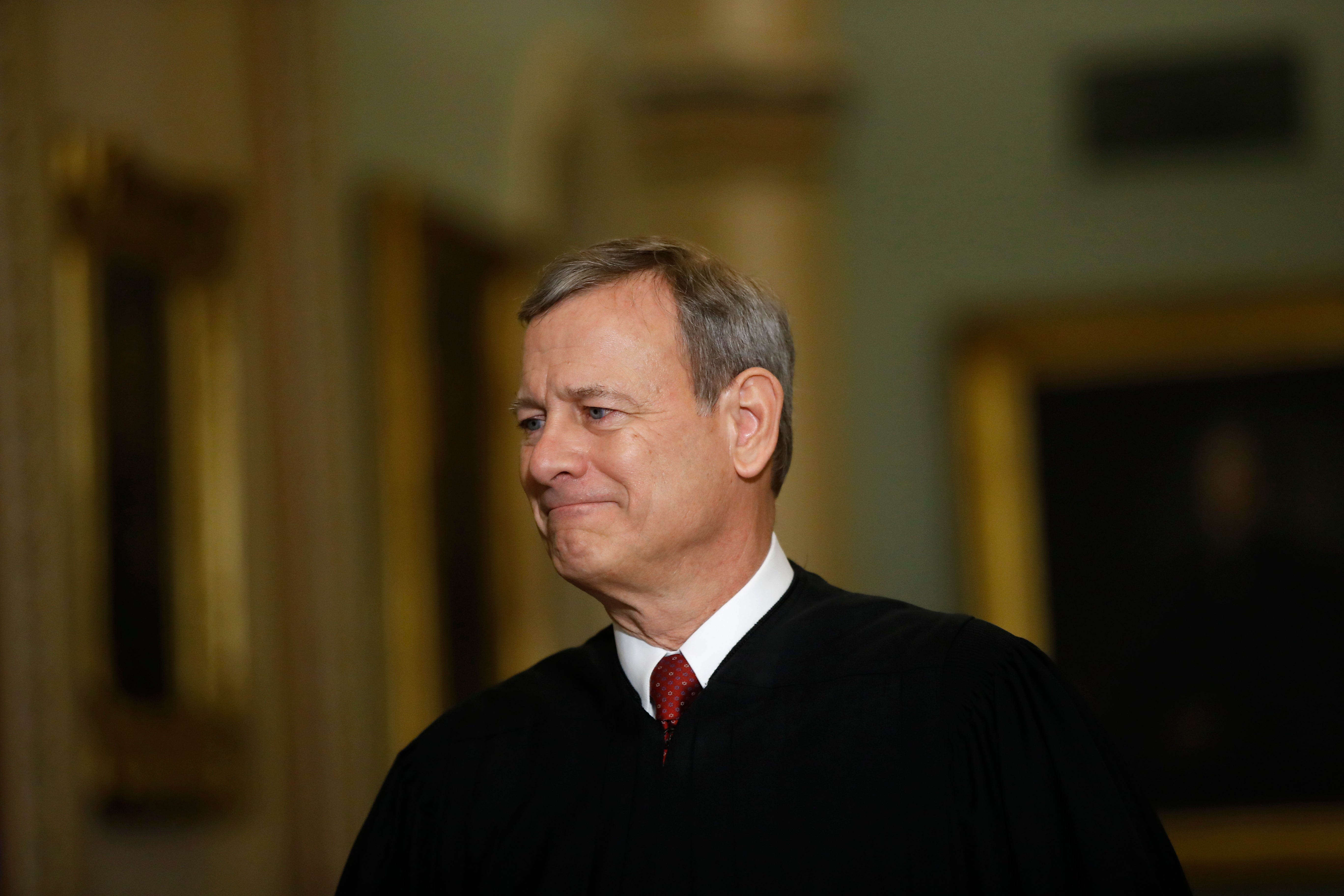
Supreme Court Chief Justice John Roberts is praising federal courts nationwide for their flexibility in responding to the COVID-19 pandemic, acknowledging in his annual year-end report the role technology has played in keeping courts running.
The high court has in the past been slow to embrace technology, but the justices conducted their first arguments by phone in May because of the pandemic and allowed the world to listen live, an unprecedented step. Other courts around the country have held video and audio hearings. Roberts did not speculate in his report whether changes made as a result of the pandemic would have a lasting impact or when the high court might resume-in person sessions.
At least some justices have received the first doses of the coronavirus vaccine, however, court spokeswoman Kathy Arberg said in an email Thursday in response to a question from The Associated Press. Officials have said the justices are being provided with doses of the coronavirus vaccine under a directive by President Donald Trump that established continuity of government as a reason for vaccine prioritization.
“Although we look forward to returning to normal sittings in our Courtroom, we have been able to stay current in our work. Other appellate courts around the country have responded with similar considered flexibility,” Roberts wrote in the seven-page report released Thursday evening.
Roberts said the past 10 months have been “all hands on deck for the courts.” The high court itself asked employees to begin working remotely in March.
“By April, judges around the country were guiding critical court functions from their home offices — or their kitchen tables,” Roberts wrote. “Hearings of all sorts went virtual. Judges quickly (or at least eventually) learned to use a wide range of available audio and video conferencing tools."
Roberts noted that this is not the first time courts have had to respond to a public health crisis. In the 1790s, when the Supreme Court met in Philadelphia, the justices shortened their argument calendars more than once in response to yellow fever outbreaks. And in 1918, the outbreak of the Spanish flu led to the cancellation of Supreme Court sessions.
The Supreme Court has said it will continue to hear arguments by telephone through at least January.