Prospects to bring the coronavirus infection under control have yet to be seen, and the virus has continued to pose a serious threat to society. In this series, politicians, local administrators and pundits give their thoughts on how to deal with and overcome virus-related issues from a political standpoint.
-- Fight through trial and error
The battle against an unknown virus, called the new coronavirus, was initially a challenge that required trial and error. Facing the new challenge, we determined that the entire government will have to tackle this together.
A symbolic case is the handling of the virus outbreak on the Diamond Princess cruise ship. Late at night on Feb. 4, 10 out of 31 passengers tested positive for the virus through PCR testing, and we thought, "This is a serious issue." We immediately convened the health, labor and welfare minister and the land, infrastructure, transport and tourism minister and others relevant to the situation and worked late into the night every day to create countermeasures. The incident definitely required the entire government to take action.
In the beginning, we thought, "It's only just masks," however, around this time, the country was facing a greater mask shortage than we initially thought, partly because of our dependence on China to provide a consistent supply. In light of this, the Economy, Trade and Industry Ministry and the health ministry formed a "mask team" to support domestic mask producers. After that, the Internal Affairs and Communications Ministry joined the effort and asked local governments to distribute its stock of masks. To deal with issues concerning university hospitals and medical waste, the team was reorganized into a "supply team" staffed with officials from five ministries and agencies, including the Education, Culture, Sports, Science and Technology Ministry and the Environment Ministry.
I'd like to refrain from commenting on the validity of the government's timing to declare a state of emergency and the period of the emergency, which were taken based on the revised Law on Special Measures for Pandemic Influenza and New Infectious Diseases Preparedness and Response, as well as its decision to apply the measure nationwide.
The initial response to limit the use of PCR tests to those who were deemed necessary by doctors to take the tests was aimed to avoid a recurrence of the havoc caused by the new influenza outbreak in 2009. At that time, many people with mild symptoms rushed to hospitals, causing disruptions in medical examinations. While the lessons learned from the past helped prevent such confusion, it is regrettable that there were only a small number of tests made available. Doctors also seemed concerned about becoming infected.
As people have cooperated in avoiding the "Three Cs" [closed spaces, crowded places and close-contact settings] such as by refraining from nonessential outings, the number of deaths caused by the virus is very low compared to Europe and the United States. Japan's method of completely containing cluster infections has attracted the attention of the world.
-- Political task to secure employment
At present, the government's basic stance is to strike a balance between preventing the spread of infections and promoting social and economic activities. If the government were to ask a wide range of industries to halt operations, it would deal a serious blow to the economy. One of the major political tasks is to secure employment for people. The regional tourism industry is greatly suffering.
The number of people infected with the virus is increasing again, but if hospital beds are secured for patients with serious or moderate symptoms, and those with mild symptoms are isolated at hotels, we don't have to be overly afraid. Compared to the first wave, which was when the state of emergency was declared, there is only a small number of people who are seriously ill, making the current situation is quite different. As we are aware that infections are likely to occur in places like nighttime entertainment districts, the government will do whatever it can under the current laws, such as conducting police inspections based on the Law on Control and Improvement of Amusement Businesses.
Discussions have been held on such issues as compensating businesses that follow requests to temporarily close and penalties for those that do not take proper infection prevention measures. Such matters, including making amendments to the revised new influenza special measures law, are difficult issues that the government should undertake once the virus is under control.
-- Ties with Tokyo metropolitan govt
In the megacity of Tokyo, cooperation and coordination between the metropolitan government and the 23 wards are insufficient, causing a delay in knowing the extent of infections. Given that, I called it a "Tokyo problem." Based on the lessons learned from this experience, it is necessary to review the relationship between the central and metropolitan governments, as well as the relationship between the metropolitan government and the 23 wards.
The biggest change brought about by the coronavirus pandemic is the spread of teleworking. There is a growing public consensus that efforts should be accelerated to digitize society. The My Number card system can be a symbol of a digital society. As only less than 20% of people have obtained the cards, we hope to promote the use of the cards quickly.
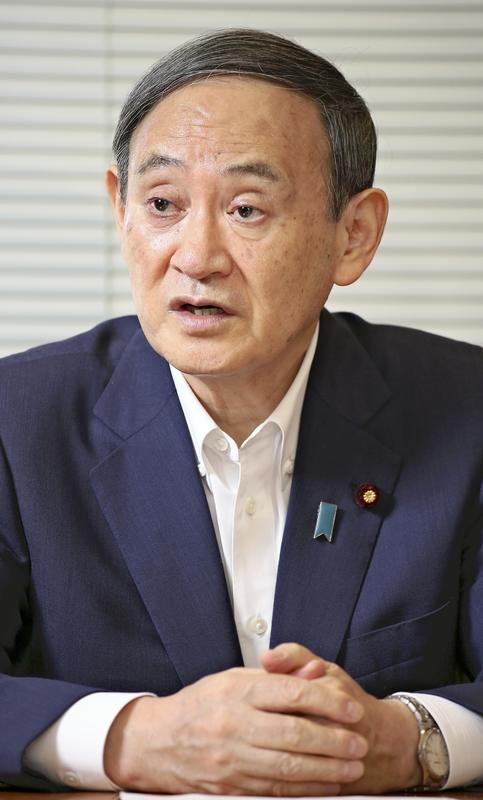
The person who will succeed Prime Minister Shinzo Abe must be decisive. It is also important for them to be able to follow through on their decisions by unifying the members of the Liberal Democratic Party. I have no intention to run for the president of the party. As chief cabinet secretary, I want to firmly support Prime Minister Abe by creating necessary measures and helping to implement at least some of them.
Read more from The Japan News at https://japannews.yomiuri.co.jp/