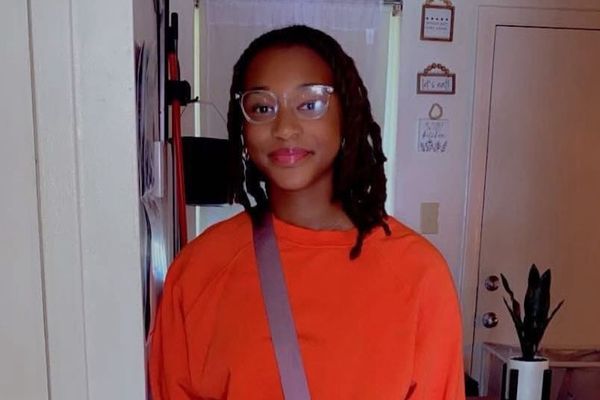
Aug. 13--On a March weekend in 2007, an emerging Chicago jazz singer gave a performance that neither she nor anyone else in the room will soon forget.
Typhanie Monique was celebrating the release of a duo album she had made with Chicago guitarist Neal Alger, "In This Room." But on this evening, at the Green Mill Jazz Club, she achieved a level of technical acuity and expressive freedom that superseded expectation. Lightning seemed to strike as she scatted profoundly in Thelonious Monk's "Straight, No Chaser," transformed Juan Tizol's "Caravan" via funk-tinged rhythm and reveled in several inimitably quirky originals.
As clubowner Dave Jemilo -- who does not dispense praise extravagantly -- put it a few days later: "Typhanie killed."
Monique's profile in Chicago and beyond rose dramatically after that, but then she slowed the tempo of her career just as abruptly, choosing to pursue a master of arts in vocal pedagogy at Northeastern Illinois University starting in 2009 (she holds a Bachelor of Music degree from Elmhurst College). Last year, Monique picked up her Northeastern diploma, and she believes that now she may be on the verge of a second breakthrough.
In the fall, Monique will record her first solo album as bandleader (her past three were duos with guitarist Alger), and she'll be joined on several tracks by powerhouse Chicago drummer Dana Hall and organist Tony Monaco, among others, in a project to be produced by Jeff Levenson. More important, she contends that her years studying repertoire by Schubert and Schumann, Rachmaninoff and Ives, Granados and Satie have stretched and deepened the character of her jazz singing.
"I just feel that I have a lot more strength in my upper register due to the fact that a majority of the repertoire I sang was mezzo to soprano," says Monique, who's playing Tuesday nights at Andy's Jazz Club throughout this month.
"Technically speaking, my range expanded, my agility and flexibility expanded. And my tonal palette expanded.
"What I tell my students is: As you gain and advance technically -- especially as a jazz musician -- your freedom of expressivity is much more vast and open."
This runs counter, of course, to the surprisingly long-held and widely cherished myth that technical achievement in general (and classical training in particular) is detrimental to the jazz musician's art. Instrumental wizards such as Oscar Peterson, Wynton Marsalis, Marcus Roberts and others have been criticized for the digital prowess and tonal sheen of their work, as if this somehow diminished the jazz authenticity of their art.
Though it's true that many jazz players early in the history of the music learned their craft mostly on the bandstand -- since formal training typically was denied African-American musicians long ago -- that wasn't always the case. No less than Jelly Roll Morton, the first jazz composer and pioneering jazz intellectual, learned a great deal from regularly attending performances at the French Opera in New Orleans at the turn of the previous century (you could hear it in his music, particularly when played his piano versions of operatic excerpts).
Moreover, most jazz musicians of the past couple of generations have been well schooled in classical, jazz, world music and other idioms in universities and conservatories. Knowledge of centuries of music that preceded jazz and global styles that now influence it are integral to the modern jazz player's art.
Still, one wonders whether Monique feared she might sacrifice her jazz methodology during her long, deep dive into the classics.
"I really didn't, because during the time that I was studying, I was still performing jazz, and I was also singing Aretha Franklin and doing the occasional corporate performances that had me singing contemporary music," says Monique.
"So the challenge, honestly in school, was going back and forth. And toward the end of it -- toward the last couple of years -- I definitely scaled back on performing, because I had to hone in on the classical chops.
"I'm way too rhythmic of a human being, and have too much love and natural instinct for improvisation ... and that was part of the problem singing the classical repertoire, because I over-consonate, and I was way too rhythmic of a singer," meaning she hit beats and offbeats with the sounds of consonants, as jazz singers tend to do.
In classical music, "It's linear ... you have a sustained line. In classical singing, it's about the vowel, the tonal beauty of the vowel."
What effect all of this training has had on Monique's jazz singing remains to be heard, with the forthcoming recording session perhaps marking a turning point for her. At the very least, it will be her most important statement yet on her views of jazz singing, for it will represent the culmination of years in jazz rooms and classrooms. Considering that she released her last recording, "Yuletide Groove" with Alger, in 2008, she's way overdue for a new album.
After that great night at the Mill in 2007, Chicago recording engineer Josh Richter -- then Monique's fiance and now her husband -- told me, "I never heard her like that. I sit and listen to her practice all the time. I hear all the little things she's working out. That night, I never heard any of those things she did before."
Here's hoping she has more of those surprises to come.
hreich@tribpub.com
"Portraits in Jazz": Howard Reich's e-book collects his exclusive interviews with Frank Sinatra, Tony Bennett, Lena Horne, Ella Fitzgerald and others, plus profiles of early masters such as Louis Armstrong, Duke Ellington and Billie Holiday. Get "Portraits in Jazz" at chicagotribune.com/ebooks.
Typhanie Monique Quartet
When: 5 and 7 p.m. Tuesdays in August
Where: Andy's Jazz Club, 11 E. Hubbard St.
Tickets: $10; 312-642-6805 or www.andysjazzclub.com