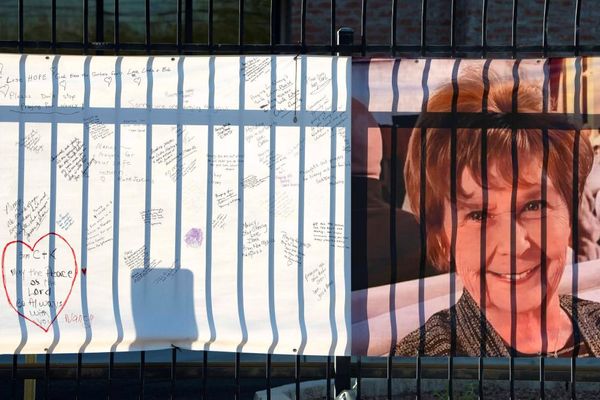
Feb. 06--Cleopatra Cowley-Pendleton stepped to the microphone at a Washington Park community center last month, almost exactly two years after her 15-year-old daughter Hadiya was gunned down in a park not far from President Barack Obama's home, becoming a national symbol for Chicago's rampant gun violence under Mayor Rahm Emanuel.
Despite her family's tragic loss, Cowley-Pendleton was there to introduce Emanuel before his speech on crime and endorse his re-election.
"I can truthfully say his actions became more than that of just a mayor," Cowley-Pendleton told a small crowd of mayoral supporters and assembled media. "I also know in my discussions with him on gun violence, he feels a personal pain with every loss of life in our city. I know Rahm, the man works hard to ensure our city becomes a place where illegal guns are no longer a threat. Because he wants all of our citizens to live healthy, happy lives of opportunity."
The blessing from Cowley-Pendleton offered Emanuel a counterpoint to critics who say he's callous about the street violence that continues to plague wide swaths of the city. Each of the mayor's four challengers in the Feb. 24 election has pounded away at Emanuel on crime, saying his policies have failed.
With the exception of a murder spike in 2012, the city's homicide rate has remained more or less flat during the mayor's four-year term. The number of shooting victims has been up and down during the same period. Public approval of Emanuel's handling of crime has remained low, but he's had a slight uptick since entering campaign mode a few months ago.
It's a tricky issue for the mayor, who has tried to balance making the case for his crime-fighting record with expressing empathy for Chicagoans who feel unsafe in their neighborhoods.
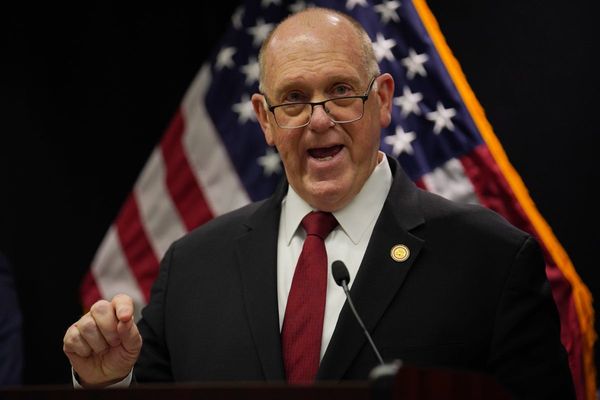
"The truth is that as much progress as we've made over the last four years, we simply have to do better," Emanuel said during his crime campaign speech. "Too many families still have their kids off the porch when it gets dark. Too many families, too many parents, do not let their kids go outside because they're scared."
Four years ago, Emanuel campaigned on a pledge to put 1,000 more officers on the street. The difficulty of delivering on that promise has haunted him since, in light of the spike in violence and huge increase in police overtime spending to tamp it down.
Now his opponents are trying to capitalize on the issue.
Cook County Commissioner Jesus "Chuy" Garcia and 2nd Ward Ald. Bob Fioretti say Emanuel failed to make good on his 1,000 new cops pledge. Both say they would find the money to hire more officers. At around $100,000 a year in salary and benefits per new officer, it would cost an estimated $50 million to hire 500 more officers and about $100 million to hire 1,000.
Fioretti thinks there's enough money in the budget to hire 500 officers if overtime spending were trimmed. The city expects to spend $95 million this year on police overtime, up by nearly a third.
Garcia has said he would "keep the promise that the mayor broke" and hire 1,000 officers. He has suggested $75 million would come from reduced overtime spending but hasn't specified where he'd get the rest.
For his part, Emanuel has argued that it costs less to pay overtime than it does to hire additional police officers.
As it turned out, Emanuel's campaign pledge didn't mean hiring 1,000 new officers. The city was strapped for cash, so it was difficult to keep up with retirements and departures of about 500 officers a year, much less hire 1,000 on top of that.
To try to hit the mayor's goal, Emanuel's police superintendent quickly shook up the way the Chicago Police Department deployed the cops it had. Garry McCarthy promised smarter police work and improvements in the decadeslong animosity between the force and the people they swore to protect. One of McCarthy's first restructuring moves was to dismantle some of the department's saturation teams that had been credited with helping control violence in gang strongholds.
But what followed put the mayor on his heels -- a spike in homicides during his first full year in office, Hadiya Pendleton's killing and the heat of a national media spotlight on the scourge of shootings. To suppress the violence, Emanuel more than doubled the police department's overtime budget, an increase that union officials say is stretching the rank and file to the breaking point. And some of the saturation teams were brought back.
Perceptions about crime have been a frustrating issue for Emanuel and McCarthy, the superintendent he recruited from the East Coast. Despite the early success of maintaining the peace during constant demonstrations during the 2012 NATO summit in Chicago -- and a homicide rate that has declined after spiking that same year -- Emanuel's administration has been dogged by a perception of failure on crime.
In the early 2000s, Chicago's annual homicide count routinely topped 600 before plummeting about 25 percent and then remaining flat. Under Emanuel, the homicide totals remained largely the same from 2010 to 2011 (435 to 436), rose in 2012 (504) and then fell in 2013 (419) and 2014 (407).
Last summer, Emanuel and McCarthy were criticized for allegedly underreporting the number of homicides in 2013 by incorrectly classifying some as "death investigations," among other tactics. In April, the city inspector general showed the department underreported aggravated batteries and assaults by about one-fourth in 2012 by failing to follow state guidelines to count each victim, not just each incident.
McCarthy has lamented a changing media landscape that has increased the amount of quick online and social media reporting on individual crimes that would not have garnered such attention just a few years ago. The result is a broad perception that Chicago is often unsafe in all corners of the map, and a reality that it remains a truly dangerous place for many of the city's most vulnerable citizens in particular neighborhoods on the South and West sides.
That dynamic has played a significant role in Emanuel's waning popularity. But a recent Chicago Tribune poll showed that voter perceptions about the mayor's handling of crime have improved slightly the last several months amid a wave of Emanuel campaign ads in which he's tried to reshape views on his first term.
In August, Tribune polling showed voters disapproved of Emanuel's job performance on crime by nearly 2-to-1 -- 30 percent approved while 57 percent disapproved. In the poll conducted last week, Emanuel had narrowed the gap to 34 percent approving and 48 percent disapproving.
The mayor's standing on crime also has improved among white and black voters since August. Among whites, the mayor's numbers went from 36 percent approving and 52 percent disapproving to an even 42 percent in the latest poll. Among African-American voters, Emanuel stood at 22 percent approval and 63 percent disapproval in August and is now at 29 percent approval and 50 percent disapproval.
But Emanuel's numbers are now worse among Latino voters. In August, that group gave Emanuel 37 percent approval and 55 percent disapproval. Now those figures are down to 28 percent approval and 60 percent disapproval.
With crime remaining a top issue, Emanuel last month outlined a second-term crime-fighting strategy that seeks mainly to double down on ideas he says have worked in his first four years. That includes expanding the summer jobs program to try to keep kids out of trouble and pressing for better relationships between cops and residents in neighborhoods where police are making inroads against gangs.
Among challengers, Garcia wants to increase the autonomy police enjoy in neighborhoods as part of a bid to step up community policing efforts. And he has pledged to set up programs where young people who commit crimes can make restitution and "come face to face with the victims of their actions and engage the entire community to serve as witnesses to an apology and to be supportive."
Businessman Willie Wilson wants more police officers out of squad cars and instead walking the beat and taking public transportation, which he says will help relationships between cops and residents. And perennial candidate William "Dock" Walls has said he would suspend vacations for police officers and limit the amount of time they spend in court in order to get more of them on the street.
Crime concerns go beyond the mayor's race. Ald. James Cappleman, who represents the Uptown neighborhood, said he spends a good deal of time talking to skeptical residents in the 46th Ward. "The perception in the ward sometimes doesn't match the reality," he said. "And I understand that. If people see an incident or experience a crime, that is going to have a profound impact on how safe they feel."
But Cappleman said the campaign has provided a platform for Emanuel to try to change the way Chicagoans feel about crime, even as his challengers hammer the mayor's public safety record. "It's an opportunity for (Emanuel) to make the case, to point to programs he has implemented at a time when people are paying close attention to what he says on the topic," he said.
On the West Side, 28th Ward Ald. Jason Ervin said residents who are bombarded with news reports about violent crimes think the situation is worse than it actually is. "People I talk to don't feel as safe as they did (a few years ago)," Ervin said. "They see more aggressive policing and better police response to problems. But with the constant shootings and homicides in the news, it's difficult for lots of people to feel better about things."
Ervin said the perception gap on crime extends to aldermen. "I have colleagues (on the City Council) who represent what I consider low-crime areas, and they tell me they're catching hell," Ervin said. "I say to them 'Hey, if I could drop your crime problems into this neighborhood in my ward, it would be a great day.' So it all comes down to what they're used to and what their constituents are used to compared to how they feel things are going."
dheinzmann@tribpub.com
jebyrne@tribpub.com