CHICAGO _ In an abrupt reversal, lawyers for the city of Chicago announced Friday they would not seek to sue the estate of a teen shot to death by a police officer after all.
The change of heart came shortly before the lawyers planned to be in court for an emergency hearing seeking the approval of a judge for the unorthodox lawsuit.
Lawyers for the city filed the motion Thursday afternoon, saying they wanted to sue the estate of Quintonio LeGrier for the 2015 shooting that also killed an innocent bystander.
The proposed suit rested largely on allegations that LeGrier tried to hit Officer Robert Rialmo with an aluminum baseball bat before the officer opened fire, killing both the teenager and 55-year-old Bettie Jones, a neighbor standing nearby.
The story sparked outrage on social media after the Chicago Tribune first revealed the proposed lawsuit Thursday evening. On Friday morning, Bill McCaffrey, spokesman for the city's Law Department, emailed a statement announcing the city would drop the effort.
"We are constantly evaluating and reevaluating our legal strategies, and we have determined the motion is not the best course of action," the statement said.
If successful, the suit could have shifted some of the city's potentially hefty financial liability for the death of an innocent woman onto LeGrier's estate.
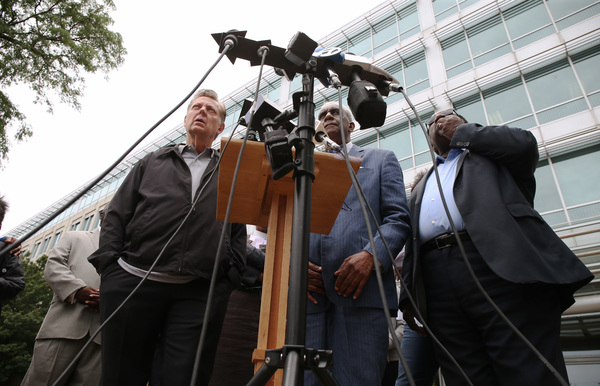
On Thursday evening, attorney Basileios Foutris, who represents the LeGrier family, had called the move a "sick" and "twisted" bid to shrug off liability and said Rialmo never belonged on the street.
On Friday morning, he endorsed the city's move.
"I guess common sense prevailed," he said.
The city's proposed lawsuit and quick reversal are only the latest twist in the litigation over the shooting on the day after Christmas 2015.
In addition to suits by survivors of both LeGrier and Jones, Rialmo filed an unusual lawsuit against the Police Department that alleges in part that he was inadequately trained. The officer is also suing LeGrier's estate, blaming him for a shooting that Rialmo says caused him emotional trauma.
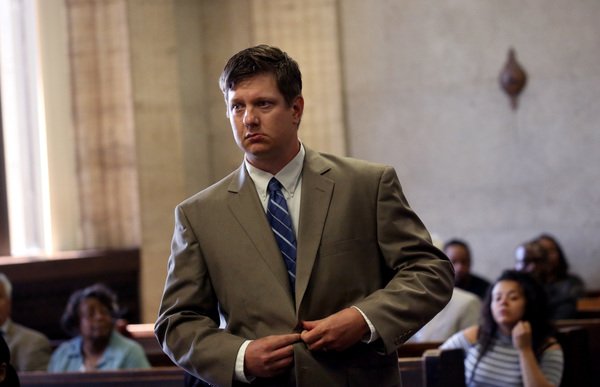
Rialmo's attorney, Joel Brodsky, has said Rialmo fired in self-defense because of LeGrier's actions. The officer was justified in shooting the bat-wielding teen, even if that led to Jones' death, Brodsky has said.
The shooting garnered wide attention as it killed a bystander and was the first fatal Chicago police shooting following the court-ordered release of video of an officer shooting teen Laquan McDonald 16 times. The video's release sparked calls for Mayor Rahm Emanuel's resignation and heated protests fueled by long-standing complaints about the department's treatment of minorities. Efforts to overhaul the department continue more than two years after the video's emergence.
About 4:30 a.m. on the day after Christmas 2015, Rialmo and his partner responded to 911 calls about a domestic disturbance at a West Side apartment where LeGrier was staying with his father.
LeGrier had behaved erratically as a student at Northern Illinois University and had altercations with other students and run-ins with police, records show.
LeGrier's mental health has become an issue in the litigation that has followed his death, and the lawsuit the city floated Thursday alleged he "failed to take prescribed medication to control his mental illness."
Jones, who lived downstairs at the home in the 4700 block of West Erie Street, answered the door and pointed the cops to the second-floor apartment. LeGrier then came down the stairs with a baseball bat, according to an analysis released in February by State's Attorney Kim Foxx's office, which declined to bring charges against Rialmo in the incident.
The police started to back up onto the front landing as the teen came toward them with the bat raised over his head, prosecutors wrote. As Rialmo backed down the stairs, he fired, according to prosecutors. He shot eight times, hitting LeGrier six times. Jones had been standing behind him and was shot once in the chest, prosecutors wrote.
Rialmo recently stipulated in court that he knew Jones was standing close by when he fired, though Brodsky said the officer was nonetheless justified in firing in self-defense. Rialmo has said he feared for his life after LeGrier swung the bat at him.
Rialmo's proximity to LeGrier during the shooting is at issue in the litigation. A witness said in a sworn deposition that Rialmo was on the sidewalk when he fired, and attorneys for the Jones and LeGrier families have said physical evidence backs up that testimony. But Rialmo said in a deposition that he fired his first shot from the porch, putting him closer to the teen at that critical moment.
The Civilian Office of Police Accountability, which investigates shootings by Chicago police, has yet to rule on whether the shooting was justified under department policy.
The city's now-scuttled proposed lawsuit blamed LeGrier for "negligent acts and/or omissions" including that he failed to follow police commands, advanced on officers, swung the bat at police and failed to take medication to control his mental illness.
Foutris has denied LeGrier did anything to justify being shot.