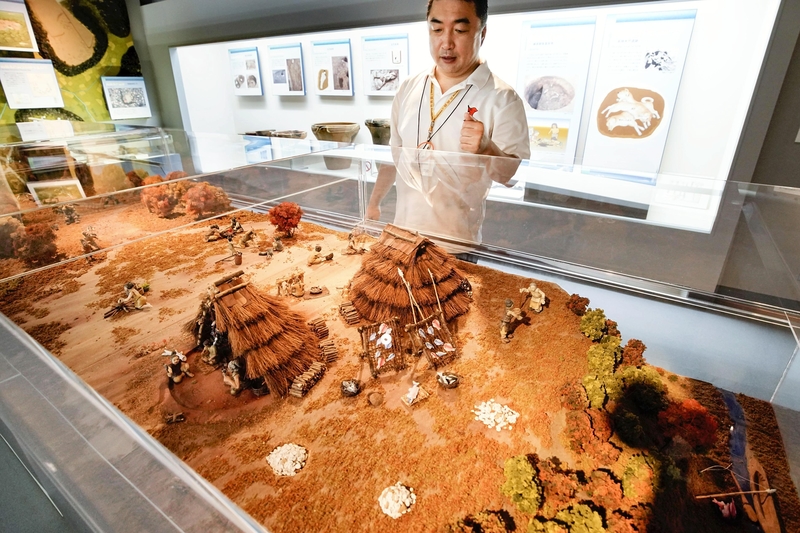
Japan's ancient shell mounds, said to have been the "garbage dumps" of the Jomon period (ca 14,000 B.C. to ca 1000 B.C.), have been excavated in Chiba Prefecture more than other areas in the country. In the Tobinodai area of Funabashi, for example, about 40 shell mound sites dating back to about 8,000 years ago, as well as the sites of 25 ancient dwellings, have been discovered. Findings show that the Jomon people led settled lives blessed with food gathered from the sea and mountains.
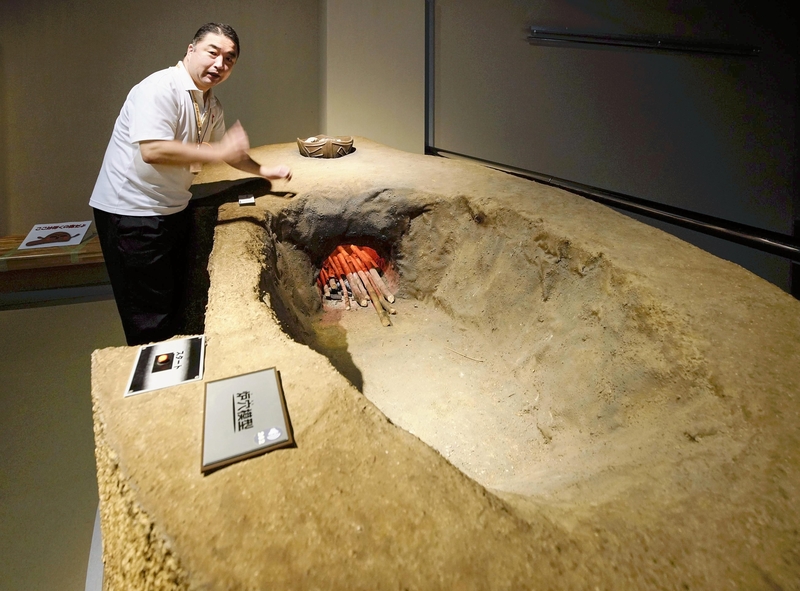
The Tobinodai area is home to the site of Japan's first excavation of an ancient fire pit for outdoor cooking. The dig revealed an elliptical pit about 1 to 2 meters long and 0.5 to 1 meter wide, dug beside a house to provide a fire for cooking.
Viewing the dioramas on the second floor of the Tobinodai Historic Site Park Museum, visitors can visualize a scene of Jomon people crouching down to check the burning fires. They likely ate seafood, including clams and sea bass.
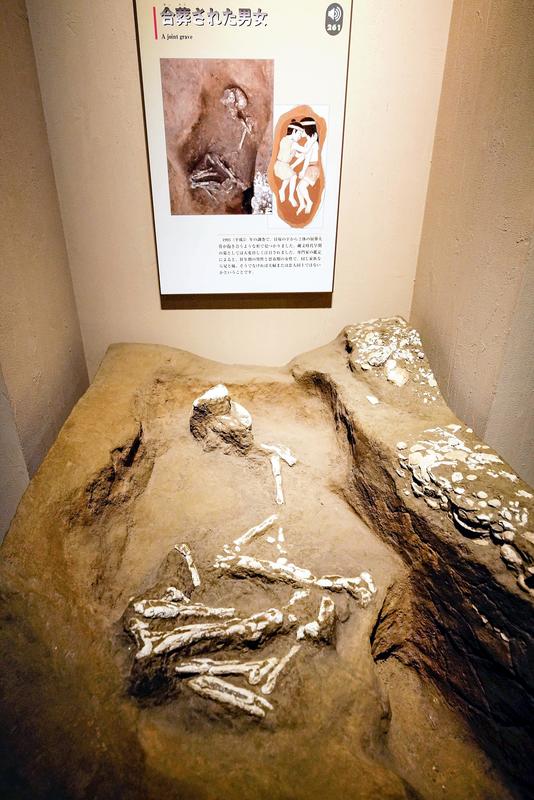
Adjacent to the fire pit are replicas of human bones. The original bones are the oldest human bones found buried together in the country and are said to be of a man aged 25 to 30 and a woman aged 15 to 20. They are believed to be those of a married couple, siblings, or a pair of lovers. It is a pitiful sight that the two lie atop one another as if hugging each other. The bones were found in 1993 during a site examination prior to the construction of a community center, thereby accelerating the momentum for building a museum to preserve excavated items.
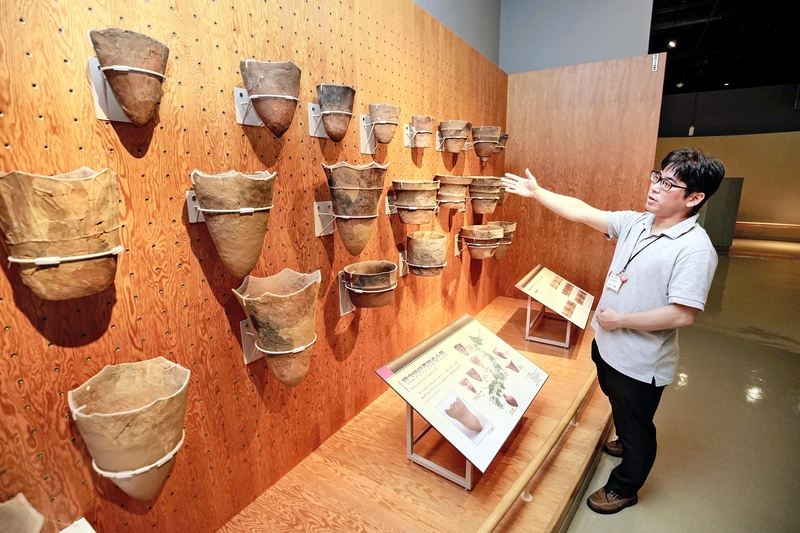
An array of earthenware items also makes a powerful impression. The name Jomon comes from patterns on the period's pottery created by pressing straw cords into the clay. The pottery pieces at this museum, however, are characterized by fine lines believed to have been etched using shells.
Materials from archaeological sites in the neighborhood of the Tobinodai area are exhibited on the museum's third floor.
Conspicuous items on display include a large amount of shells excavated at the Torikake Nishi Shell Mound in Funabashi. A site where rituals were carried out using bones of wild boars and deer was also discovered at the shell mound. The mound is thought to have been a sacred place to offer prayers and wishes for resurrection.
Atsushi Kasai, deputy curator of the museum, said, "Because [the Jomon period] was a time when there was no written language, it's possible to develop various interpretations from excavated items and imagine their dreams."
It is really romantic to imagine life in prehistoric times. Viewing the exhibits widens visitors' imagination, making them feel as if they have become researchers.
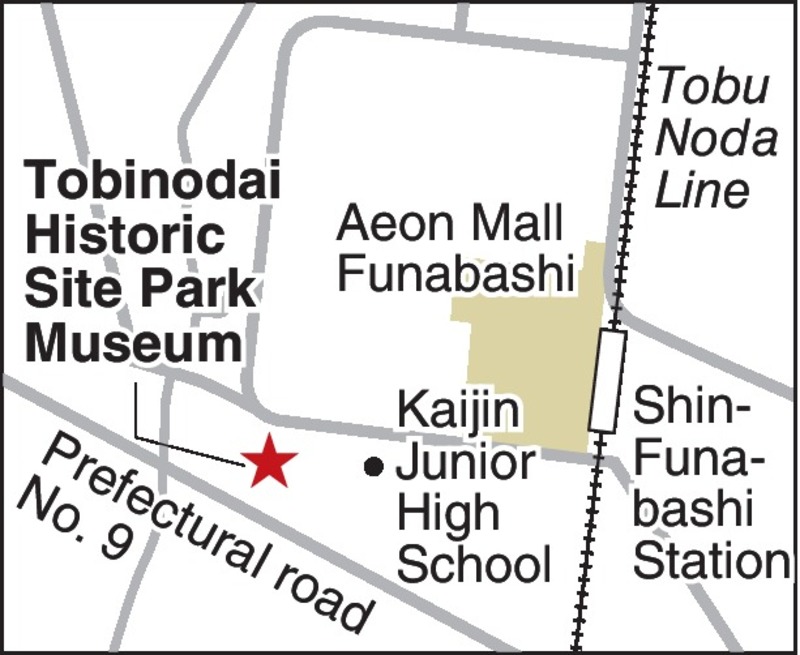
Tobinodai Historic Site Park Museum: 4-27-2 Kaijin, Funabashi City, Chiba Prefecture
Read more from The Japan News at https://japannews.yomiuri.co.jp/