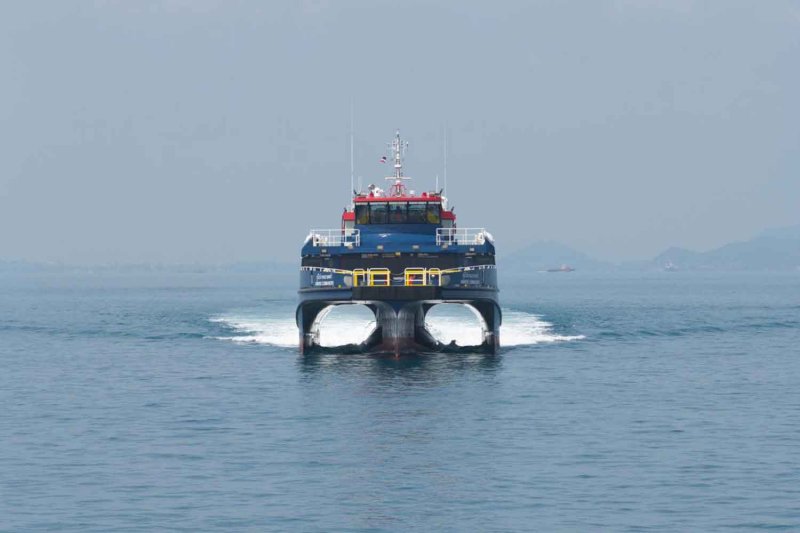
Chevron Thailand Exploration and Production is enhancing its offshore petroleum operations by deploying the world's first trimaran crew vessel to transport workers to drilling platforms in the Gulf of Thailand.
President Chatit Huayhongtong said the company is stepping up its use of technology to bolster Thailand's long-term upstream energy security.
Alongside the trimaran crew vessel, Chevron has rolled out its Integrated Operation Center (IOC) to optimise mature offshore natural gas operations in the Gulf.
The move comes as energy producers face the challenges of managing ageing brownfield assets, where reducing production costs and maximising efficiency are critical to sustaining domestic energy supplies.
Traditional single-hull crew vessels often encounter rough seas, particularly during Thailand's monsoon season in the latter half of the year.
These conditions can cause crew fatigue and operational delays, said Mr Chatit.
The newly built 90-seat trimaran addresses these issues with a three-hull structure that rises partially above the water at high speed, reducing vessel roll and cutting transit times between onshore facilities and offshore platforms by up to 30%.
This design minimises fatigue among workers and improves overall transport reliability.
The vessel also provides a high-capacity, cost-efficient alternative to helicopters, which typically carry only about 10 passengers per flight at significantly higher expense.
With enhanced wave tolerance and safety features, the trimaran is particularly suited to the Gulf of Thailand's severe monsoon season from October to December.
"Our primary mission is to create energy security for Thailand," Mr Chatit said.
"As field potential naturally diminishes over decades of production, bringing in innovative technologies to manage operating costs, enhance safety and maintain economic viability across our operations is essential."
Chevron Thailand currently operates three major offshore production platforms -- Benjamas, North Pailin and South Pailin -- which together account for about 20% of Thailand's total natural gas supply.
Offshore workforce management requires personnel to work demanding three-week rotations before returning onshore to rest, making safe and efficient transport vital.
Another innovation introduced by Chevron Thailand is the IOC, a digital hub that centralises real-time data streams, platform monitoring and operational controls.
The IOC reduces unplanned downtime, minimises the need for permanent staff on remote rigs and enhances decision-making efficiency for offshore operations.