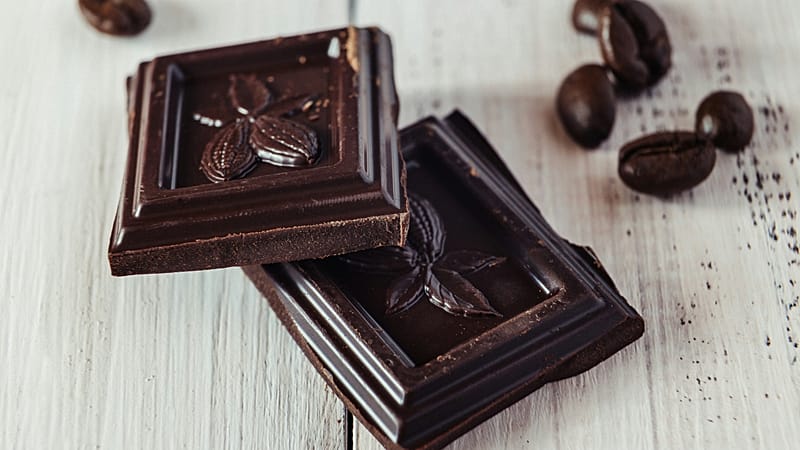
Theobromine, a chemical found in dark chocolate, may have anti-ageing properties, a new study has found.
The study, published on Wednesday in the journal Aging, found that theobromine – a common plant compound that comes from cocoa beans – could slow biological ageing.
“Our study finds links between a key component of dark chocolate and staying younger for longer,” said Jordana Bell, the study’s senior author and head of the epigenomics research group at King's College London.
“While we’re not saying that people should eat more dark chocolate, this research can help us understand how everyday foods may hold clues to healthier, longer lives.” Bell added in a statement.
Researchers looked at 509 participants in the United Kingdom and 1,160 in Germany, and found that those with higher levels of theobromine in their blood had a biological age lower than their actual age.
Biological age is how old your body seems based on its health and function. It reflects the wear and tear your cells, tissues, and organs have accumulated over time, and is influenced by lifestyle, environment, and genetics – not just the passage of time.
These markers are based on patterns of small “bookmarks” on our DNA, called methylation, which change in a predictable way with age.
The researchers determined the participants’ biological age by looking at the chemical changes in their DNA to see how fast they were ageing, and by estimating the length of their telomeres, which are the protective caps on the ends of the chromosomes. Shorter telomeres are associated with older age and age-related diseases.
Dark chocolate has previously been associated with other possible health benefits, including for heart health. However, scientists note that more research is needed to fully understand the association between theobromine and ageing.
“Although the study explores an interesting association, it does not tell us what happens when theobromine levels change due to eating more or less chocolate and how this changes our health,” said Dimitrios Koutoukidis, an associate professor of diet, obesity, and behavioural Sciences at the University of Oxford.
Koutoukidis, who was not involved with the study, added that it is possible that after taking into account the added sugar and fat of the chocolate, the health effects are cancelled out.
“So, if people like it, they should enjoy it infrequently and in small amounts,” he said.