The craft beer industry is enjoying a widely hyped boom, with almost 3,500 breweries operating in 2014 – the most since the 1880s, according to CraftBeer.com. But a lesser-known niche market – craft liquor, or the creation of boutique-style alcohol – is where many spirits hustlers are building their small businesses.
According to the Distilled Spirits Council of the United States, which cites figures from 2004 to 2014, sales of American distilled spirits have surged from $717m to $1.56bn. And Bourbon and Tennessee whiskey sales more than doubled in that time, from $494 million to just more than $1 billion.
Capitalizing on this trend, Andrew Maruska and Alex Levin, design entrepreneurs who run agencies in Brooklyn, New York, will launch their liquor brand, Des-gin, in December. Thanks to hard work and support from helpful distillers and bottle manufacturers, their side hustle is well under way: they’ve perfected their recipe with a distiller; designed and produced bottle labels; and secured a retailer, restaurant and distributor specializing in craft spirits. “We’d like to be profitable and even mainstream,” Maruska says.
The entrepreneurs say they hope their first product, branded with a common misspelling of the word “design”, will connect with the creative community the same way consumers associate Red Bull with action sports.
Despite offerings from major gin brands like Bombay and smaller, newer distilleries in Philadelphia and Portland, Oregon, gin drinkers still have fewer options than other alcohol consumers. Levin and Meruska chose gin over other hard liquors like vodka because of the creative freedom: after adding juniper, ginmakers can incorporate a vast assortment of ingredients to customize their drink.
“Ultimately, if our gin brand helps inspire and empower the design community, I’ll feel our venture is worthwhile,” Levin says.
Spirit of the … coconut?
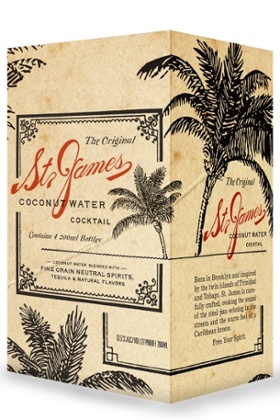
New York-based side hustlers Tracey Solomon and Andre Haynes are launching a new coconut water–based, premade cocktail, dubbed St. James, inspired by their Trinidad and Tobago roots. The business partners, who are also independent contractors in market research and video production, are finishing their ingredient orders for a practice run. They’ve gained legal approvals and will finalize distribution once the first batch of 20,000 bottles arrives at a New Jersey warehouse from their Missouri manufacturer.
Solomon says St. James has a sweet but not syrupy profile and is 13% alcohol. “It tastes wonderful chilled on the rocks with lime, very refreshing and smooth, the most delicious coconut water you’ve ever had,” she says.
Both hustlers have faith that the New York cocktail sect will embrace the beverage, but will feel they’ve really made it once other regions start requesting the drink. “Coconut cocktails are rare,” Solomon says.
Reimagining whiskey production
Entrepreneurs are also using innovative products and techniques to make craft spirits production more efficient. Theron Regnier, a Los Angeles-based real estate broker, launched a new side business two years ago: Rattleback Whiskey. The company produces rye whiskey using a flash-crafting technique that creates the spirit in six days, versus the many years that mainstream bourbon Maker’s Mark requires.
Part of Regnier’s inspiration came from a resurgence of whiskey drinkers after decades of declining sales. Rye volumes have spiked 536% in the past five years, according to the Distilled Spirits Council of the United States. National Public Radio reports that women currently make up 37% of whiskey drinkers versus 15% in 1990, and they are largely driving the growth.
To help perfect the technique, Regnier partnered with a Silicon Valley entrepreneur using an accelerated-aging technology similar to that used to make rum. He’s working with a distillery in Bend, Oregon, to produce a limited-release run, due out in January 2016.
From their lips to fellow side hustlers’ ears
For those looking to launch a liquor business alongside a day job, these hustlers have learned some helpful lessons:
- Liquor is highly regulated, and launching a brand requires interacting with the US Alcohol and Tobacco Tax and Trade Bureau. Manufacturers must sell to a distributor, which then sells to retail stores and restaurants, and they in turn sell to the consumer. The cost of regulation and approvals is surprisingly low, says Levin, but the three-tier system is complex.
- Hustlers must approach their state’s liquor bureaus to learn local distribution regulations. Solomon and Haynes cold-called the New York State Liquor Authority and invested in legal counsel.
- Spirits companies can’t market to minors or encourage excessive drinking.
- Labeling details can stall the process. The Des-gin team irreverently added the design industry’s placeholder text “Lorem lpsum” on their label, but regulators found that confusing. Off it came.
- The deep-set traditions in the craft spirits world can overwhelm newcomers lacking family ties, recipes or rich experience. “Entrepreneurs may find the ‘by invitation only’ viewpoint off-putting,” Regnier says. “Convincing whiskey traditionalists of the virtues of new technologies can be a tough sell.”
- Avoid reinventing the wheel. By partnering with a 20-year-old distillery, Regnier avoided years of figuring out the distilling himself. And friends found for Solomon a graphic designer experienced in the liquor industry who designed the bottle’s beautiful label. Additionally, attend trade shows.
Surprisingly smooth
Many elements of launching a liquor brand are fluid. Production is surprisingly affordable. Freighting one pallet containing 960 bottles of Des-gin from the Missouri manufacturer to the distributor’s Pennsylvania warehouse, and after that to the label printer in Chicago, then to the Florida distillery, and finally to Brooklyn incurred minimal expense – although the gin hitched a ride alongside other spirits.
And while regulations exist, nationally there’s a government shift toward loosening the rules. California recently joined Oregon in allowing craft distillers to offer tasting rooms, as offered at popular beer breweries and winemakers.
And surprisingly, lack of experience can be an advantage. Regnier says the new wave of whiskey drinkers may view the older establishment as snobby and patriarchal, and a novice appears refreshingly humble. “We are doing things authentically, but using innovative ways, and this approach appeals to our consumer,” Regnier says. “The liquor industry has room for entrepreneurs in ways we’ve never seen.”
Content on this page is brought to you by Squarespace. Receive 10% off your new Squarespace signup with offer code SIDEHUSTLE.