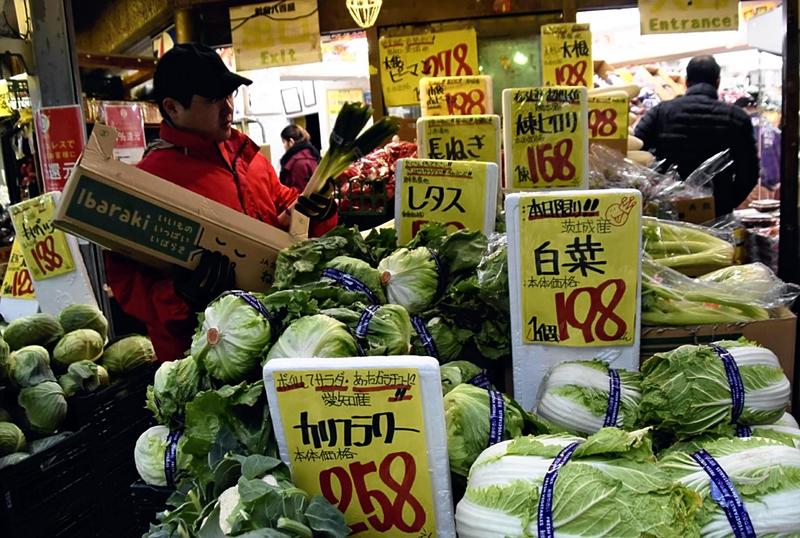
The warm winter is keeping down the prices of vegetables such as cabbage and Chinese cabbage, which is welcome news for family budgets but putting the squeeze on farmers.
Leaf vegetables have been growing smoothly this season so there is an abundant supply, but weak demand for ingredients for hot pot dishes due to the warmer weather has held prices down.
At Shinjuku Yaoya, a fruit and vegetable shop in Shinjuku Ward, Tokyo, Chinese cabbages were selling Friday for 258 yen each, cabbages were 138 yen and daikon radishes were 158 yen. These prices were all about 20% percent cheaper than last year.
"I'm glad the vegetables I often eat are cheap," said a housewife in her 70s who lives nearby.
However, sales have been sluggish. "Many customers have told us they aren't eating hot pot dishes so much because of the warm weather," said an executive of the company operating the store. "To be honest, I wish the weather would get colder."
According to the Agriculture, Forestry and Fisheries Ministry's price trend survey, the tax-inclusive retail prices of eight vegetables from Jan. 20 to 22 were between 5% and 40% lower than average years. In particular, cabbage prices were down 39%, Chinese cabbage had dipped 22% and daikon 27%. Prices of lettuce, tomato and other vegetables were also trending downward.
A major vegetable wholesaler said the lack of snow across Japan this winter had resulted in vegetables growing more quickly.
An official in charge at the agriculture ministry said: "The supply of vegetables has increased because growers have brought forward their shipping periods. It looks like prices will remain stable for a while."
On the other hand, the lower prices are hurting farmers.
"Even if the market price is cheap, farmers still shoulder the same expenses to grow their produce. As things stand now, some farmers will be in the red," said an official in charge at the Japan Agricultural Cooperatives' Aichi Minami in Tahara, Aichi Prefecture, which oversees one of the nation's leading cabbage-growing areas.
An economist said that although vegetable prices remaining low would be a "plus" for household budgets, "If consumption remains flat during the warm winter, the overall negative impact on the economy will be large."
Read more from The Japan News at https://japannews.yomiuri.co.jp/